Wednesday, March 10, 2021

SAL Definition of Success

What is your personal and/or professional
definition of SUCCESS?
What does it mean to be successful?

In other words, what do YOU believe that you have to do, be, or accomplish in order to qualify as a personal or professional success?

This is a good and important question to ask oneself, and there are no limits to the variety of answers that human beings can and do provide to this question.

Unfortunately, many people make it almost impossible for themselves to feel successful because of the unrealistically high expectations that are placed upon themselves by others, or that they choose to place upon themselves.

For example, think of someone you know who will never consider him or herself a success until he or she has acquired a certain amount (usually an unnecessarily large amount) of financial resources or material possessions. Or think about those who will never view themselves as being successful until they have attained a certain job, career title, hierarchical position, or relationship? And what about those who are continually living in the shadows of other people, and who refuse to allow themselves to feel successful until they have accomplished some unrealistic standard that someone else (in whose shadow they choose to live) has previously accomplished.

One of the most important SAL lessons I have ever learned—and that I could ever teach—is that all the definitions of success elucidated above (and any related suppositions of success) are ultimately bogus and unwise metrics for actual and authentic SAL success. If this is the case, then what is the SAL definition of success? 

Good Question!

          And Freedom Focused has a good answer. 

At the proverbial "End of the Day" there is really only one authentic, legitimate, and fair definition of success for everyone under the sun, and it is this...

Your best is really the best you can ever do
SAL  DEFINITION  OF  SUCCESS: I am successful when I can look back at any given effort, performance, project, relationship, or time period in my life and honestly say to myself: "I did the imperfect BEST of which I was capable at the time."

Logically speaking, is it possible to do better than your best at any given moment in time? The answer, of course, is NO! As such, as long as you honestly and authentically put forth your very best effort at something, you can legitimately consider yourself as being consummately successful—at least in that particular moment in time.

Our challenge and opportunity in life is not to "do better than our best." Our challenge and opportunity in life is to actually do our best. If we are consistently successful in this single endeavor, we will find that results will take care of themselves in the long run.  

Imagine how much more successful people would view themselves if they exchanged their bogus, unwise, and unrealistic definitions of success for the much more pragmatic and achievable SAL definition of success. Moreover, imagine how much harder people would TRY if they truly adopted the SAL definition of success as their own definition of success. It is one of those powerful paradigm shifts that, when fully embraced by large numbers of people, could literally change the world.  

For better or for worse—and sometimes it is for the better; but often it is for the worse—human beings can be very competitive with each other. Such competitiveness makes comparisons with others an inevitability. Let's face it... we all like to "win" and virtually all of us spend too much time fixating on how we "stack up" against others. I know this is true in part because I myself am probably the most competitive person I've ever known, and I have certainly done my share of comparing myself with others.

Old Ben Franklin can help us reassess
what it means to be successful
Comparisons with other people have their place, but only if they serve to positively and productively bolster your own self-improvement and growth... and only if they are kept in their proper perspective. Outside of these strict parameters, comparing yourself with others serves little positive or productive purpose beyond hindering your own happiness, curtailing your own contentment, and gypping your own joy.

In the wise words of Benjamin Franklin: "Who is rich? He that rejoiceth in his portion." And in the pithy parlance of Theodore Roosevelt: "Comparison in the Thief of Joy."


"Who is rich? He that rejoiceth in his portion."

 Benjamin Franklin 


"Comparison is the Thief of Joy."

 Theodore Roosevelt


I first learned the importance of changing my own definition of success as a junior in high school. The fall semester of my junior year (1996), I claimed an individual State Championship and co-captained my team to a team State Championship in my school's classification. I had worked long and hard to accomplish this goal, and reaching this prep-pinnacle of my sport was enormously satisfying and rewarding.

But a funny thing happened after I won that gold medal and trophy. I started to get greedy. Consequently, avarice began influencing my definition of success. Thus, during track season the following spring it was no longer enough to merely "win" a State race. Instead, I had to win all four of my events in order to qualify as a true "success."

Standing in between the two runners who
beat me in the 3200 meters at State.
I worked just as hard to attain my increasingly ambitious goals; but unfortunately, I did not achieve them during track season. Instead of four GOLD medals at the State meet in 1997, I won two silvers, a bronze, and a 4th place medal.

Despite these legitimate accomplishments, I was predictably disappointed.  

The outcome of my distance medley relay race was especially deflating because one of my teammates dropped the baton after the first lap of the race, costing us several seconds of precious time and many meters of lost ground. Despite being favored to win the race, we were now playing catch-up in a big way. What should have been a glorious victory from start-to-finish turned into a disaster-in-the-making. 

Dismayed, but undaunted, I, the anchor (last) leg of our relay team, ran my heart out for the final 800 meters of the 1600 meter distance relay race (consisting of a 200m, 200m, 400m, and 800m segments). Absolutely determined to make up the ground we had lost, I grabbed the baton from our 400 meter runner and began to furiously pursue all of the runners in front of me. One-by-one, I reeled them in and passed them by. Six hundred yards into the race, I finally caught up with the lead runner and passed him also. Despite starting out thirty or forty yards behind first place, and also trailing three or four other runners, I had managed to catch everyone ahead of me in less than 90 seconds. Sadly, I had perhaps pushed myself too hard for those first 600 meters, and on the final straightaway, began to hear a runner gaining ground on me from behind. Surging once more with every last bit of energy, strength and will I had remaining, I lunged across the finish line in utter desperation. But it was not enough. The runner who had a 30-40 meter head start on me on his 800 meter leg had managed to catch me and just barely cross the finish line in first place, a mere few hundredths of a second before I did. 

Despite running the fastest 800 meter anchor leg of the entire field of competitors, second place still felt like a failure to me. I even recall throwing my team's baton in frustration—an immature and uncharacteristic response to the race result.

The race's outcome seemed so unfair.    

But here's the thing... I ran that 800 meters faster than I had ever run the 800 meters in my entire life to date. In fact, over the course of the rest of my high school running career, which included my entire senior season in 1998, I ran faster in the 800 meters only once, and that was by a mere half-second nearly a year later. 

I also broke personal records in both the 1600 and 3200 meter races at the 1997 State Meet. As such, I should have been very pleased by my performances, regardless of the color of the medals I received. The bottom line was that regardless where I had stacked up against others, I had personally been very successful as judged by the stopwatch, not to mention the extent of my own personal effort, which had been COMPLETE, and especially so in the distance medley relay.  

Later on as a college runner, and unlike my high school career, I won very few races. In fact, the only race I ever won in college was in the 'B' heat of an indoor mile race. For those unfamiliar with track and field, the 'B' heat is where they put the slower runners competing in a track meet. The fastest guys compete in the 'A' heat.

Despite my lack of "winning" in college, I made significant improvements in my personal times in most events in which I competed. In fact, some of my best times in college would have broken State Records in the classification in which I competed in high school. According to the stopwatch and my own effort quotient, I was, in fact, a very successful collegiate athlete—despite almost never "winning." In other words, despite losing almost every race I ever ran in college, I was a very successful runner according to the SAL Definition of Success.     

These experiences as a collegiate athlete helped me to change my own definition of success to mirror the SAL definition of success. And I have been better off, and unquestionably happier and more content, ever since as a result.

I openly confess I still have a weakness for comparing myself to others. Moreover, I remain very competitive in my desire to not only be my own best self, but, if and when possible, to come out on top of my fellow competitors as well. Nevertheless, I am pleased to report that I can also honestly say that despite any and all of the things I have not yet accomplished in my life or career, I view myself as being a very successful person and professional RIGHT NOW. 

Why?

          Simple...

Because I consistently do my imperfect BEST at whatever I undertake.

Now... someone who knows me very well (like my wife) will tell you that my imperfect best can, at times, be pretty lousy! And they are probably spot on in their assessment (SMILE). Such times provide me with a "reality check" in regards to how far I still have to go in my own personal and professional growth and development. Such moments of reflection help me continually improve. Thus, when I do make a mistake, fall short, or fall prey to inertia (laziness)—which, SAL guy notwithstanding, still happens on a regular basis—I make a sincere effort to change and improve moving forward.

And I never give up trying to get better. I always keep trying, however imperfectly. As a result, I remain, and will continue to remain, a success—regardless how relatively imperfectly my actual performance or results may be on a day-to-day basis. In short, I strive always to follow the counsel of Winston Churchill, who has said:

"Never give up on something that you can't go a day without thinking about. ... Success is the ability to go from failure to failure without losing your enthusiasm. ... Never give in — never, never, never, never, in nothing great or small, large or petty, never give in except to convictions of honor and good sense. Never yield to force. Never yield to the apparently overwhelming might of the enemy."

 Sir Winston Spencer Churchill  

Freedom Focused declares that while life often seems to be a competition or series of unending comparisons with our fellowmen and women, that is not what it is designed or meant to be. Rather, it was designed and meant to be an opportunity for us to learn from others as we strive to continually put forth our own best effort in whatever we undertake—in an unending attempt to grow, improve, and progress both personally and professionally. And as long as we are sincerely and honestly giving our best all along the way, we can, at any given moment in time in our lives enjoy the authentically satisfying, rewarding, and contented pleasure that come from being a SAL Success.  

In what ways do you counterproductively compare yourself to others? Has your own definition of success reached unrealistic heights in your personal life, educational journey, or professional career? What is one simple thing you could begin thinking, saying, or doing beginning TODAY to let go of pseudo-definitions of success and begin embracing the SAL Definition of Success?    

SAL DEFINITION OF SUCCESS: I am successful when I can look back at any given effort, performance, project, relationship, or time period in my life and honestly say to myself: "I did the imperfect BEST of which I was capable at the time."

.........................

Tune in NEXT Wednesday for another article on a Self-Action Leadership related topic.  
And if you liked this blog post, please share it with your family, friends, colleagues, and students—and encourage them to sign up to receive future articles for FREE every Wednesday.

To sign up, please email freedomfocused@gmail.com and say SUBSCRIBE, or just YES, and we will ensure you receive a link to each new blog article every Wednesday.  

Click HERE to learn more about Freedom Focused

Click HERE to learn more about Dr. Jordan Jensen

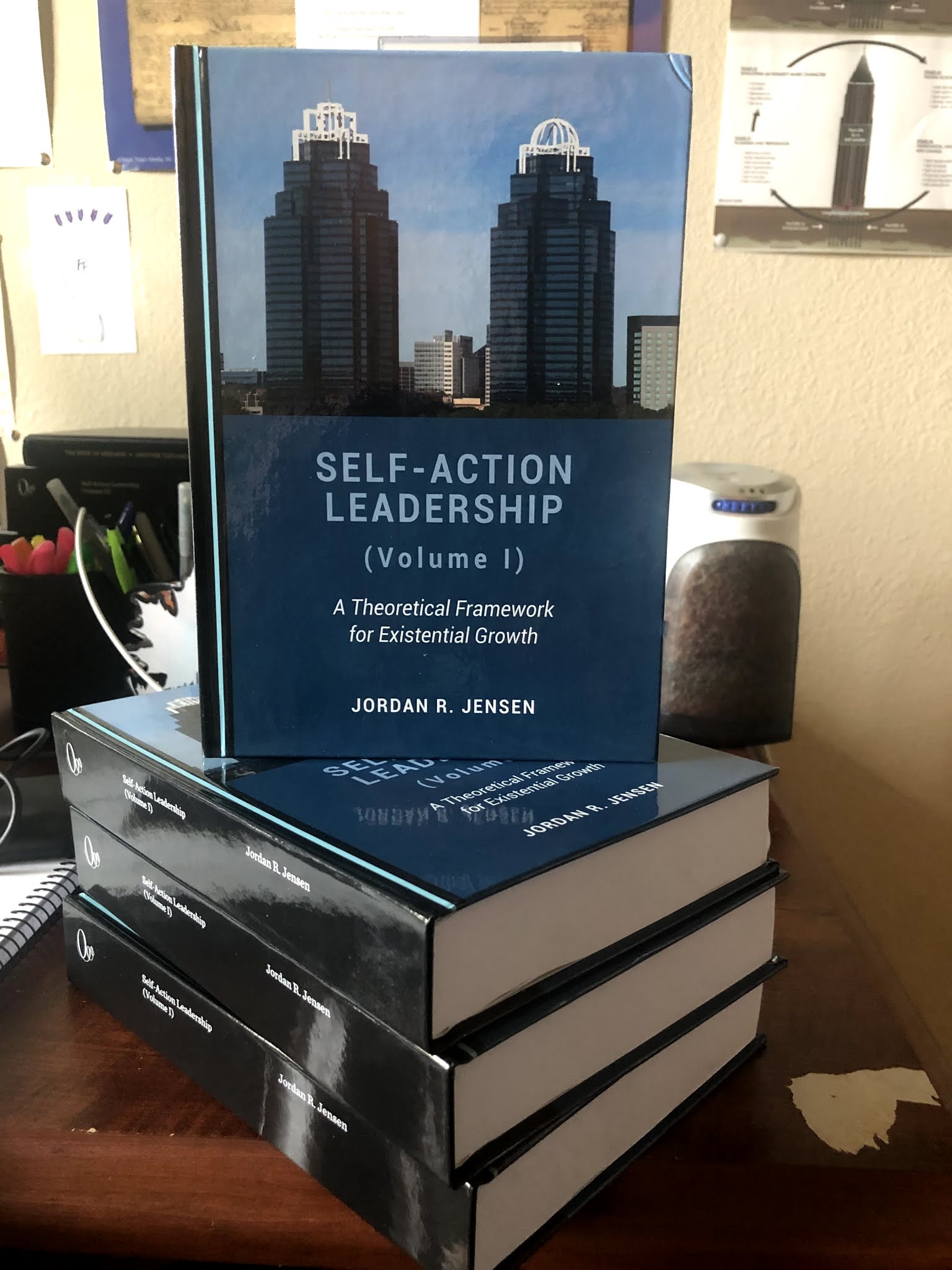
Click HERE to buy the SAL Textbooks


Wednesday, March 3, 2021

Education, not Politics, will Save America

Present-day partisans, pundits, and citizens
 alike too often value politics above education.
For better or for worse—and it seems increasingly for the worse—politics is as popular as it has ever been in America.

How do we know this?

Because voter turnout for the 2020 Presidential Election (over 60% of eligible voters cast a vote) was higher than it has been in over 100 years. That is an amazingly high percentage when compared to other elections throughout the twentieth and twenty-first centuries. In fact, you have to go all the way back to the 1908 election between William Howard Taft and William Jennings Bryant to find a comparatively high percentage of eligible voters who cast a ballot in a U.S. Presidential Election.

While the COVID-19 Pandemic undoubtedly played a prominent role in these soaring voter turnout numbers, it was not the only variable at play. The rise of social media and its concomitant culture of puerile political polarization and unremitting divisiveness also factored into this increase. 

One of the most assumptive misnomers among both professional partisans and pundits, as well as social media laity and the citizenry-at-large, is that the answer to our deepest and most pressing problems in the United States and beyond lies in politics. In the eyes of many, everything would be hunky-dory if only we could keep a particular person or party in power in perpetuity. 

Despite any and all partisan persuasions or insinuations, this simply is not true.  

As important as politics is, anyone with any common sense about reality recognizes that there remain other, more basic, fundamental, and even primal elements of life and society that transcend the importance of politics. 

What are these elements? 

Answer: One's FAMILY ENVIRONMENT in conjunction with the formal and informal EDUCATION one receives and seeks out.  

Signers of the American
Declaration of Independence
One of the main reasons family environment and education is even more important than politics is because politics itself is ultimately an outgrowth of the familial environments, education, and experiences of individual citizens and politicians. This phenomenon explains why America's august Founding Fathers and Mothers valued freedom, equality, and opportunity so much. And why did they value these principles and virtues so much? Because they were taught in their homes and schools that said virtues and principles were practically essential and politically indispensable. As a result, they grew up into men and women of great character and capacity who were willing to pledge their "lives, fortunes, and sacred honors" on the altar of promoting and perpetuating those same values.

The secret to solving America's deepest problems at home and abroad is not to ensure that a certain political party attains and maintains power. The secret lies in transforming American home life and education in ways that refocuses American Students' attention on the enduring, uniting, non-partisan virtues and values enshrined in her founding documents (i.e. The Declaration of Independence and Constitution).

And what exactly are those values? 

The secret to our success both individually and collectively
was set in stone over two centuries ago in Philadelphia, PA.
Answer

Life, Liberty, Equality, Self-Reliance, The Pursuit of Happiness, The Rule of Law, Equal Justice Under the Law, and Divided Government that Limits and Shares power.

Unlike politicians, who often complicate things and manipulate people for petty partisan purposes, Freedom Focused likes to keep things basic, simple, honest, straightforward, and consistent.

We accomplish this aim by remaining laser focused on these fundamental, timeless, and true principles equally applicable to both self-government AND self-governance. As such, everything we model, teach, or promote is aimed at safeguarding and perpetuating Life, Liberty, Equality, Self-RelianceThe Pursuit of Happiness, The Rule of Law, Equal Justice Under the Law, and Divided Government that Limits and Shares power.

At Freedom Focused, we eschew the political fractures and cultural division so common in our contemporary world. And we do so in an effort to create greater unity built upon certain fixed, timeless, and true principles and practices that have proven themselves endlessly efficacious by the unimpeachable test tubes of time. 

We therefore hold that the greatest way to form a more perfect union (e pluribus unum) is to focus more on education than we do on politics. Not because politics doesn't matter; it does! But because we recognize the great truth that politics will largely take care of itself as long as education is focused on those preeminent issues emblazoned in our nation's vital founding documents.

Part of a quality education is to learn about and participate in the political process. All responsible citizens should take at least enough interest in politics to become informed voters. I have personally always been interested in politics. In fact, for much of my life, I thought I might eventually run for office myself, up-to-and-including the office of President of the United States. Over time, I learned I was poorly suited for a political career. More importantly, I discovered that in the long run I could influence more people and make a greater positive impact on the world as an EDUCATOR than I ever could as a POLITICIAN.

That is why I chose to become an educator.

In a forthcoming blog article, I will spotlight and summarize an upcoming academic paper (pending publication in the Journal of Leadership & Management) that offers a common-sense, non-partisan, and balanced educational framework for the twenty-first century in which persons of all political parties and ideological backgrounds can potentially find common ground. 

To some, it may seem like naïve, "pie-in-the-sky" optimism to believe that anything under the sun could possibly bridge the current cultural chasms and partisan political polarization that so divides the not-so-United States of America.

For better or for worse, I am a simple person who is just provincial and optimistic enough to believe that such a solution not only exists, but, when widely applied, will eventually accomplish such an "Impossible Dream" — in much the same way that those miraculous COVID-19 vaccines are currently ridding the world of our cruel contemporary plague.

What are YOU waiting for?
If you agree with and like this article, share it!
Imagine an American social media environment where people were more passionate about posting principled pedagogical placards than they were about perpetually proliferating partisan political paraphernalia!

Please pardon the publicly punishing, yet personally pleasing perpetuation of purple prose purposely placed in the previous and present pontifications. Sometimes I just can't resist the urge to ostentatiously opine and otherwise operate alliteratively.  

It's kinda hard to imagine such a stark and welcomed cultural reversal, isn't it? Yet the simple truth is that YOU can take a step in the right direction and make a positive difference right this minute by simply sharing this article on your own social media platforms. 

For better or for worse, all of us at Freedom Focused are on board this SHIP of FREEDOM bound for A More Perfect Union... or bust! We invite YOU to join us by signing up for our blog and telling your friends, family, and colleagues about our movement by encouraging them to do the same.  

Steve Jobs and Apple Computers Changed the World.
Educators at Freedom Focused Have a Similar Aim
Maybe we will fail. Or maybe we will succeed. Time will tell. But succeed or fail, my colleagues and I choose to live and die fully engaged in making the attempt. Maybe we're crazy to even try. But make no mistake: try we will! After all, "The people who are crazy enough to think they can change the world are [usually] the ones who do." So said one of those relatively few fellows who, along with his countless committed colleagues, actually did change the world in an epically transformative and positive way.  

"The People who are crazy enough to think they can 

change the world are [usually] the ones who do."

Steve Jobs

Co-Founder of Apple Computers    

.........................  

Tune in NEXT Wednesday for another article on a Self-Action Leadership related topic.  

And if you liked this blog post, please share it with your family, friends, colleagues, and students—and encourage them to sign up to receive future articles for FREE every Wednesday.

To sign up, please email freedomfocused@gmail.com and say SUBSCRIBE, or just YES, and we will ensure you receive a link to each new blog article every Wednesday.  

Click HERE to learn more about Freedom Focused

Click HERE to learn more about Dr. Jordan R. Jensen

Click HERE to buy the SAL Textbooks

Wednesday, February 24, 2021

Celebrating Blog Post #200


Celebrating 200 Published Articles
Today's blog post marks the 200th published article in the history of Freedom Focused.  

We published our first official blog post on October 8, 2013, seven-and-a-half (7.5) years ago. Since that time, we have continued to publish articles sporadically as needs arose.

Then, beginning last October (2020), our blog took an important turn whereby we began publishing a NEW ARTICLE authored by Dr. JJ on a weekly basis every Wednesday morning. As a result, we will reach future milestones more quickly... and YOU will receive a growing quantity and quality of FREE, cutting-edge SAL material to benefit and nurture your personal and professional growth needs and goals.    

To celebrate today's milestone, we provide readers with an opportunity to look back at previous articles published since October 2013. Below you will find links to the TOP 10 blog articles to date based on total numbers of online "hits/clicks." In addition, you will find another TOP 10 list of blogs based on some of my (Dr. JJ's) personal favorites.

I hope you enjoy reviewing some of these article publications from the past seven years. I also hope you will sign up for this FREE blog today... if you have not already done so. Lastly, I encourage you to reach out to a family member, friend, or colleague, and invite them to subscribe to the Blog, so they can likewise benefit from these gratis articles in the future.   

Lastly, we want to express our sincere THANKS to all those who have supported us to date. Thanks to our readers, we have registered nearly 75,000 "hits/clicks" to date. We also have 64 official subscribers. We hope this number will continue to grow exponentially into the future, so that everyone who seeks to grow personal and professionally can benefit from the proven principles and practices of success, happiness, and inner peace contained in the Self-Action Leadership Theory and Model.  

Sincerely,

-Dr. Jordan R. Jensen


Click on any link below to access desired article


TOP  TEN  BLOG  ARTICLES  All-time by hits/clicks

1. A Doctor of Education Shares his Personal Experiences with OCD, Anxiety, and Depression

2. The Land of the Free and the Home of the Brave

3. A 21st Century 7 Habits of Highly Effective People

4. Self-Action Leadership in Real Life: Success from Chicago's South Side

5. From Orphan to Executive: Self-Action Leadership in Real Life

6. The Age of Authenticism

7. The Most Important Educational Message of the 21st Century

8. The Day Job I Never Imagined I'd Have

9. The Self-Action Leadership Theory

10. SAL for Civic Leaders and other High Profile Role Models


Dr. Jensen's other TOP TEN Favorites  

1. Diary of a Stay-at-Home Dad

2. Our Vision & Mission at Freedom Focused

3. Power Tales for a New Generation

4. A Class in Life

5. My Rocky Road of Romance

6. Why I Believe

7. The Blog Post I Hoped I Wouldn't Have to Write

8. The Role of Faith in Self-Action Leadership

9. My Career Crucibles

10. A Metaphysical Theory of Everything

.........................

Tune in NEXT Wednesday for another article on a Self-Action Leadership related topic.  

And if you liked this blog post, please share it with your family, friends, colleagues, and students—and encourage them to sign up to receive future articles for FREE every Wednesday.

To sign up, please email freedomfocused@gmail.com and say SUBSCRIBE, or just YES, and we will ensure you receive a link to each new blog article every Wednesday.  

Click HERE to learn more about Freedom Focused

Click HERE to learn more about Dr. Jordan Jensen

Click HERE to buy the SAL Textbooks

Wednesday, February 17, 2021

Are You Worthy of Your Sufferings?

The way you deal with life's difficulties speaks
volumes about you as a self-action leader.

How well do you deal with...

          Disappointment?

                    Discouragement?

                               Or Disaster

What about failure, rejection, or being ignored, belittled, or mocked?  

Actions always speak louder than words, and the way your ACTIONS answer these questions is very important if you desire to be an authentic self-action leader.  

In his famous book, Man's Search for Meaning, Viktor Frankl—an Austrian psychiatrist and Holocaust survivor—powerfully taught this principle by tapping into his own horrendous experiences as a captive in several Nazi concentration camps, including Auschwitz. By war's end, Frankl's mother, father, wife, and all of his siblings had died as a result of similar imprisonments. Miraculously, Frankl beat the odds and survived, making him the only member of his immediate family to do so.

Despite enduring such unspeakable familial tragedies and personal trials, Frankl emerged from his crucibles surprisingly victorious over his captors. Such victories evinced the extraordinary growth and insights he obtained in captivity and then proceeded to share with millions around the globe for the next half-century prior to his passing in 1997.    

In Frankl's own words:

 
"The experiences of [prison] life show that [human beings] do have a choice of action [regardless of one's external circumstances]. There were enough examples, often of a heroic nature, which proved that apathy could be overcome, irritability suppressed [even in the face of the most abject and brutal circumstances]. [Humans] can preserve a vestige of spiritual freedom, of independence of mind, even in such terrible conditions of psychic and physical stress.

"We who lived in concentration camps can remember [those] who walked though the huts comforting others, giving away their last piece of bread. They may have been few in number, but they offer sufficient proof that everything can be taken from a [person] but one thing: the last of the human freedoms—to choose one's own attitude in any given set of circumstances, to choose one's own way.

"And there were always choices to make. Every day, every hour, offered the opportunity to make a decision, a decision which determined whether you would or would not submit to those powers which threatened to rob you of your very self, your inner freedom; which determined whether or not you would become the plaything of circumstance, renouncing freedom and dignity to become molded into the form of the typical inmate."*

Frankl then goes on to note that:

"Even though conditions such as lack of sleep, insufficient food and various mental stresses may suggest that the [concentration camp] inmates were bound to react in certain ways, in the final analysis it becomes clear that the sort of person the prisoner became was the result of an inner decision, and not the result of camp influences alone. Fundamentally, therefore, any [person] can, even under such circumstances, decide what shall become of him—mentally and spiritually. He may retain his dignity even in a concentration camp. Dostoevski said once, 'There is only one thing that I dread: not to be worthy of my sufferings.' These words frequently came to my mind after I became acquainted with those martyrs whose behavior in camp, whose suffering in death, bore witness to the fact that the last inner freedom cannot be lost. It can be said that they were worthy of their sufferings; the way they bore their suffering was a genuine inner achievement. It is this spiritual freedom—which cannot be taken away—that makes life meaningful and purposeful."**

The opportunity and charge to become "worthy of one's sufferings" is something self-action leaders take very seriously. Is it any surprise then that they find inspiration in Edmund Vance Cook's famous poem from yesteryear, entitled: How Did You Die?...


How Did You Die?

Did you tackle that trouble that came your way
With a resolute heart and cheerful?
Or hide your face from the light of day
With a craven soul and fearful?
Oh, a trouble's a ton, or a trouble's an ounce,
Or a trouble is what you make it,
And it isn't the fact that you're hurt that counts,
But only how did you take it?

You are beaten to earth? Well, well, what's that?
Come up with a smiling face.
It's nothing against you to fall down flat,
But to lie there — that's disgrace.
The harder you're thrown, why the higher you bounce;
Be proud of your blackened eye!
It isn't the fact that you're licked that counts,
But how did you fight — and why?

And though you be done to death, what then?
If you battled the best that you could,
If you played your part in the world of men,
Why, the Critic will call it good.
Death comes with a crawl, or comes with a pounce,
And whether he's slow or spry,
It isn't the fact that you're dead that counts,
But only how did you die?

By: Edmund Vance Cook


Are your life's troubles sharpening
you up, or grinding you down to dust?
In the end, it's YOUR choice.
"Life is a grindstone; whether it grinds you down or polishes
you up is for you and you alone to decide."

— Cavett Robert


Are you worthy of your sufferings? 

If not, what can you do TODAY to get on the road to being so in the near future... to say nothing of before you die?  

.........................   

Tune in NEXT Wednesday for another article on a Self-Action Leadership related topic.  

And if you liked this blog post, please share it with your family, friends, colleagues, and students—and encourage them to sign up to receive future articles for FREE every Wednesday.

To sign up, please email freedomfocused@gmail.com and say SUBSCRIBE, or just YES, and we will ensure you receive a link to each new blog article every Wednesday.  

Click HERE to learn more about Freedom Focused

Click HERE to buy the SAL Textbooks

Notes:

* Frankl, V. (1984) Man's Search for Meaning. New York, NY: Washington Square Press. Pages 86-87.

** Ibid. Page 87. 

Wednesday, February 10, 2021

A Second Ring of Total Commitment


In order to be a highly effective and successful self-action leader, it is absolutely essential to be crystal clear on what your values are, and, even more specifically, how (in what order) you prioritize those values.

For example, second only to my relationship with Deity and my corresponding theological beliefs and faith, my WIFE and CHILDREN are my most important priorities and the greatest treasures in my life. Everything else is tertiary to these priceless and precious human beings with whom I share a deep, meaningful, and loving relationship.

Today's blog post shares a specific example of a new Positive Cue I recently began utilizing in my own personal exercise of Self-Action Leadership as it relates to the love I feel and the commitment I have made to my three KIDS. Make sure to read to the article's end if you want to hear the unique story of how this unfolded.    

Before we get to that point, however, you may be asking yourself: "What is a Positive Cue?"*

Great Question!   

Self-action leaders use World Altering Strategies* in the form of positive and negative "cues"* to promote and inspire desirable behavior. In Volume Two of the Self-Action Leadership textbook, it reads: 

"Just as an architectural firm seeks to invoke a professional, pleasant ambience with its interior and exterior designs, you can create an environment that inspires and uplifts you as a self-action leader ... [by] employing world-altering strategies to remove negative cues and add positive cues to your environment."**

Removing negative cues involves getting rid of visual, auditory, or other sentient triggers that might tempt you to engage in behaviors you're trying to avoid. Adding positive cues involves decorating your environment with tangible reminders aimed at promoting healthy and productive actions and goals. For example, if you want to cultivate a healthier diet, don't fill your pantry with junk food or browse the Internet for dessert recipes. Instead, prepare healthy snacks, visualize yourself achieving your goals, and fill your mind with images and successful stories of others who have accomplished what you desire to achieve.  

I displayed this goal above my desk in my bedroom the summer before
my junior year in high school. On October 30, 1996 I accomplished my
goal at Sugar House Park and Highland High School in SLC, Utah.
Since I was a little boy, I've always been inspired by the concept of World Altering Strategies in the forms of positive and negative cues. Consequently, I've often been motivated to adorn my personal work and living spaces with pictures, posters, awards, quotes, symbols, goals, and other visual reminders of what's most important to me. These visual cues help me stay focused on my vision, mission, values, and goals. Purposely decorating your personal living and working space in purposeful ways can provide YOU with similar benefits. 

Maximizing positive cues while minimizing or eliminating negative cues from your environment will help you develop the habit of positive visualization. This, in-turn, focuses your mental energy on solutions and successes rather than on problems and failures. It also helps you rid yourself of negative self-talk. Perhaps most importantly, it assists you in maintaining an ongoing vision of what you want most in your life, relationships, and career. Stephen R. Covey calls this process the "mental or first creation," which, according to Covey, always precedes the "physical or second creation"*** of whatever you seek to make real in your life. In other words, envisioning yourself mastering a task is a prerequisite to actually doing it well.

As avid readers of the Freedom Focused blog know, I have been a stay-at-home Dad for the past FIVE (5) years. As a result, I have spent a significant amount of time and energy raising my three children, currently aged seven, five, and two. In the New Testament, Jesus taught that "where your treasure is, there will your heart [time/effort/focus] be also" (Luke 12:34). I have found this statement to be true; not because I am a Christian believer, per se, but because the love and affection I feel and extend toward my children is unquestionably deeper, greater, and more sincere and authentic in 2021 than it was in 2016.

Why is this?

It's pretty simple, really. The answer is: because I have spent thousands of additional hours serving and otherwise living for my children since I became a stay-at-home-dad.

As human beings, we tend to love those people and things we serve and live for; and the more we serve and live for someone (or something), the more we come to love them (or it). This phenomenon is a classically simple and highly satisfying metaphysical example of Newton's first law of motion, which states: to every action there is an equal and opposite reaction. When you reach out toward and serve someone else, your heart ends up changing (improving) towards that person—even if the other person rejects or rebuffs your outreach.  

My three kids playing in the fighter jet at the
"Airplane Park" in Artesia, New Mexico
Last year our family lived in Carlsbad, New Mexico for about ten months before moving permanently to Florida. During the time we spent in the dusty deserts of southeast New Mexico, I took my children on several trips to a park in the nearby city of Artesia. The kids and I refer to this particular park as the "Airplane Park" because it has a skeletal structure of an Air Force plane on which the kids loved to play.

Another area of the Airplane Park we enjoyed was the swing set. Until just recently, this particular park sported old fashioned, steel-made, bucket-type swings that my little son Tyler Jordan loved to swing on. 

One day, while pushing Tyler in one of these antique swings, I noticed a golden ring on the ground at my feet—right there in front of the swing set. After stooping down to pick it up, I realized it was a "REAL" wedding ring of some quality and heft, and likely at least partly gold in make. The ring was a size or two larger than my own wedding band, and was therefore too loose for the ring finger on my right hand. However, it fit perfectly on the middle finger of my right hand. 

Because of its probable worth, I didn't feel right about just keeping the ring. So, I contacted the Artesia Daily Press—the local newspaper covering Artesia, New Mexico—and purchased a brief advertisement in their classified section to announce my discovery of the ring. My goal was to find its rightful owner if possible.

After two weeks had passed without any responses to my advertisement, I concluded it was fair and reasonable to invoke the "Finder's Keepers" rule. In so doing, I determined I would begin wearing the ring on the middle finger of my right hand for the foreseeable future as a dedicatory "Positive Cue" reminding me of the importance of, and my love and adoration for, my three children, as well as the eternal commitment I have made to them as their father. It was, after all, at the Airplane Park while pushing my young son in a swing that I had happened upon the treasure.  

One of the exciting things about marrying my wife, Lina, back in 2008 is that I could begin wearing a wedding band on my left ring finger. In my opinion, there is nothing else in life quite as wonderful as marriage and romance, and the opportunity to wear a tangible symbol of the love, commitment, attraction, and adoration I share with my beloved and chosen companion has always been a great privilege and honor for me.

Second only to the wonder, excitement, and joy of romance and marriage is the fun, joy, love, and satisfaction I experience being a father to my three wonderful children.

As such, it dawned on me that it would be very appropriate to begin wearing another ring—on a different finger on my other hand—as a symbol of my everlasting love for and commitment to my three kids. In my view, this new practice of mine completes the familial tradition of wearing a marriage band. Instead of just one reminder (positive cue) to continually remind me what is most important in my life, I now have two. Now every time I see or touch either of these rings—which occurs numerous times each day—I am reminded of what matters most to me in my life.  

And on a point of far lesser importance, I also think it looks really cool to wear the second ring! I've always liked the color appearance of both yellow gold and silver/platinum/white gold, and now I get to sport a little bling from both precious metal colors on my hands.  

I intend on wearing both of these rings for the rest of my life. That way, I have a tangible reminder (positive cue) right at my fingertips (literally) to help me remain true, faithful, and completely committed to the people that matter most to me in my life—my WIFE and KIDS.  

What positive cues could you add to your person, living space, workplace, or environment that would help you to stay focused on what matters most to you? 

What negative cues could you eliminate from your person, living space, workplace, or environment that would make it easer to avoid temptations and other negative thoughts, speech, and behavior?  

I invite you to take stock of your personal, familial, and professional surroundings and then take a concrete action (or two, or three...) to decrease the negative cues and increase the positive cues in your own life and career.  

.........................   

Tune in NEXT Wednesday for another article on a Self-Action Leadership related topic.  

And if you liked this blog post, please share it with your family, friends, colleagues, and students—and encourage them to sign up to receive future articles for FREE every Wednesday.

To sign up, please email freedomfocused@gmail.com and say SUBSCRIBE, or just YES, and we will ensure you receive a link to each new blog article every Wednesday.  

Click HERE to learn more about Freedom Focused


Article Notes

* Neck, C.P., & Manz, C.C. (2010). Mastering Self-Leadership: Empowering Yourself for Personal Excellence (Fifth ed.). Upper Saddle River, NJ: Prentice Hall.

** Jensen, J.R. (2019). Self-Action Leadership, Volume II: An Action Research-Based Character Development Model. Newcastle-Upon-Tyne, UK: Cambridge Scholars Publishing. Book the Fifth. Chapter 7. Page 143.

*** Covey, S.R. (1989). The 7 Habits of Highly Effective People: Powerful Lessons in Personal Change. New York, NY: Fireside. Page 100.  

Wednesday, February 3, 2021

Life Lessons I've Learned from Gandhi

Mohandas Karamchand Gandhi
1869-1948


Perhaps more than any other person, Mohandas Gandhi is responsible for India gaining its freedom from British rule back in 1947. Amazingly, however, Gandhi never held political office. Although trained in the law, he was never a President, Premier, Prime Minister, or King. Nor was he a legislator, governor, prefect, or military officer. He was a regular citizen... albeit with unusual vision, focus, determination, and persistence. 

This legacy of great influence through self-direction makes Gandhi one of the greatest icons of Self-Action Leadership the world has ever known. He demonstrated through example that the moral authority of one's informal influence can, in some cases, prove far more potent and powerful than the formal authority derived from an organizational title or position.

This concept explains why people like Socrates, Plato, Aristotle, Homer, Shakespeare, Mozart, Joan of Arc, Florence Nightingale, Frederick Douglass, Harriet Tubman, MLK, Gandhi, and others like them are more famous and influential today than a whole slew of high-ranking political and military leaders from the past. In the long-run, the extent of one's influence is usually marked more by character and contribution than it is by title or position.     

Sadly, in 1948, Gandhi was assassinated for his efforts, but not before India became an Independent Nation. His legacy—which will live on forever—becomes more burnished with each passing year and decade.  

Gandhi once famously remarked that: 

"You must be the Change You wish to see in the World."


The British Empire controlled
India from 1858-1947
Gandhi recognized that he himself had no formal authority or power to change the British Empire and its sometimes heavy-handed colonial policies. However, he also recognized that as he worked to change himself, his influence over others began to naturally expand. As he continued this cycle of self-change leading to expanded influence on others, he was, over the course of several decades able to influence a movement that eventually led to a tangible and significant shift in British policy, thus freeing himself and his countrymen from the direct control of Britain, which they had held like an iron vice since 1858.   

How did Gandhi accomplish such a monumental thing without any political authority or military power? 

Thanks in large part to Gandhi, India gained
its Independence from Britain on August 15, 1947
The answer is: by hearkening to his conscience and exercising epic amounts of personal responsibility over long periods of time. Gandhi was disciplined, hard working, focused, determined, and persistent. He had a vision of a free India, and he refused to give up until he had either achieved his objective or reached the end of his life. Fortunately, he was able to accomplish his goal before his death.

Gandhi's advice to "Be the Change we wish to see in the World" is one of the most fundamental principles championed by Freedom Focused and the Self-Action Leadership Theory and Model. Another core belief of ours is summed up in the words of the Greek philosopher, Plutarch, and then reiterated by the twentieth century psychologist, Otto Rank:

"What you achieve inwardly changes your outer reality." 


Unfortunately, far too many voices in our world today focus on external problems instead of internal changes. While it is no secret that external problems are real and need to be addressed, why is it that so many people fail to comprehend (or accept) the reality that the only way to solve external problems is to initiate internal changes?

The answer is pretty simple: because it is much, Much, MUCH easier to complain about external problems than it is to seriously commit to internal changes. Anyone can yell, scream, complain, and blame others for the way things are out there in one's school, community, organization, state, or nation. And sadly, many people do complain about and blame others—endlessly—about external problems while simultaneously doing virtually nothing to initiate real internal changes. If you don't believe me, just turn on any news channel and listen to the endless blather of vitriolic blame volleyed back-and-forth from contemporary pundits representing a variety of different political persuasions.

You know what I am talking about because you've heard your share of it.      

Unfortunately, it is the relatively rare individual who takes complete personal responsibility for his or her internal state of being and then goes to work indefatigably on one's own personal and professional growth. And it is these same "few" who invariably end up making the most positive and productive contributions towards meaningful external change. 

"Where in the world are these rare, proactive people" you ask?

Good question!

Often times society isn't always sure exactly who they are because the news media isn't very interested in giving air time to individuals who are quietly, humbly, conscientiously, and effectively going about their business trying to be their very best selves and make a difference along the way. Sadly, the news media considers those kinds of people and their lives and careers "too boring" and insufficiently provocative to bother covering. But I'll bet that you know someone like this. Perhaps YOU even qualify as such a person, however imperfectly.  

Any wise and honest person knows that it is those people who ensure that our world continues to turn with at least some semblance of sanity. If you watch the news, it may appear that a few loud mouths and a collection of fringe extremists are continually running the show; but thankfully, the reality is more complex than whatever mirage the media may be portraying at any given moment in time. This reality is reassuring. While the news media does provide a bully pulpit for the benefit of loud mouths and fringe extremists, the people who ensure that the show always goes on are usually not the ones in the spotlight.

And now, back to Gandhi's great quote, and how it has continually influenced me throughout my life.      

For the most part, and thanks to my wonderful parents, siblings, extended family members, teachers, and friends, I was blessed with a happy, innocent, adventurous, and in many ways an almost idyllic childhood. 

Despite these fortunate favors of youth, I still had to learn the hard way growing up the same lesson that all of us learn eventually... that I cannot always depend on other people to treat me the way I want to be treated. I learned further that if I wanted to influence and be respected by others, I would have to earn it the hard way—bit-by-bit over time.  

For Example
: I learned in second, seventh, eighth, and twelfth grades that bullies existed, and that if I didn't stand up for myself, I would be bullied for the rest of my life. I also learned that there were ways to stand up for myself—and put an end to bullying—without resorting to physical violence. I further discovered I could seek out others who were being bullied and show them kindness, compassion, and respect. And I noticed it felt good inside to do so.  

Growing up, I discovered that people are often unkind and disrespectful to "the new guy" or the youngest or weakest person in a class or group. I likewise learned that I didn't have to carry on that negative tradition. Instead, I could choose to be both kind and respectful to "newbies" and other, less popular members of the group.

I could choose to Be the Change I Wished to See in the World.

As an adult professional, I learned that my colleagues were sometimes prone to inappropriate, offensive, or even dishonest speech and behavior. I also learned that I could respectfully confront them about their conduct in an effort to influence a modification thereof—at least around me. I also learned that taking such a course could sometimes win their respect, not their derision. And sometimes it could earn their derision, not their respect. But either way—and most importantly—I learned that what other people thought about me was less important than what I thought about myself; and I always thought more highly of myself when I stood up for honesty and other conduct that was right and fair than I did when I fell prey to negative peer pressure or allowed myself to get bullied by bad behavior.

I could choose to Be the Change I Wished to See in the World.
     
As a substitute teacher—and later as a full-time teacher—I learned that many educators like to spend their discretionary time complaining and otherwise gossiping about what is wrong with their colleagues, supervisors, students, and the system. I also learned I could re-direct negative communications and re-frame them positively, as well as avoid gossip sessions as much as possible. I further discovered I could always accomplish more by focusing on my own sphere of control and influence than I ever could by sitting around complaining about other people and things beyond my control.

I could choose to Be the Change I Wished to See in the World.

Throughout my life, I have abhorred litter. I have also learned that picking up trash myself does more to help the world's littering problem than complaining about it ever has, or ever will.

I could choose to Be the Change I Wished to See in the World.

I have failed over, and over, and over again in my efforts to find love and career success. I have also learned that blaming other people or circumstances beyond my control does absolutely nothing to help me succeed. Likewise, I have learned that never giving up and continually refining my approach along the way eventually leads me to find success in whatever undertaking I pursue.

I could choose to Be the Change I Wished to See in the World.

In short, I have learned over, and over, and over again that the BEST response to virtually every problem in life is not to point the finger of blame at others (as easy, fun, tempting, and entertaining as that approach often is), but to first look inward and examine myself to determine where I might, in fact, be part of the problem—and then go to work to improve and/or fix my own thought processes, speech, and conduct. 

This doesn't mean that others aren't sometimes legitimately to blame for issues and problems in life; sometimes they are! It merely means that I will always find greater success in the long-run if I focus most of my attention on what I can directly control or influence, rather than spending time and effort complaining about what I cannot control.

The world is full of finger pointers who are convinced that everyone in the world is to blame for their problems; everyone, that is, except themselves. Self-action leaders recognize that no one is perfect, including oneself. As such, we all have a lifetime of opportunity to go to work on ourselves in an effort to bring about positive change in the only truly tenable way—from the INSIDE-OUT.  

The next time you find yourself pointing the finger of blame at someone else, or complaining about something over which you have no control, I invite you to interrupt that negative pattern by standing up and taking action on some aspect of self-improvement over which you can control. While it might not be easy to take that first step towards positive change, I promise you will feel better after you are moving down the road toward building positive momentum. And you just never know where such an action might lead you in the future.   

You may never free your country from tyranny like Gandhi did; but Self-Action Leadership can empower you to free yourself from your own greatest enemy—YOURSELF—so that you can begin to earn and enjoy the sweet personal and professional victories within the realms of your own, unique sphere of control and influence.

No matter what anyone may have told you in the past, rarely will your greatest enemy in life be someone else who exists out there somewhere. More often than not, your greatest enemy is inside of your own heart, mind, and soul. That is the bad news. The good news is that YOU always possess the freedom, control, and power to fight against that enemy until you eventually WIN.  As someone once said: "Look in the mirror if you want to see your greatest enemy and your best friend."  

Are you fighting the right war against the right enemy in your own life and career? If not, then Freedom Focused can help. And if so, then Freedom Focused can also help.  

Click HERE to learn how we can help.    

.........................

Tune in NEXT Wednesday for another article on a Self-Action Leadership related topic.  

And if you liked this blog post, please share it with your family, friends, colleagues, and students—and encourage them to sign up to receive future articles for FREE every Wednesday.

To sign up, please email freedomfocused@gmail.com and say SUBSCRIBE, or just YES, and we will ensure you receive a link to each new blog article every Wednesday.  

Click HERE to learn more about Freedom Focused

Click HERE to buy the SAL Textbooks

Journals of Rex Buckley Jensen

Rex Buckley Jensen (1943-present) Circa mid-late 1970s In this week's article, it is an honor and privilege for me to pay homage to my d...