Showing posts with label Theodore Roosevelt. Show all posts

Wednesday, October 16, 2024

SAL Hierarchy Case Studies


Chapter 21


SAL Hierarchy Case Studies 


To illustrate how one's Existential Growth develops over time from the Education Stage (Level 1) on up to the Creation Stage (Level 9), consider the following THREE (3) theoretical case studies that follow the career trajectories of a Doctor, a School Teacher, and a Stay-at-Home parent. 

As you review these case studies, keep in mind that these examples represent relatively generic and IDEAL existential scenarios. As such, they by no means capture or represent the extraordinary diversity of background, circumstance, and experience of persons throughout a massive planet of eight billion souls, each of whom carries a unique SAL Variables Quotient and otherwise treads a singular pathway through life. 

While we at Freedom Focused are firm believers in the theoretical potential of ALL human beings to rise to the highest levels of Existential Growth as described in the SAL Hierarchy, we also recognize and acknowledge that practically speaking, not everyone will have access to all of the necessary opportunities and resources required to complete this climb during their lifetime. 

In light of this reality, we encourage SAL practitioner's everywhere to avoid comparing themselves to others and focus instead on their own unique journey. SAL is not an interpersonal competition. Rather, it is an intrapersonal toolkit for individual development, growth, happiness, success, and inner peace.   


Maria's Story: A Doctor

As a little girl, Maria learns of her potential to someday become a doctor (Education Stage).

As a child and adolescent, she throws herself into her studies to lay the foundation for her college and medical school pursuits (Beginner's Stage). 

After graduating from high school, she enrolls in a pre-med undergraduate program at a local university (Practitioner's Stage).

After college, Maria prepares and applies for, and then attends medical (graduate) school. She also "pays her dues" by completing her internship and residency.

Along the way, she faces and overcomes a series of unexpected challenges standing in the way of her ambitious aspirations. These challenges include: dealing with difficult teachers and colleagues, having to retake several courses she did not pass the first time, and issues with social and test-taking anxiety (Refiner's Stage).

She also faces a variety of personal and familial obstacles that make this pathway even more difficult. For example, a crushing romantic breakup, a death in the family, and the loss of a scholarship all serve to make her road even more difficult. These (and other) fiery blasts test and try her during the time she spends in the Refiner's Stage

After overcoming every obstacle placed in her pathway by the rough retinue of her refining crucibles, Maria finally lands her first official job as a board-certified DOCTOR. Here she enters the Polishing Stage, where she begins to enjoy the fruit of her many years of diligent study and underpaid labor. It is also where she begins to fine tune and hone her credibility and reputation—and begins paying back her massive student loans!

Years after her crushing romantic letdown, she finds love again, and gets married. Her spouse brings two children to their union, and they decide to add a third through adoption and a fourth through natural birth. The grounding of her personal and familial life adds strength and vitality to her successful professional career, despite taking maternal time off to have her baby.  

After a decade-or-so has passed, Maria is personally successful, professionally respected, debt-free, and making a handsome salary. As a noted physician who has helped thousands of people with their health and well-being, she has fulfilled the core of her personal, career, and family goals to enter the SAL Actualization Stage

As Maria's career progresses, she increasingly secures roles as a coach, leader, mentor, and teacher of others on their own medical journey. She provides further guidance, love, and leadership to her four children—and later on, to her grandchildren as well (Leadership Stage). 

Later in life, having earned plenty of money, acquired much recognition and many awards, and helped all the people she has set out to help, she realizes she has truly become the doctor of her dreams (Self-Transcendence). 

With nothing left to achieve at the hospital, Maria decides to partially retire and invest her surplus time, effort, and resources in doing field research in areas she is most passionate about. Along the way, she co-authors several influential papers in medical journals with respected colleagues. Some of their findings influence positive contributions in practical settings within the broader medical field (Creation Stage).

She also begins engaging in philanthropic work, and aims to spend the rest of her life gradually gifting away generous chunks of her ample retirement portfolio to worthy causes she believes in and is passionate about (Creation Stage).

Maria is excited about her capacity to build and give back and is confident she can contribute meaningfully by lending her expertise to creative pursuits aimed at serving others and promoting higher causes.

She spends the rest of her life thus engaged while splitting time with her spouse, children, grandchildren, friends, and colleagues in service, hobbies, and other pursuits she enjoys (Creation Stage).


Jason's Story: A School Teacher

While attending grade school, a young lad named Jason learns about his potential to someday become a school teacher (Education Stage). 

Throughout his formal education, Jason takes his schooling seriously and closely watches his many teachers and professors to glean ideas for his own future leading a classroom (Beginner's Stage).

After completing his undergraduate coursework, he completes his "Student Teaching" and lands his first job as a high school instructor teaching his favorite subject: MATH (Practitioner's Stage).

Like most first-year teachers, his first nine months turn out to be incredibly challenging. 12-15-hour workdays are common throughout his first semester, and there are days when he questions whether he chose the right career field (Refining Stage).

Jason has a great mentor, but also a very demanding principal. His many miscues and stumbles prove embarrassing and painful; but he persists and doesn't give up. By the end of the school year, he starts to get the hang of things, makes significant improvements, and regains the trust of his supervisors, including his principal. Over time, he begins to gradually glean more joy and satisfaction from his job (Refining Stage).

In his personal life, Jason fell in love and got married very young, while still in college. Things went okay at first. However, incompatibility issues conspired with financial stresses and other issues that ultimately led to a divorce after a couple of years (Refining Stage).

After graduating from college and beginning his teaching career, he gets remarried after he has gotten on top of his finances and matured as an individual and partner. He and his spouse have two children and adopt one more over the years. Family is important to both of them and they work together to ensure that their family relationships remain a top priority in their lives (Polishing Stage). 

Professionally, Jason spends the next ten years focusing on becoming an outstanding classroom teacher and gets a little better with each year that passes. His confidence grows and his enjoyment of the students and subject matter mature along with it. His salary is modest and always will be compared to many other career fields; nevertheless, he does receive marginal raises with each year that passes. He also goes back to school and earns a masters, then a doctorate degree, thus expanding his knowledge, skills, expertise, and salary—albeit again, only marginally (Polishing Stage). 

After fifteen years, he is named Head of the Math Department at his school. Things have really started to come together for him as an educator and he is genuinely enjoying his career. He's not getting rich, but he and his wife and family are financially secure, and are patiently and proactively preparing for a modestly comfortable retirement (SAL Actualization Stage).

After twenty years in the classroom, he is offered a new job at the District Office that involves training other math teachers at schools throughout the district, then the region, and eventually the State. He ends up publishing a book as a resource accompanying his training; the book becomes a modest best-seller in his field throughout the State and Nation. The extra income from modest royalty payments is most welcome (Leadership Stage). 

After 15 years of success in his District Training and Consultant's job, he decides to retire—to great acclaim and praise—after 35 years as a professional educator (Self-Transcendence).

Still a relatively young man in his mid-50s, he spends the rest of his life as a part-time traveling speaker and consultant around his State, Nation, and even the world further promoting the same material that he made popular in his district training job. He never becomes "famous" or "rich" in a traditional sense, but he does become well known and respected in his field and wisely guards his allocated resources to retire comfortably in due time (Creation Stage).

Just as importantly and meaningfully, Jason remained similarly devoted to his marriage and family relationships. As a result, he found success there as well. This afforded him great joy and satisfaction as a husband and father throughout his career, thus setting him up pleasantly and rewardingly to spend his retirement spending quality time with his spouse, grandchildren, friends, colleagues, and church community where he was involved regularly in productive service opportunities. As an old man, Jason looks back with pride and satisfaction on all he accomplished and the countless lives he positively influenced through his teaching, speaking, writing, and example (Creation Stage).  


Jack's Story: A Business Builder and Stay-at-Home Parent

Growing up, a boy named Jack had wanted to follow in his father's footsteps of being a Construction Foreman and General Contractor (Education Stage).

When he wasn't in school, Jack often watched and/or worked with his father in the construction industry. Later on, in junior high, high school, and college, he worked as a salaried laborer on his father's construction crew (Beginner's Stage). 

After graduation, he enrolled at a local state college to study 
Construction Management. He earned his degree and then got a job as a foreman of a small framing crew in his hometown (Practitioner's Stage).

During college, Jack met, dated, fell in love with, and decided to marry a young architect named Lisa. She was unusually intelligent, talented, and performed at the top of her class. While he attended a local State College, she was enrolled in a neighboring university that was ranked in the top #5 in the nation in architecture.

Jack's dream was to start his own construction company. After Lisa graduated and got a job with a big-name firm in a distant city, he quit his job and began to pursue his dream of starting his own construction company in the same city where his wife worked.

Accomplishing his dream, however, proved to be much more complicated and difficult than he had anticipated. In the meantime, he and his Lisa had a couple of kids while she continued to work full-time (part-time for six months-to-a-year following each maternity leave). 

After a couple more years of struggle and toil trying to get his construction company off the ground, Jack and Lisa decided that it would be best—for the time being—if he set aside his entrepreneurial dreams and focused on being a stay-at-home parent to their two kids. After going back to work full-time, Lisa's salary alone was sufficient to support the family and the two of them determined together that having at least one of them raise their children up-close-and-personally was more important to them than having two incomes or starting a business right now (Refining Stage).

At first, raising two small children proved even more difficult than trying to start a new construction company from the ground-up. Then, to make matters even more challenging, Lisa had another couple of babies, again working part-time for six months-to-a-year following each maternal leave. With these added family responsibilities, they decided he would continue to be a full-time stay-at-home dad for the foreseeable future (Refining Stage).

Over time, Jack gradually got better at being a stay-at-home dad by building a routine and finding a groove in his process, which continued for the next decade until all the kids were in school. The more experienced he became, the more he enjoyed his work at home, and the less he missed his past business building endeavors (Polishing Stage). 

However, he still wanted to pursue his professional dream. Once all the kids were in school, there was enough time and money for him to go back and begin building his own construction company. After five years of diligent ground work, preparation, and sweat equity, he and his crew were finally up-and-running and turning a profit (SAL Actualization Stage). 

After 10 years of successfully leading his construction crew, his last child graduated from high school, at which point he and his wife decided to start an organization together that incorporated both architecture and construction elements and services (Leadership Stage). 

After five years of this additional business building, the couple had risen to the point where they no longer had to be intimately involved in the day-to-day operations and decided to appoint a leadership team to take over while still retaining ownership (Self-Transcendence).

With an empty nest and plenty of time and money on their hands, they decided to spend the rest of their lives devoted to their colleagues, friends, and most importantly—their growing family of grandchildren and later great-grandchildren. They remained loosely involved at the top of their organization, but eventually sold it completely, while still doing the odd business consult and/or teaching/training from time-to-time. 

In later retirement, they enjoyed traveling the world together, often accompanied by one or more of their adult children and their families. They also served three missions for their Church, including in two international destinations and one domestic location (Creation Stage). 


Don't Despair if You Aren't the IDEAL

Do not despair if your life does not resemble any of the fictional case studies from the previous section. 

     Indeed, don't panic if you aren't the IDEAL. 

          After all, the vast majority of human beings, including myself, aren't

These three fictional "Case Studies" in several ways represent IDEAL circumstances and scenarios. 

Obviously, "Life Happens" and not everyone will be fortunate enough to "Have it all" as these three individuals seemingly do by the end of their lives. 

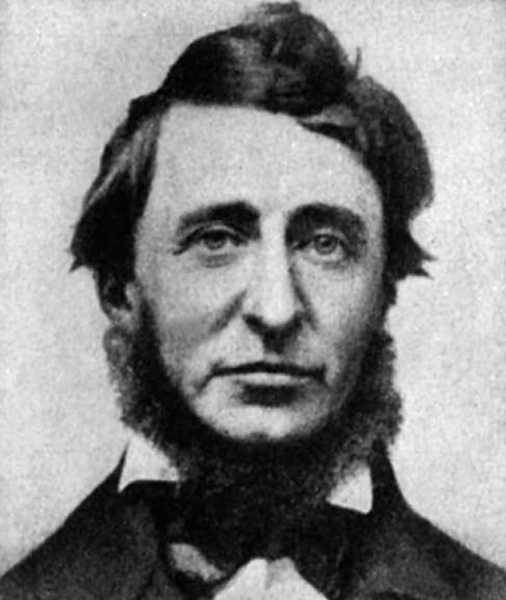
Colonel Theodore Roosevelt
Commander of the First U.S. Volunteer
Cavalry Regiment (Aka: The Rough Riders)
Spanish American War, 1898
That's OKAY!  

It is not necessary to check every single IDEAL "Box" in order to progress in your own Existential Growth. A host of life difficulties and challenges reminiscent of the "Refining Stage" can (and often will) arise across a spectrum of life stages to make life messier than you'd like and otherwise throw "Curve Balls" that complicate, interrupt, and disrupt well laid-out dreams and hopes and plans. When that happens, as it assuredly will for all of us in various ways, don't despair!

Just keep going and remain ever committed to doing the best you can with what you have where you are.   


"Do the best you can with what you have where you are."  

Theodore Roosevelt


IDEAL case studies are presented here not to make you feel undo pressure, stress, or to unduly influence you to compare yourself with others, but simply because IDEALS serve as loadstars to which we can principally and collectively hitch our wagons. 

After all, the purported value of IDEALS is a fundamental hallmark of this entire Life Leadership textbook. Thus, I invite you to derive inspiration and motivation therefrom.  

It is also important to remember that while failure to realize an IDEAL may sometimes be the result of bad luck or unfortunate birthing or other unfavorable life circumstances beyond your control, sometimes the exact opposite is the case. In other words, sometimes you fail to realize an IDEAL because of a very real moral failure or other preventable blunder for which YOU must ultimately take complete personal responsibility.

In the case of the former scenario, do your best with what you have and make peace with your imperfect reality—while always striving to improve that reality in the direction of an IDEAL. In the case of the latter scenario, take complete responsibility for your own unwise past decisions and then do the best you can to make the best of your present and future.

In all situations, you cannot change the PAST. As such, your best will always involve moving forward with determination, persistence, and positivity toward a brighter FUTURE.    


In Your Journal

  • What pathway (career / lifestyle) lies in your mind, heart, and soul? 
  • What pathway (personal / family) lies in your mind, heart, and soul?
  • If you make it to the Creation Stage, what would you like to contribute and/or create?


Dr. JJ

Wednesday, October 16, 2024
Palm Beach Gardens, Florida, USA


Author's Note: This is the 412th Blog Post Published by Freedom Focused LLC since November 2013 and the 221st consecutive weekly blog published since August 31, 2020.   

Click HERE for a compete listing of the other 411 FF Blog Articles 

Click HERE for a complete listing of Freedom Focused SAL QUOTES  

Click HERE for a complete listing of Freedom Focused SAL POEMS   

Click HERE to access the FULL TEXT of Dr. JJ's Psalms of Life: A Poetry Collection

Click HERE for a complete listing of Self-Action Leadership Articles

Click HERE for a complete listing of Fitness, Heath, & Wellness Articles

Click HERE for a complete listing of Biographical & Historical Articles


Click HERE for a complete listing of Dr. JJ's Autobiographical Articles

.........................

Tune in NEXT Wednesday for another article on a Self-Action Leadership related topic.  

And if you liked this blog post, please share it with your family, friends, colleagues, and students—and encourage them to sign up to receive future articles for FREE every Wednesday.

To sign up, please email freedomfocused@gmail.com and say SUBSCRIBE, or just YES, and we will ensure you receive a link to each new blog article every Wednesday.  


Click HERE to buy the SAL Textbooks  


Chapter 21 Notes

Wednesday, October 9, 2024

CREATION Stage


Chapter 20


CREATION Stage


LAYER 9:  Planets and Stars Beyond

As you travel beyond Earth's atmosphere into deep outer space, an innumerable host of astronomical bodies—namely planets and stars—are housed within different space classifications known as superclusters, local groups, galaxies, solar systems, asteroid belts, stars, planets, moons, comets, space stations, etc.

All of these objects or collections of objects can be found throughout the Universe in various stages of creation and expansion or contraction and destruction. 


LEVEL 9:  CREATION Stage 

Something truly wonderful awaits YOU on your journey beyond the realms of Self-Transcendence. 

That something is the CREATION STAGE, where you get to take a prominent—even a leading—role in creating new ideas, things, relationships, families, organizations, communities, states, regions, nations, and even the world-at-large in the form of global-enhancing projects.

These creative pursuits are likened to the creation of various astronomical bodies throughout the universe.

In the Creation Stage, you have acquired and/or honed all of the abilities, experience, knowledge, skills, talents, and wisdom necessary to become a builder of structures and/or organizations, a creator of constitutions and cultures, a producer of philosophies, and—most importantly—an influencer and molder of human lives and relationships.

In this most important realm of your life's work, YOU spearhead the Existential Growth and development of other self-action leaders in hopes of helping them to one day join you as a Self-Transcended being in the Creation Stage themselves.

In the Creation Stage, there is no longer any jealous threat of competition, and one-upmanship ceases to exist. Self-action leaders in the Creation Stage value each other as much as they value themselves, and they take as much joy and satisfaction in the creations of others as they do in their own—if not more so.

Men and women like Jesus, the Buddha, Confucius, Muhammad, Gandhi, Mother Teresa, and Florence Nightingale created whole new religions or movements upon entering the Creation Stage. In short, they changed the world in significantly positive ways. 

Many other men and women have done likewise throughout human history. While their names are not always widely known to history, the nature and kind of their accomplishments and creations are possessed of a similar substance to those whose names are commonplace. Moreover, the quantity of ordinary men and women who achieved extraordinary Existential Growth, development, and achievements—up to and including the Creation Stage—dwarfs the number of men and women who did so and are well known to history. As such, don't fall prey to the erroneous notion that you must ink a salient or prominent mark on the history books in order to reach this lofty existential status.    

Self-action leaders who arrive at the Creation Stage change the world and make it a better place in which to live and work. You can usually identify these people because they possess lasting legacies that are burnished ever brighter with the passage of time. These remarkable and venerable individuals achieved their masterpieces through commitment, consistency, constancy, continency, and continuance to the end.    

Depending on the scale and scope of one's visibility and influence in a social setting, such contributions may impact circles ranging from small groups of people (relationship, home, neighborhood, organizational) to immense masses (state, nation, world). 

The reason that Buddha, Christ, Confucius, Muhammad, et cetera, are so well known is because they combined substance with a massive scale and scope. But remember: the scale and scope of one's influence or creations is not nearly as important as the substance thereof.  


Financial Standing as a Metric for

Measuring Existential Growth

In general, financial status can be a useful metric by which to judge Existential Growth; but it is an imperfect and often unreliable method. This is because some people obtain wealth through avarice and other morally dubious means and then use their wealth for selfish and/or nefarious purposes.

In short, there are almost always exceptions to any given rule.

Nevertheless, the general rule is that financial solvency, security, success, independence, and prosperity/affluence can be meaningful benchmarks for measuring Existential Growth. This is only true, however, when wealth is earned honestly through productive industry that benefits others.

Wealth that was merely inherited or gambled into likely has little, if any inherent positive effect on your Existential Growth. In many such cases, money may even contribute to your existential atrophy and regression.

While many exceptions exist, the Beginner's Stage is typically marked by financial dependence on one's parents/initial caregivers. If you're on your own, you are likely struggling to make ends meet, as I was at that point in my life.

Basic financial stability is typically reached in the Practitioner's Stage, but may be challenged again in the Refining Stage. 

A more solid and reliable means of financial stability and security is typically reached in the Polishing Stage. From there, a self-action leader may become increasingly secure along one's way to financial independence and/or prosperity and affluence as they progress to higher levels up to and including the Creation Stage. Many, but not all, self-action leaders who reach the Leadership Stage and beyond are financially independent. 

As you reflect upon these approximate benchmarks, always keep in the forefront of your mind the possibility for legitimate exceptions to exist.

Suffice it to say, one can rise to the highest levels of Existential Growth without being financially wealthy, even though fiscal well-being often is a hallmark of such development and growth.  

In the next chapter, we will provide three case studies in order to further illustrate and illuminate the SAL Hierarchy's NINE different levels (or stages) in the dynamic interplay of real life. 


In Your Journal

  • Would you like to someday rise to the Creation level? Why or why not? 
  • Are you willing to pay the high price required to rise to the Creation level? Why or why not?
  • What are ways that we can help each other rise to this lofty level of Existential Growth?  


Dr. JJ

Wednesday, October 9, 2024
Palm Beach Gardens, Florida, USA


Author's Note: This is the 411th Blog Post Published by Freedom Focused LLC since November 2013 and the 220th consecutive weekly blog published since August 31, 2020.   

Click HERE for a compete listing of the other 410 FF Blog Articles 

Click HERE for a complete listing of Freedom Focused SAL QUOTES  

Click HERE for a complete listing of Freedom Focused SAL POEMS   

Click HERE to access the FULL TEXT of Dr. JJ's Psalms of Life: A Poetry Collection

Click HERE for a complete listing of Self-Action Leadership Articles

Click HERE for a complete listing of Fitness, Heath, & Wellness Articles

Click HERE for a complete listing of Biographical & Historical Articles


Click HERE for a complete listing of Dr. JJ's Autobiographical Articles

.........................

Tune in NEXT Wednesday for another article on a Self-Action Leadership related topic.  

And if you liked this blog post, please share it with your family, friends, colleagues, and students—and encourage them to sign up to receive future articles for FREE every Wednesday.

To sign up, please email freedomfocused@gmail.com and say SUBSCRIBE, or just YES, and we will ensure you receive a link to each new blog article every Wednesday.  


Click HERE to buy the SAL Textbooks  


Chapter 20 Notes


Wednesday, April 3, 2024

What is the SAL Philosophy?


FranklinCovey Co-Founders Collection
Dr. JJ's Personal Library

Book the Third

The Self-Action Leadership Philosophy


Dedicated to...

Dr. Stephen R. Covey and M. Scott Peck, M.D.

M. Scott Peck, M.D. Collection
Dr. JJ's Personal Library
More than any other single authors, Doctors Covey and Peck taught and then reinforced for me the importance, value, and honor of taking complete personal responsibility for everything in my life that I can either control or influence. I will forever be grateful to them for The 7 Habits of Highly Effective People and The Road Less Traveled and enthusiastically commend these classic works to YOU, the reader, as two of the most important and influential books in the history of the modern self-help movement and in the creation of this comprehensive Life Leadership textbook.     


"In the long run, we shape our lives, and we shape ourselves. The process never ends ... And the choices we make are ultimately our own responsibility."

Eleonor Roosevelt


Chapter 1


What is the SAL Philosophy? 


The SAL philosophy can be summed up in two simple words:


Personal Responsibility


There is, of course, more to it that just that, but the philosophical essence of SAL really is that basic. It involves: principles, practices, and premises that promote taking complete personal responsibility for everything in your life that you can either control or influence.  


SELF-ACTION LEADERSHIP PHILOSOPHY

Principles, practices, and premises that promote taking complete personal responsibility for everything in your life that you can either control or influence.  


Postmodern Cultures of Complacency and Blame

Taking personal responsibility involves eschewing cultures of complacency and blame, which have grown rife amidst postmodern philosophies that promote hedonism, narcissism, and nihilism over self-restraint, service, and sacrifice. Indeed, we live in a world where far too many individuals blame other people and things for the results that they do, or do not, get in their lives. Instead of spending their time and energy searching after authentic solutions to their problems, the goal of these "blame-gamers" is to find a scapegoat for their failures and then throw a perpetual pity party for themselves—and whoever is willing to join them. 

Blame-gamers believe that their problems are everyone and everything else's fault, but never a result of their own bad decisions or irresponsible behavior. A blame-gamers troubles are never his or own fault; they are always the fault of one's ancestry, parents, siblings, extended family members, friends, coworkers, organization, boss, community, state, nation, world, government, history, God, DNA—or even one's "stars." 

As Henry David Thoreau—a pal of Emerson's—once remarked: As long as a man stands in his own way, everything seems to be in his way, governments, society, and even the sun and moon and stars, as astrology may testify." 


Henry David Thoreau
1817-1862

"Henry Thoreau made, last night, the fine remark that, as long as a [person] 
stands in his [or her] own way, everything seems to be in the way, governments, society, and even the sun and moon and stars,
as astrology may testify."

Ralph Waldo Emerson
(Quoting Thoreau in his Journal)


Please do not misunderstand.

I am not saying that external forces and internal variables do not play a role, and sometimes a significant role, in the circumstances and events of our lives; of course they do! This point will be thoroughly detailed and otherwise explicated in Chapter 7 of BOOK the THIRD, where 17 specific Life Leadership variables are identified and addressed.

There is no question that bad things do happen to good people beyond their control. However, human beings always possess the liberty to choose what they are going to think about, say, and do NEXT. And since YOU and I are both human beings, I am talking about us.

Therein lies the essence and power of Self Action Leadership!

It has been said that you can't always control how you feel, but you can control what you think about, say, and do about how you feel; and therein lies the power to regulate and modulate your emotional state over time. 

Regardless how YOU or I may feel at any given moment in time, we are always free to respond to what happens to us.  This is just one of many things that existentially elevates us above the rest of the animal kingdom.

Herein lies the essence and power of Emotional Intelligence, which is a crucial element of SAL!  


SAL Mantra

You can't always control how you feel.
But you can control what you think about, say, and do about how you feel. 


As human beings, YOU and I possess the liberty and power to proactively choose how we will respond to people, things, circumstances, and events in our lives. Unlike animals, we are not destined to react in predetermined, Pavlovian, and mercurial fashion to the exigencies, crises, and trials of life. 

YOU and I are always at liberty to decide how we will respond to any and every situation and circumstance in our lives and careers. The more effectively we exercise that liberty, the more our external circumstances will improve over time.  

One of my favorite high-profile examples of personal responsibility in action over time is Oprah Winfrey, a mega-media mogul from the United States. Oprah is the first African American woman to become a billionaire. 

Yes, that's billionaire with a "B." 

Oprah has directly blessed and/or influenced hundreds of millions (if not billions) of people as an actress, talk show host, and philanthropist. Most, if not all, educated adults the world round know who Oprah Winfrey is and what she has accomplished. She is one of the most famous, powerful, and remarkable women who has ever graced planet Earth. 

What some do not know about Oprah is that she was born into poverty in one of the poorest states in America in the 1950s, when prejudice and segregation against Blacks was still institutionalized and deeply imbedded in American culture. And her troubles didn't end there. Oprah's childhood and adolescence was marked by a variety of crucibles, including sexual abuse. 

Oprah's thorny start in life did not portend the kind of beauty, grace, and greatness she would eventually achieve. Nevertheless, give a determined self action leader like Oprah a few decades of time and the liberty to direct her own thoughts, speech, and actions, and she'll rise up and change the world. Along the way, she found a way to transcend anything that life tried to throw at her. 

Instead of giving in to social pressures around her and becoming a victim of circumstance, Oprah chose to change, grow, and become increasingly free until she not only made her mark on the world, but has in fact helped to change the world in positive, meaningful, and lasting ways in the process.  

Oprah's inspiring story reminds me of the words of Napoleon Hill, the famous author of the best-selling book: Think and Grow Rich. Said Hill: Before success comes in any man's life, he is sure to meet with much temporary defeat, and perhaps some failure. ... Remember that all who succeed in life get off to a bad start, and pass through many heartbreaking struggles before they "arrive." (1)


"Before success comes in your life, you are sure to meet with much temporary defeat, and perhaps some failure. ... Remember that all who succeed in life get off to a bad start, and pass through many heartbreaking struggles before they 'arrive.'"

Napoleon Hill


My own journey to success was very different from Oprah's, but one component of our respective journeys was very similar: we both met with much temporary defeat, failure, and passed through many heartbreaking struggles before we arrived—just as Napoleon Hill said we would. And, so it will be with YOU or anyone else who succeeds in any significant way. 

There simply are no shortcuts to authentic change, growth, happiness, success, fulfilment, or inner peace. 

        Everyone must pay the price these desirable states demand!

Oprah's life is a remarkable demonstration of the power of consistently exercising personal responsibility over long periods of time. If YOU are willing to make the same kind of commitment to your own growth and freedom, it doesn't matter who you are, you will eventually earn the same kind of growth as Oprah. This fact does not mean, of course, that everyone who makes such an effort is guaranteed to become a billionaire talk show host.

But that's okay!

        Why is it okay?

Because the focus of Self-Action Leadership is not aimed at inter-personal competition against rivals; the focus of SAL is on intra-personal growth, freedom, achievement, fulfillment, and inner peace. We are all different beings with a unique toolbox of gifts, talents, abilities, and desires. As such, the very best SAL efforts of one person may result in a very different life picture than the very best SAL efforts of another person. In the end, however, both pictures have the potential of being equally and exquisitely—albeit ultimately incomparably—beautiful. 

Theodore Roosevelt
1858-1919
Self action leaders understand the long-term futility in comparing themselves with others. They recognize the wisdom of Theodore Roosevelt, who once quipped that: Comparison is the thief of joy.


"Comparison is the thief of joy."

Theodore Roosevelt


Avoid stealing your own happiness, peace, and contentment by continually conditioning such priceless states on comparisons with others. Instead, invite these wonderful things into your life in increasing measures by simply being the best YOU that you are capable of—and conditioning your joy on that and that alone.

It won't always be easy to accomplish this skill; after all, it is human nature to compare ourselves with others. But if you are serious about SAL, it is a skill you will keep practicing until you have mastered it.
 
Along the often arduous, circuitous, lengthy, and steep pathways of your own existential journey towards growth and freedom, YOU—like Oprah—must remain determined, consistent, persistent, and patient. In the words of Napoleon Hill, "when defeat overtakes a [person], the easiest and most logical thing to do is to quit, [and] that is exactly what the majority of [people] do." (2)

Some (and perhaps many) people will try to convince you that Oprah Winfrey (and others like her) is an outlier and that "cherry-picking" her as an example of success to hold up to inspire others is unfair and unrealistic. And you know what? If you believe this is true, it will be true for you and you will never rise to the full stature of your potential. 

But if you believe that you can succeed in significant ways in life—like Oprah—and are willing to pay the price that significant success demands, then the sky really is the limit. In the end, the greatest constraints and limitations you will face in life are the ones you choose to place upon YOURSELF in conjunction with the restrictions you allow others to place upon you. 

Don't allow yourself to be so limited and constrained! 

        Declare your INDEPENDENCE from mediocre minds and related voices in your own head.  

If you are blessed with the opportunity to learn about Self-Action Leadership and possess the ability and health to implement its practices, yet still find yourself mired in the same—or worse—circumstances at the end of your life as you were at the beginning of your life, you really have no one to blame but yourself. In the words of Dr. Stephen R. Covey: We are responsible for our own effectiveness, our own happiness, and ultimately, I would say, for most of our circumstances. (3) 


"We are responsible for our own effectiveness, our own happiness,
and ultimately, I would say, for most of our circumstances."

Stephen R. Covey


You will notice in the above quote that Covey says "most" of our circumstances. Not all; but most. It is quite true that you can't change where you started out in life. You also cannot prevent all bad things from happening to you against your desires and will. Life often isn't fair—especially in the short run; that's just the way things are! 

There is nothing you can do to change your ancestry, birth, early years, or other past experiences and choices. But there is much you can do to shape your present and future decisions and thereby dramatically influence a more positive and productive long-term trajectory for your life and career.  

Generally speaking, you have TWO (2) primary choices after YOU are born into this world. The FIRST option is to complain about your lot in life and blame others for your misfortunes. The SECOND option is to take advantage of every opportunity and resource you have access to in an effort to learn and grow as much as you can with what you have. 

You can either view your life and career as fixed and unalterable realities, or you can do the best you can with what you have and watch it gradually evolve into a brighter future. 

The choice really is YOURS!

I eagerly encourage you to take the latter route, even—and especially—if you have been unjustly treated by individuals, groups, or culture and society-at-large in the past. While some people (or peoples) legitimately have had, do have, and will yet have a harder "row to hoe" than others, all of us have received the proverbial "short end of the stick" in one way or another. 

Constantly comparing ourselves with others is counterproductive to realizing your full potential; and as Theodore Roosevelt so incisively reminds us, it robs you of joy as well!

"REPUBLIC DAY," which Gandhi
helped make possible, is celebrated
by Indians on January 26th.
No matter where you came from or what you did (or didn't) have when you started off in life, we ALL have opportunities to exercise proactive Self-Action Leadership in the face of difficulties, injustice, and unfairness. Oprah didn't transcend poverty and abuse by merely cursing her abusers and condemning injustices in American society. 

Similarly, Gandhi did not secure freedom for the Indian people by condemning the English Royal Court, the British Raj, or the British Empire-at-large. Martin Luther King, Jr. and his colleagues didn't succeed in garnering civil rights for African Americans by simply trumpeting the grievances of racism, discrimination, disenfranchisement, and slavery. 

While all three of these great leaders could have easily felt justified in complaining about how hard they and their people had it, they were honest and humble enough to accept, and smart enough to realize, that just complaining would not lead to a better life for them or their people. These inspiring leaders understood that the pathway to a better life always lies in education, personal growth and development, and the cultivation of valuable skills and talents—in other words, in Self-Action Leadership—especially in the face of indignity, injustice, unfairness, and slander. 

They understood that freedom is not found in criticizing, condemning, and complaining; it comes from doing, creating, and contributing. In the words of Vince Lombardi—that famous Green Bay Packers championship football coach: The measure of who we are is what we do with what we have.


"The measure of who we are is what we do with what we have."

Vince Lombardi


Oprah, Gandhi, and MLK all chose a higher pathThe Road Less Traveled—whereby they opted to "never breathe a word about their loss[es]," (4) while concurrently working extremely hard, avoiding excuse-making, and determining to never, ever, ever give up. The result was that these three individuals—and others like them—changed the world in positive ways that left indelible impacts on society that our generation, and generations yet to come, will forever admire and learn from.


"Two roads diverged in a wood, and I
I took the road less traveled by,
And that has made all the difference." (5)

Robert Frost


I have tremendous admiration and respect for the exemplary courage, remarkable leadership, and considerable achievements of these extraordinary individuals and all those who have trodden a similar pathway through life. I encourage you to study their lives in order to learn from and be inspired by their incredible examples.  

Sadly, in today's postmodern world, many so-called leaders of various causes disregard the examples of Gandhi, MLK, and Oprah. These so-called leaders have proliferated a cultural vat of victimization to the point of establishing entirely new academic fields and industries whose life-blood feeds on the recycled rhetoric of past grievances, the unjust exaggeration, manipulation, and exploitation of outlying incidents in the present, and fatuously frenetic fearmongering for the future. 


The Greatest Opportunity in the World

A great religious leader once taught that next to life itself, the greatest blessing and opportunity that each of us possesses is the freedom to direct that life. (6) There is no more important information than the knowledge that empowers you to effectively lead your own life and then positively influence others to effectively lead theirs. It is wonderful beyond measure to possess such liberty and potential. 

But, as is always the case, preserving communal liberty and earning individual freedom always comes with a price that must be paid for in time, effort, and sacrifice. Whether you know it or not and whether you like it or not, natural consequences always flow from every thought, word, and deed you ever think about, say, and do. 

Regardless where or how you start out in life, or what happens to you along the way beyond your immediate control, you remain sovereign over your individual choices (responses).

This means that...

        Nothing goes until YOU go;

                Nothing works until YOU work;

                        Nothing happens until YOU start happening!

I invite you to go to work TODAY by standing firm in your commitment to read and carefully study the rest of this Life Leadership textbook, complete the SAL Master Challenge, and then continue to personify its principles by animating its practices for the rest of your life. 

If you will do these things, your life will start to happen in ways you had never before believed, or had only dreamed of in the past.


SAL Mantra

Nothing goes until YOU go.
Nothing works until YOU work;
Nothing happens until YOU happen!   


In Your Journal


  • What can you do beginning TODAY to more fully take personal responsibility for the direction of:
    • Your life?
    • Your career?
    • Your relationships?
    • Your long-term legacy as a human being?


Dr. JJ

Wednesday, April 3, 2024
Palm Beach Gardens, Florida, USA


Author's Note: This is the 382nd Blog Post Published by Freedom Focused LLC since November 2013 and the 193rd consecutive weekly blog published since August 31, 2020.   

Click HERE for a compete listing of the other 381 FF Blog Articles 

Click HERE for a complete listing of Freedom Focused SAL QUOTES  

Click HERE for a complete listing of Freedom Focused SAL POEMS   

Click HERE to access the FULL TEXT of Dr. JJ's Psalms of Life: A Poetry Collection

Click HERE for a complete listing of Self-Action Leadership Articles

Click HERE for a complete listing of Fitness, Heath, & Wellness Articles

Click HERE for a complete listing of Biographical & Historical Articles


Click HERE for a complete listing of Dr. JJ's Autobiographical Articles

.........................

Tune in NEXT Wednesday for another article on a Self-Action Leadership related topic.  

And if you liked this blog post, please share it with your family, friends, colleagues, and students—and encourage them to sign up to receive future articles for FREE every Wednesday.

To sign up, please email freedomfocused@gmail.com and say SUBSCRIBE, or just YES, and we will ensure you receive a link to each new blog article every Wednesday.  


Click HERE to buy the SAL Textbooks    


Chapter 1 Notes:

1.  Hill, N. (1960). Think & Grow Rich. New York, NY: Fawcett Crest. Pages 23 and 39.

2.  Hill, N. (1960). Think & Grow Rich. New York, NY: Fawcett Crest. Page 23.

3.  Covey, S. R. (1989). The 7 Habits of Highly Effective People: Powerful Lessons in Personal Change. New York, NY: Fireside. Page 93.

4.  Paraphrased line from Rudyard Kipling’s poem, If (stanza 3, line 4). 

5.  Concluding lines from Frost's famous poem, The Road Not Taken.

6.  McKay, D.O. (1950). Free Agency... A Divine Gift “Next to the bestowal of life itself, the right to direct that life is God’s greatest gift to man.”

Wednesday, February 7, 2024

The Age of Authenticism


Chapter 7


The Age of Authenticism 


The world has enough Fiction,
                                                Façade,
                                                            Farce,
                                                                      Fraud, &
                                                                                Facsimile.

The world needs more TRUTH and integrity.

        It needs more authenticity, and it needs it badly.

René Descartes
1596-1650
Life is REAL...

It is not a dream or mirage. It is not some ethereal hallucination we merely imagine is occurring. It is an authentic experience rooted squarely in reality that exists just as surely as YOU and me. As the famous French philosopher, Réne Descartes, so cogently argued some four centuries ago: I think, therefore, I am


"I think, therefore I am."

Réne Descartes


There are a lot of philosophies and ideologies out there willing to fill your mind with fiction and fear. My job in creating this Life Leadership textbook is to fill your mind with facts and FAITH—faith in Universal Laws and faith in your own capacity to understand and abide by the True Principles that accompany them.

At Freedom Focused, we further aim to fill your mind, heart, and soul with HOPE—hope for the endless happiness and blessings that eventually accompany authentic personal and professional freedom and growth.  

As human beings our experiences are shaped and ultimately defined by the choices we make. Regulated by the passage of time, right choices will result in success, happiness prosperity, and most importantly, freedom. On the other hand, wrong choices will result in failure, misery, penury, and bondage.

In the final analysis, life really is that simple—not to be confused with that easy

Human beings have a remarkable capacity for creativity and stubbornness when it comes to making excuses for why things didn't, or aren't, turning out quite right in their lives. 

From blaming genetic predispositions, chemical imbalances, and mimetic influences to scapegoating structural inequities, past disadvantages, and bad luck—a wide swath of humanity seems convinced they are not to blame when their state of mind, heart, body, career, or life is in disarray or distress. 

While past and present life adversities and unfairness present real challenges that should be appropriately addressed insofar as possible, they don't have to completely define your life's story—unless you choose to let them.  

Things typically turn out badly for those who harbor a victim's mentality. In the mind of a victim, undesirable life scenarios and circumstances are always the fault of someone or something else. Such is the distorted belief system of those inhabiting the bubble world of blame. 

In reality, the results you get in the long-run are determined with quasi-mathematical precision by the choices YOU make. There are, of course, legitimate exceptions to this overarching generalization, something I'll discuss at great length in BOOK the THIRD, Chapter 7, which is entitled: Life Leadership Variables

Nevertheless, the universal Law of the Harvest—as you sow, so shall ye reap—remains an irrevocable and effervescent truism that can never be wished away by the whimsy of mankind's sometimes flimsy intellect and mercurial inclinations. 

This particular "True Principle" is further illuminated by the "Karma concept," which posits that, what goes around comes around, or, put another way: whatever you send out into your life will inevitably boomerang right back to you... with interest!

Making right choices is not always that easy

But the formula for achieving lasting success in any life arena is that simple

Fortunately, Universal Laws exist, govern absolutely, and provide a sure way to happiness, success, and freedom. They are also relatively easy to understand. 

If you are interested in becoming a self-action leader, the time has come for YOU to stop making excuses for your personal problems, inadequacies, and failures, and begin taking complete personal responsibility for everything in your life that you can either control or influence. 

I recognize this is a very black-and-white way of looking at a world ever colored in a spectrum of situational grays. Such circumstantial cloudiness can create profound ambiguity about the way things really are in the world and universe. In the midst of such mortal mystifications—which we all must pass through—dark distortions and dour delusions often seem like horrifying realities. The only escape from the ashen lenses through which we all must peer in this world lies in right thinking, speaking, doing, and being.

There is no other way.

        The principle is that simple in theory. 

                And the application is that difficult in practice.  


The Need for Unsophisticated Truisms

I am aware how naĂ¯ve and provincial such statements sound to many in our postmodern world, and that is precisely what makes them so beautiful, profound, and desperately needed throughout our troubled nation and planet.  

The world has enough sophistication and rationalization; it needs more common sense and integrity. It has enough selfishness and hedonism; it needs more self-restraint and honor. It has enough sarcasm and greed; it needs more sincerity and goodness. It has enough deception and derision; it needs more truth telling and encouragement. The world has enough fake; it needs more real. It has enough authoritative caricature; it needs more authentic character.  (1)

In short, the world needs more self-action leaders, and the key to their development and proliferation lies in the pedagogical promotion of basic, unsophisticated truisms rooted in common sense. 

That is what SAL principles and practices offer. 


A Critique of Postmodernism

Postmodernism is a term assigned to an influential intellectual and cultural movement that has had a tremendous impact on academia, politics, entertainment, fashion, and virtually everything else  in the Western World since World War II. Postmodernism posits that nothing really exists except that which is constructed through language, perceived through our limited senses, or that which is decreed by postmodernists themselves to be real, or true.

Postmodernism turns traditional notions of "Right" and "wrong"—and morality in general—on its head. To a postmodernist, there really isn't any right or wrong in any absolute sense. Instead of fixed and irrevocable truisms rooted in Universal Law, postmodernists see right and wrong as subjective terms that may be flexibly applied to different situations based on arbitrary agendas and personal pet (or political) projects.

Simply stated, postmodernism (aka poststructuralism) is: an over-zealous philosophical ideology that denies and discredits the existence of moral absolutes.


POSTMODERNISM / POSTSTRUCTURALISM

A philosophical ideology that denies and discredits the existence of moral absolutes.


Vestiges of postmodern philosophy can be observed in academe, politics, and culture throughout the Western World and beyond. The entertainment industry is particularly preferential of postmodern premises, evinced by their common iteration and reiteration in screenplays and musical lyrics. 


"We don't need no education
We don't need no thought control ...
Hey! Teacher, leave them kids alone."

Pink Floyd
From their hit song, Another Brick in the Wall, Part 2


"Pay my respects to grace and virtue
Send my condolences to good...
Wave goodbye ... You got to let me go."

The Killers
From their hit song, Are We Human?


"Nothing really matters
Anyone can see ...
Nothing really matters to me." 

Queen
From their hit song, Bohemian Rhapsody?


Principles of postmodernism promote a convenient credo of moral relativism, thus affording human beings with pretended power to redefine moral principles to suit their own capricious conceptions of Right and wrong. However sophisticated or well-intentioned its authors and acolytes may be, the fruits of foraying into postmodern premises and practices have been frighteningly foul in the past, perennially perverted in the present, and point to an ever darker and foreboding future. 

Wittingly or not, postmodernists seek to elevate human beings into godlike figures with the power to determine what is and isn't real on the contradictory premise that nothing really is anyway, except that which is critically constructed by language and the pompous proclamations of postmodernists themselves. And speaking of critics and criticism, postmodernism is full of both; after all, the movement is largely rooted in philosophical and literary criticism.

The problem with critics is that they are almost always "Big talkers, but Little doers."


"Big talkers, little doers."

Benjamin Franklin


The cultural "produce" harvested from the "gardens" of postmodernism consists largely of selfishness, hedonism, narcissism, nihilism, confusion, and hopelessness. 

Not exactly an honorable track record!

With the perpetual production of such unsavory fruit, one must wonder why Western society has—for the past 80 years—embraced postmodernism with such an ironically evangelical zeal. 

Technological advancements, the Information Age, and the end of widespread agrarianism were bound to clamor for a contrast to erstwhile intellectual fashions and foundations. But sadly, their vacuously inauthentic product—bereft of any basis in reality—has borne the bitter fruit of a rotten crop.  

The aim of Self-Action Leadership is not to create critics, but to develop doers. It seeks to teach and train those whose desires lie not outside the stadium in the cirque du critique, but inside the arena on the PLATFORMS of PERFORMANCE.

In the inspired and ennobling words of Theodore Roosevelt:
"It is not the critic who counts; not the man who points out how the strong man stumbles, or where the doer of deeds could have done them better. The credit belongs to the man who is actually in the arena, whose face is marred by dust and sweat and blood; who strives valiantly; who errs, who comes short again and again, because there is no effort without error and shortcoming; but who does actually strive to do the deeds; who knows great enthusiasms, the great devotions; who spends himself in a worthy cause; who at the best knows in the end the triumph of high achievement, and who at the worst, if he fails, at least fails while daring greatly, so that his place shall never be with those cold and timid souls who neither know victory nor defeat."  (2)
As Bryant S. Hinckley once noted: Cynics do not contribute, skeptics do not create, doubters do not achieve


"Cynics do not contribute, skeptics do not create, doubters do not achieve."

Bryant S. Hinckley


Following World War II, the West entered a period of largely uninterrupted prosperity. These good times have blessed the United Statesand the rest of the world—with the opportunity to develop an intellectual class of unprecedented size and scope. It has also afforded society with an unprecedented acquisition of both riches and leisure time. 

These developments have provided legions of individuals with opportunities and mobility hitherto unknown in the annals of human history. But as is often the case, blessings often carry the seeds of accompanying curses, which must be carefully guarded against lest they spoil the fortune and favors. 


Again, in the incisive words of Roosevelt:
  

Anyone can stand around and criticize the work of others.
Real credit should go to actual artists who produce the work.
"There are certain failings against which it is especially incumbent that both [people] of trained and cultivated intellect, and [people] of inherited wealth and position should especially guard themselves, because to these failings they are especially liable; and if yielded to, their—your—chances of useful service are at an end. Let the [man or woman] of learning, the [person] of lettered leisure, beware of that queer and cheap temptation to pose to himself and to others as a cynic, as the [person] who has outgrown emotions and beliefs, the [person] to whom good and evil are as one. The poorest way to face life is to face it with a sneer. There are many [people] who feel a kind of twisted pride in cynicism; there are many who confine themselves to criticism of the way others do what they themselves dare not even attempt. There is no more unhealthy being, no [person] less worthy of respect, than he who either really holds, or feigns to hold, an attitude of sneering disbelief towards all that is great and lofty, whether in achievement or in that noble effort which, even if it fails, comes second to achievement. A cynical habit of thought and speech, a readiness to criticize work which the critic himself never tries to perform, an intellectual aloofness which will not accept contact with life's realities—all these are marks, not as the possessor would fain to think, of superiority but of weakness. They mark the [people] unfit to bear their part painfully in the stern strife of living, who seek, in the affection of contempt for the achievements of others, to hide from others and from themselves in their own weakness. The role is easy; there is none easier, save only the role of the [person] who sneers alike at both criticism and performance." (3)

While postmodernist thought originated largely amongst the philosophical and literary intelligentsia, its insidious messages of moral relativism soon spread to infect entire cultures and governments throughout the West and beyond with the popular, albeit patently erroneous, notion that there really isn't any absolute truth.

The result?

Legions were sucked into an infernal black hole of cryptic and convoluted intellectualism as its message crept into—and eventually cloaked—the balance of society and culture in the corrupt philosophy of anything goes

The collateral damage of this ideology to the moral pulse and existential progress of an entire planet has been, in many ways, calamitous—and in some cases, fatal. 

Postmodernism has even sought to rewrite history, or at least cast a negative shadow on some of history's greatest acts, actors, and achievements. Not all such aims have been bad. In some cases, history needed to be rewritten to reflect greater accuracy and holism in conjunction with removing some of the scales and shadows removed from some of its darker moments and secrets. 

In many cases, however, in an attempt to achieve unrealistic social justice goals such as equality of outcome, history has too often been deconstructed and recast to make the good guys (who were certainly not perfect) out to be fiends, while re-diagnosing some of the genuine devils as being merely misguided, mentally ill, mismanaged, or misunderstood—rather than the diabolical tyrants that they actually were

This Life Leadership textbook was written in part as a comprehensive response to the negative cultural consequences of postmodernism. It seeks to resurrect an academic accession of absolute truth along with its precious virtues of dignity, honor, self-discipline, self-restraint, self-reliance, individual liberty, personal freedom, and realism upon which all of history's lasting success stories were, are, and will yet be built. 

This text further seeks to champion these virtues in nations, governments, states, communities, organizations, schools, families, relationships, and most importantly: individual lives

I love my country—and the world at large—too much to stand idly by and watch it perish in the perfidious and profane pages of postmodern philosophy and philology. It took the better part of a century to get to the unstable place where we currently stand, and it will take several decades and much work to reverse the deep damage that has already been done.

The good news is the damage is not irreversible!

        Indeed, I believe my nation and world's best days are still ahead of us. 


Prestructuralism: Postmodernism's Polar Opposite

Postmodernism is an example of the philosophy embraced by the left-wing, liberal extremes in a society. But that is only one side of the danger. The far-right, conservative extreme can prove just as dangerous. While the pathways to these ideological polar opposites is extremely different, their terminal destination is, ironically, the same awful location—even that politically polluted place where liberty dies and freedom is suppressed. 

The term we use at Freedom Focused to describe postmodernism's philosophical inverse is PRESTRUCTURALISM, which is defined as: an over-zealous philosophical ideology that postures erroneous ideas as moral absolutes


PRESTRUCTURALISM

A philosophical ideology that postures erroneous ideas as moral absolutes.


Prestructuralism metaphorically refers to a state of mind or ideology that exists before a solid structure (philosophy) rooted in Universal Laws has been well established in a person's mind, or in a group, society, culture, or nation. It is a primitive state of morality marked by superstitions, false scientific conjectures, and perverted religious extremist paradigms.

Conversely, postmodernism metaphorically refers to a state of mind or ideology that exists after a solid structure rooted in Universal Laws has been eroded. It is a perverted scholarly version of morality that results when highly sophisticated academics try to rationalize away traditional moral structures and/or visceral wisdom (i.e. CONSCIENCE) rooted in Universal Laws that have stood the test of time.  

The answer to mitigating these two problematic polar extremes in thinking and seeing lies in identifying a virtuous BALANCE between prestructuralism and poststructuralism (aka postmodernism).

At Freedom Focused, we refer to this balance as MORAL STRUCTURALISM, or just structuralism for short. Moral Structuralism refers to: a balanced moral philosophy based on True Principles rooted in Universal Laws.


MORAL  STRUCTURALISM

A balanced moral philosophy based on True Principles rooted in Universal Laws.


Moral structuralism is a means of
BALANCING the extremes of 
prestructuralism and postmodernism
Moral structuralism represents an Aristotelian "Golden Mean," or balance, between the two extremes of prestructuralism and poststructuralism (or postmodernism). 

According to Aristotle, virtue will never be found in extremes, but rather in a balance between extremes. Aristotelian extremes include "deficiency"on one extreme end of a spectrum and "excess" on the opposite extreme end. 

Another name for the Golden Mean is the "Goldilocks Zone"—where things are "just right"in the middle ground between extremes.

PRESTRUCTURALISTS inhabit the "deficiency" extreme and suffer from a lack of rational thought. 

POSTMODERNISTS inhabit the "excess" extreme and suffer from rational thought gone awry.

MORAL STRUCTURALISTS inhabit the virtuous balance of Aristotle's Golden Mean between the two extremes and benefit from thought processes properly balanced between rationalism and visceralism (i.e. emotiveness and intuition).  

Prestructuralists err because their intellect fails to reach the mark. Postmodernists err because their intellect overshoots the mark. Moral structuralists, on the other hand, hit the intended mark—or as close to it as is humanly possible.  

And what exactly is "the Mark"?

"The mark" represents whatever goodness, rightness, truth, and virtue that is achieved by locating an ideal balance between prestructural and poststructural (or postmodern) extremes. 

While prestructuralists zealously promote false notions they claim are absolute, postmodernists seek to rationalize away absolutes entirely. Both prestructuralists and postmodernists are misguided in their approach and results because they are extreme and fall far afield of the happy medium or Golden Mean.

Moral Structuralists, on the other hand, are laser-focused on identifying what is absolutely true (or false) and then abiding by whatever correct moral structures they ascertain, discover, learn, observe, et cetera in a balanced way that appropriately takes into account reasonable and rational "exceptions to the rule." 

Two of the most poignant and salient historical examples of prestructuralism (far right political ideology) are Nazi Germany and Islamic extremist terrorists. Hitler's erroneous "truth" heralded his supposed superiority of the Aryan race. Islamic extremist terrorist's false "truth" sanctions the murderous killing of Christians, Jews, and other "heathens" (Westerners).  

A prominent historical example of postmodernism (far left political ideology) is the former Soviet Union. 

As Soviet communists made good on their efforts to eliminate dissent, squelch individual liberties, and control the press, truth itself began to die. The only "truth" that remained was the arbitrary messaging and iron-fisted will of the state apparatus. The result? Tens of millions of citizens and soldiers died in Stalin's far left famines and purges in the 1930sand then later against Hitler's far right military might in World War II in the 1940s.

Ironically, both extremes—despite their ideological polar opposition to each other—end up in essentially the same place, which always bears the hallmarks of tyranny, deceit, destruction, and death. After all, which is really worse in the end: Hitler or Stalin? Sane-minded persons will rightfully eschew both extremes.

Given the self-evident reality that a better way exists than either of these two calamitous extremes, readers can take hope in the possibility of a new age, even an age of Self-Action Leadership, or an AGE of AUTHENTICISM.  


The Age of Authenticism


The time has come for the candor and actuality of authenticity to eclipse the pernicious perjury and perfidious presumption of prestructuralism and postmodernism. 

It is time for something REAL.

The dawning of a new age—even an AGE of AUTHENTICISM—answers this clarion call of the cynical, sarcastic, synthetic, and sinful era in which recent generations have too long resided.

I cannot claim credit for coining this new term, but I concur with its originator—the British novelist Edward Docx—that "Postmodernism is dead," (4) or at very least has finally begun to atrophy around its cancerous core, which will eventually cave in on itself as it gradually crumbles into the diabolical dust from whence it was constructed.

At Freedom Focused, we believe history will eventually credit authenticism with transcending postmodernism and replacing it with something as new as it is old, and that remains perennially and effervescently vital; namely: character, courage, goodness, love, kindness, truth, and virtue in all of their authentic splendor. 

At Freedom Focused, we are absolutely committed to promoting and championing this new Age of Authenticism throughout the world, and invite YOU to add your passion, voice, and talents to our ever-increasing choir of self-action leaders.  

Self-Action Leadership is designed to serve as an intellectual exponent of this new movement that is rejecting "postmodernism with all its detachment and deconstruction," (5) and entering a nobler place where "some things are pure and some things are right." (6)

Postmodernism is the business of critics, curmudgeons, and power-hungry politicians and potentates. Similarly, prestructuralism is the business of tyrants, terrorists, and irrational fanatics. 

Moral Structuralism on the other hand—and the reality, truth, character, integrity, and authenticity that it spawns—is the business of principle-centered poets and self-action leaders. 

In the invigorating and inspiring prose of G.K. Chesterton:

"There is at the back of all our lives an abyss of light, more blinding and unfathomable than any abyss of darkness; and it is the abyss of actuality, of existence, of the fact that things truly are, and that we ourselves are incredibly and sometimes incredulously real. It is the fundamental fact of being, as against not being; it is unthinkable, yet we cannot unthink it, though we may sometimes be unthinking about it; unthinking and unthanking. For he who has realized this reality knows that it does outweigh, literally to infinity, all lesser regrets or arguments for negation, and that under all our grumblings there is a subconscious substance of gratitude. That light of the positive is the business of the poets." (7)

If you seek greater authenticity in your life and relationships, as well as throughout your nation and world, I invite you to join us in this fresh new movement of education and action that engenders real hope and leads to authentic change and growth. This place of light, of reality, of authenticity, is a glorious place to live and work. It is the promised land of hope and the real address of growth and change.

Most importantly, it is the gateway to both individual liberty and personal freedom.   

We at Freedom Focused further invite YOU to join us on this journey to truly authentic living—a land where all people possess opportunities that are both real and endless. There can be no greater opportunity, speaking individually or collectively.


Avoiding Victimization and Discouraging Grievance

Every human being has so much potential that it sincerely saddens me when I see victimization heralded and grievance trumpeted upon the rooftops while opportunity is but whispered—and especially in segments of society where opportunities are most scarce and hope is most vulnerable. 

Indeed, it bereaves all of us at Freedom Focused to see the best in human beings and communities being squandered on residual reflections on the worst that may have happened to individuals or groups in the past—or on real or perceived slights in the present. 

The time has come for society-at-large to spend less time talking about how oppressed some people were in the past, and spend a lot more time proclaiming how profoundly capable these same people are in the present—and how tremendously positive their potential is for the future if they are given the opportunity to learn SAL and apply it in concert with the grace, mercies, and powers of Serendipity.  

Instead of crying out about limitations, let's proclaim from the tallest towers in the land how innately creative, talented, and intelligent all human beings are, and how limitless their potential is when properly taught, positively encouraged, productively directed, and rightly resourced.   

Let's spend less time telling people how hard they had it (or have it) and invest more time and effort in promoting their potential for transcendence and success—even in the face of great external difficulties or persisting structural inequities—if they are but given a chance to learn and then demonstrate a willingness and desire to diligently apply their acquired knowledge. 

Please don't misunderstand what I am trying to say here. I am not suggesting we ignore persisting structural inequities in society. Indeed, we must continually fight against the pernicious problems of bigotry, racism, sexism, xenophobia, and evil of all kinds wherever it nestles and festers. At the same time, however, we must be cautious of going to extremes in such crusades, lest we fall prey to the ironic trap of engaging in a reverse form of the very thing we claim to be fighting against. 

What I am suggesting is the promotion of a pedagogy of possibility as an alternative to the derailing dogma of grievance that has been proven to be such a prevailing co-conspirator with postmodernism to poison the waters of hope, optimism, and possibility for so many otherwise creative, intelligent, and capable human beings in our twenty-first century global society.  


Our Call for Widespread Cultural Change

The rooftop and bell tower cry of Freedom Focused, and our grand, overriding purpose of introducing Self-Action Leadership to the world, is our clarion call for widespread—even international—cultural change.

Nay; that is too weak. 

        Our call is for global cultural TRANSFORMATION. 

The societal renewal and reinvigoration we speak of will be rooted in self-renewal, and will occur ONE person at-a-time in absolute accordance with the free will of each individual. In other words, Freedom Focused will never coerce anyone to become a self-action leader. 

Attempting such a perverted pathway of conversion would not only compromise our own clearly proclaimed values, principles, and practices. Moreover, it would ultimately prove untenable—even impossible!  

While human beings can be coerced to say or do some things against their will at gunpoint or through fear or other threats, no one can ever truly be coerced to think or believe something against their own, free will. Our recognition of this great truth is so fundamental and primal that it undergirds everything we think about, say, and do as individuals and an organization.  

We can promote, persuade, instruct, and invite... but never force Self-Action Leadership. 

Nor will we ever try to do so.  

Over time, as the numbers and quality of self-action leaders willingly increases, said individuals will eventually lead to organizational, national, and then international reformation, reinvigoration, restoration, reimagining, and finally reinventing. As a result, and despite whatever challenges and calamities we may collectively face in the years ahead, individual self-action leaders have every reason to be hopeful, optimistic, and even excited about the future. 

I am under no illusions about the difficulty of the task that lies before us. 

Cultural transformations do not happen overnight. 

It took many decades—eight (8) to be exact—for postmodernism to become sufficiently entrenched in academe and the media to pollute our culture to the point it has today. More recently, prestructuralist extremists have further complicated things with initiatives of an opposing extremity. It will, therefore, take at least a couple of decades for the AGE of AUTHENTICISM to effectively eclipse both prestructuralism and postmodernism and reverse their poisonous effects on a large scope and scale. 

In the meantime, the cycles of history suggest that we may in coming years be approaching another national and/or international calamity and conflict on part with the two World Wars and the economic Great Depression of the last century. 

Dubbed "the Crisis of 2020" by generational scholars William Strauss and Neil Howe, it is predicted that this pending crisis will occur sometime before the end of the 2020s and "will be a major turning point in American [and World] history." (8) At this "adrenaline-filled moment of trial" people everywhere "will feel that the fate of posterity—for generations to come—hangs in the balance." (9)

"The crisis will be a pivotal moment in the lifecycles of all generations alive at the time. The sense of community will be omnipresent. Moral order will be unquestioned with 'rights' and 'wrongs' crisply defined and obeyed. Sacrifices will be asked, and given. [We] will be implacably resolved to do what needs doing, and fix what needs fixing." (10)

History is not a perfect predictor of the future, and even if it were, self-action leaders understand the futility in living anywhere other than the PRESENT. Nevertheless, by seizing present moments to study the past and ready ourselves for the future, we will be better prepared to effectively combat whatever internal enemies or external foes that cross our path in days to come. 

However long it takes, our efforts to be victorious in this crucible-to-come, as well as our endeavors to transform culture into a place that values character, competence, and integrity—will be worth it. Moreover, the exhilarating journey that takes us to that promised land will be packed with opportunities for personal growth and positive relationship building at every turn.

We are excited about this journey and hope you will choose to join us for the ride of your life and/or career. Join us, and together we will travel ever-closer to our still unreached potential as a nation and planet. There can be no greater national or global quest, a crusade that beings with the ONE—with YOU and with me.

In the meantime, may each of us continually recall the timeless wisdom of one of the greatest self-action leaders the world has ever seen, who reminds us that: YOU must be the change you wish to see in the world.


"You must be the change you wish to see in the world."

Mohandas Gandhi


In Your Journal

  • Do you ever fall prey to mindsets of petty cynicism, unfair criticism, or irresponsible victimization? If so, how so, and what is something you could do beginning TODAY to rise above these negative and counterproductive mindsets?
  • Think about the last time you blamed someone or something else for the state of your education, career, relationships, or life. Do YOU bear any personal responsibility for your situation or circumstances being what they are? 
  • What is something you could do TODAY to change your thoughts, speech, or behavior in a way that would have a positive impact on your present circumstances over time?  

Dr. JJ

Wednesday, February 7, 2024
Palm Beach Gardens, Florida, USA


Author's Note: This is the 373rd Blog Post Published by Freedom Focused LLC since November 2013 and the 185th consecutive weekly blog published since August 31, 2020.   

Click HERE for a compete listing of the other 372 FF Blog Articles 

Click HERE for a complete listing of Freedom Focused SAL QUOTES  

Click HERE for a complete listing of Freedom Focused SAL POEMS   

Click HERE to access the FULL TEXT of Dr. JJ's Psalms of Life: A Poetry Collection

Click HERE for a complete listing of Self-Action Leadership Articles

Click HERE for a complete listing of Fitness, Heath, & Wellness Articles

Click HERE for a complete listing of Biographical & Historical Articles


Click HERE for a complete listing of Dr. JJ's Autobiographical Articles

.........................

Tune in NEXT Wednesday for another article on a Self-Action Leadership related topic.  

And if you liked this blog post, please share it with your family, friends, colleagues, and students—and encourage them to sign up to receive future articles for FREE every Wednesday.

To sign up, please email freedomfocused@gmail.com and say SUBSCRIBE, or just YES, and we will ensure you receive a link to each new blog article every Wednesday.  


Click HERE to buy the SAL Textbooks    


Chapter 7 Notes:

1. The literary style and rhythm in this paragraph—and others like it throughout this book—are borrowed from a similar style used in paragraph 16 of an October 2000 speech entitled The Joy of Womanhood, delivered by Margaret D. Nadauld. My thanks to Mrs. Nadauld for inspiring me with her stirring delivery and well-crafted prose.

2.  Roosevelt, T. (1910). Citizenship in a Republic. Speech delivered at the Sorbonne in Paris, France, on April 23, 1910. 

3.  Ibid.  

4.  Docx, E. (2011). Postmodernism is Dead. Prospect Magazine. 20 July 2011. URL: https://www.prospectmagazine.co.uk/essays/49336/postmodernism-is-dead

5.  Pastabagel (2011). Partial Objects (blog article). 19 August 2011. URL no longer available.

6.  Arcade Fire. (2010). Month of May. Written by: Win Butler, Regine Chassagne, William Butler, Tim Kingsbury, Richard R. Parry, Jeremy Gara.

7.  Chesterton, G.K. (2008). Geoffrey Chaucer. Cornwall, UK: House of Stratus. Page 15.

8.  Strauss W. & Howe, N. (1991). Generations: The History of America’s Future, 1584-2069. New York, NY: Quill (William Morrow). Page 382.

9.  Ibid.

10.  Ibid.  


JJ's Journal: 1981

    From the Personal Journals of My Father Rex Buckley Jensen  1981 Sunday, March 29, 1981 Annual School Picture Monticello, Utah September...