Showing posts with label JFK. Show all posts

Wednesday, October 23, 2024

The PRICE of Existential Growth


Chapter 22


The PRICE of Existential Growth 


In the previous chapter, the SAL Hierarchy and its NINE (9) levels or stages were introduced. In this chapter, we will discuss the PRICE of Existential Growth, which cannot be gifted, purchased, stolenor traded for; it must always be earned.


COROLLARY 10.3

Existential Growth cannot be gifted, purchased, stolen, or traded for; it must always be earned.


In this world, you can buy virtually any product, resource, or service if you have enough money.

That is not the case with Existential Growth!

Like any trait of character or other metaphysical commodity, Existential Growth must always be earned; that is just the way things are. 

Not even a billionaire can buy knowledge, skills, talents, morals, or good character. Such things must always be earned (developed) over time, and can only be acquired with the currency of effort, expended authentically and consistently in concerted ways.

In short, earning Existential Growth is challenging. It requires great effort, focus, and determination expended over time, and engenders anxiety and pain along the way.  


COROLLARY 10.4

Earning Existential Growth is challenging. It requires great effort, focus, and
determination expended over time and engenders anxiety and pain along the way.

Like compound interest, wealth in any area of life
requires patiently waiting for the rewards of GROWTH.
As Fyodor Dostoevsky so aptly put it: a new philosophy, a new way of life, is not given for nothing. It has to be paid dearly for and is only acquired with much patience and great effort


"A new philosophy, a new way of life, is not given for nothing. It has to be paid dearly for and is only acquired with much patience and great effort."  

Fyodor Dostoevsky


Vince Lombardi, that famous championship Head Coach of the Green Bay Packers during the 1960s, and Barry C. Forbes, echoed Dostoevsky's words, as follows: 


"Success is like anything worthwhile. It has a price. You have to pay the price to win
and you have to pay the price to get to the point where success is possible.
More important, you must pay the price to stay there."  

Vince Lombardi


"A price has to be paid for success. Almost invariably those who have reached the summits worked harder and longer, studied and planned more assiduously, practiced more self-denial, [and] overcame more difficulties than those of us who have not risen so far."  

Barry C. Forbes


M. Scott Peck corroborated Dostoevsky's, Lombardi's, and Forbes' truisms when he wrote:

"Attitudes [and beliefs and habits] have a kind of inertia. Once set in motion, they will keep going, even in the face of [conflicting] evidence. To change an attitude [or belief or habit] requires a considerable amount of work and suffering. The process must begin ... in a painful acknowledgment that what we thought was right all along may not be right after all. Then it proceeds into a state of confusion. This state is quite uncomfortable; we no longer seem to know what is right or wrong or which way to go. But it is a state of openness and therefore of learning and growing. It is only from the quicksand of confusion that we are able to leap to the new and better vision." (1)

As a boy, my father taught me that nothing in life worth having comes fast or easy. 

Dad was RIGHT!

Existential Growth requires time, effort, self-sacrifice, patience, and varying amounts and degrees of pain and other unpleasantness. 

There... is... no... other... way!

Those who acquire anything of real or lasting value have paid the price it demands and have therefore earned the rights and privileges that accompany its acquisition.  

This Life Leadership textbook invites YOU to do things you have never done before. It challenges you to stretch by privately examining your mind, heart, and soul deep below the fickle façades you may have diffidently donned and then flakily flaunted in public in the past.    

There is no way of getting around the discomfort of Existential Growth. It has been said that "hard work never killed a man; but it sure scared a lot of them!" 


"Hard work never killed anyone; but it sure scared a lot of 'em!"  

Anonymous


I can personally relate to this quote because I confess that I've often been afraid of hard work myself. This may come as a surprise because I am known for being a hard worker and have achieved a great many things in my life and career through my consistent, determined, and focused work ethic. 

But the fact is that sometimes hard work scares me. The important thing is that I have not let this fear stop me from moving forward and taking action. After all, courage is not the absence of fear, it is action in the face of fear. In the pithy parlance of the ole Western actor, John Wayne: Courage is being scared to death and saddling up anyway


"Courage is being scared to death
and saddling up anyway."  

John Wayne


This is one of my all-time favorite quotes for the simple reason that I have applied it so many times across my own life's varied and dynamic experiences; and in so doing, have discovered its beautiful and rewarding truth.

One dynamic and inspirational leader said the following about the virtues of hard work:

"Work is the miracle by which talent is brought to the surface and dreams become reality. There is simply no substitute under the heavens for productive labor. It is the process by which idle visions become dynamic achievements. I suppose that we are all inherently lazy. We would rather play than work. We would rather loaf than work. A little play and a little loafing are good. But it is work that spells the difference in the life of a man or woman or a boy or a girl. Children who are taught to work and to enjoy the fruits of that labor have a great advantage as they grow toward maturity. The process of stretching our minds and utilizing the skills of our hands lifts us from the stagnation of mediocrity." (2)

One of the reasons I include so many details of my own SAL journey in this Life Leadership textbook is because I want YOU to understand how hard I had to work and how much difficulty I was required to pass through to get to the wonderful places I stand today. I share this information because I want YOU to clearly understand that I can't merely luck my way into Existential Growth; and neither can you or anyone else.

I did not get to where I am today because I got lucky.

I became what I am today because I successfully passed through many soul-wrenching trials and was blessed by Serendipity all along the way.   

That is not to say I didn't enjoy many aspects of my journey; I did! But the journey was difficult and required my very best efforts in conjunction with a lot of patience and sacrifice. It required me to throw everything into the tasks at hand and hold nothing back; and it will require YOU to do the same. 

No matter who you are, or who your parents or friends are, and regardless of your SAL Variables Quotient, YOU must ultimately earn every fiber and sinew of what you become (minus the grace- and mercy-filled gifts of Serendipity). Existential Growth is a magnificent adventure; but it is not for the faint of heart or the weak of will. 

If you are reading this Life Leadership textbook in hopes of getting temporarily motivated or "psyched up" it may have that provisional effect; but that is not its primary purpose. Its fundamental objective is to empower you with a knowledge of True Principles rooted in Universal Laws in hopes you will choose to muster the effort, discipline, and dogged determination and persistence that authentic Existential Growth absolutely demands of everyone who ultimately achieves it.    

This Life Leadership textbook is an academically sound, yet highly practical, field guide to becoming a happy and successful human being. In order to take full advantage of it you must commit to more than just a passive review, or even a close reading of its contents. 

You must commit to a careful study of the total work in conjunction with completing all of the SAL Master Challenge. Then, you must continue to read, study, and refer back to this text over and over again throughout your life to recalibrate, refresh, remake, renew, restore, and continually gain new insights as you grow, progress, mature, and experience evolving needs on higher levels of Existential Growth. 

Doing this will not be easy; at times, in fact, it will prove quite hard! But that's okay, because great people and organizations embrace opportunities to do hard things and achieve lofty heights. 

Greatness was never achieved without bravely confronting and then faithfully enduring HARD THINGS

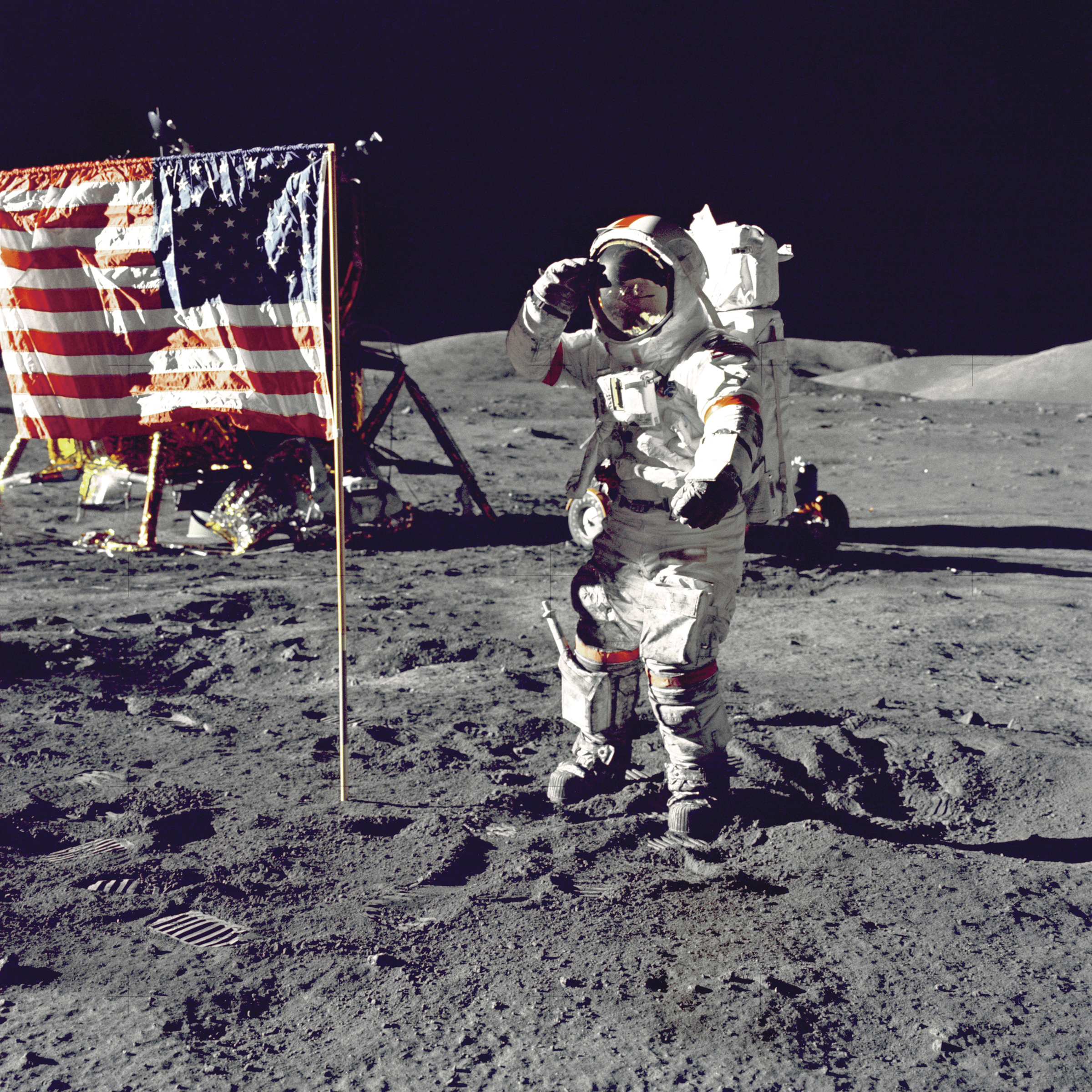
In the memorable message of President John F. Kennedy: We do not go to space because it is easy; we do it because it is hard


"We do not go to space because it is easy;
we do it because it is hard."  

John F. Kennedy


All human beings are capable of remarkable achievements. Stellar feats of human endeavor are not limited to those who possess outlying aptitudes or talents. 

We each came to this world equipped with the capacity to accomplish difficult things, to meet and beat extraordinary adversity, to engage and realize significant personal changes, and to achieve personal, familial, and organizational EXCELLENCE. 

Some of life's mightiest and most satisfying accomplishments involve transcending onerous obstacles, completing worthy goals, and overcoming the undesirable and unhelpful elements of one's natural character and personality. 

This text will never seek to hide the incredibly challenging nature of SAL.

Freedom Focused will never deceive you or sell you snake oil.

This transparency exists for the sake of authenticity and candidness. And we lay it on thick because it is the truth.

But do not let this truth discourage or dissuade you from accepting the challenge!  

Lest you think that SAL is all difficulty and misery, I have some very good news for you. Beyond the struggle and uncertainty lies achievement, growth, happiness, fulfilment, and prosperity beyond your wildest dreams. 

Furthermore, the end rewards are just the tip of the proverbial iceberg when it comes to the plentiful positives that accompany the journey itself, which, while inevitably challenging, is also extremely exciting, magnificently motivating, richly rewarding, strenuously satisfying, and fantastically fulfilling.

Any pursuit of Existential Growth will provide YOU with added meaning to your life; and according to Viktor Frankl, MEANING is a great (if not the fundamental) antidote to depression and virtually all other preventable and/or curable mental illnesses. (3) 

Indeed, you are much less likely to get sucked into the "existential vacuum" (4) when you are busy cleaning up your life, home, and community—and helping others to do the same. 

In the end, the REWARDS of Existential Growth far outweigh the PRICE, even though the price may seem daunting—if not insurmountable—along the way. However cliché it may sound, there really is a pot—nay, a mountain—of GOLD at the end of each of your life's many rainbows.

But REMEMBER: Storms always precede Rainbows!

To locate these mounds—or even mountains—of gold, you must come to understand and recognize gold for what it really is—and also for what it really isn't.

Beware of existential fool's gold!

You can avoid being fooled by fake gold by being willing to patiently persist and be persistently patient—all along your lifelong quest—never forgetting the sage truism of Napoleon Hill, who reminded us that every adversity, every failure, and every heartache carries with it an equivalent or a greater benefit. (5)


"Every adversity, every failure, and every heartache carries
with it the see of an equivalent or a greater benefit."  

Napoleon Hill


Simple Truths vs. Easy Answers

In the legendary lingo of M. Scott Peck, M.D., life is difficult, complex, and there are no easy answers (6) to its myriad challenges and obstacles. 

Peck is right!

        That is the bad news.

The good news, however, is that while there may not be easy answers to life's quizzical queries and perplexing problems, there are many SIMPLE TRUTHS that can guide us to success and victory. 

The SAL philosophy is chock full of these simple truths. By "simple" I mean it is simply stated and easy to conceptualize or theorize. But this does not mean, of course, that it is easy to apply in real life—at least not in the short run—although a compelling argument can be made that it is, in fact, the easiest way to live in the long-run.

In the reiterated refrains of Jerzy Gregorek and Eleonor Roosevelt: 


"Hard choices, easy life.

Easy choices, hard life."

Jerzy Gregorek


"Courage is more exhilarating than fear and in the long run it is easier. We do not have to become heroes overnight. Just a step at a time, meeting each thing that comes up, seeing it is not as dreadful as it appeared, discovering we have the strength to stare it down."   

Eleanor Roosevelt


Existential Growth is more than an academic definition and theoretical construct. It is a MINDSET—a new way of thinking, speakingdoingliving, and most importantly—being

In her book, Mindset: The New Psychology of Success, Carol S. Dweck suggests that growth in any life arena is possible, but contingent upon developing a frame of mind that cultivates, nurtures, and supports the possibility and reality of GROWTH. 

According to Dweck, there are two fundamental, yet divergent mindsets about our potential as human beings. The first is a "fixed mindset," which advocates the belief "that your qualities are carved in stone," (7) and there's not much you can do about it. The second is a "growth mindset," (8) which promotes the paradigm that our potential is more fluid based on what we choose to think about, say, and do. 

As Dweck puts it:

"In [the growth] mindset, the hand you're dealt with is just the starting point for development. ... It is based on the belief that your basic qualities are things you can cultivate through your efforts. Although people may differ in every which way—in their initial talents and aptitudes, interests, or temperaments—everyone can change and grow through application and experience. ... [Those with a growth mindset] believe that a person's true potential is unknown (and unknowable); that it's impossible to foresee what can be accomplished with years of passion, toil, and training." (9)

Existential Growth goes well beyond mere self-improvement and personal development. It advances to the ontological transformation of your very being. The purpose of this Life Leadership textbook is to help YOU develop a Growth Mindset so you can begin a lifelong journey toward the highest levels of Existential Growth in the SAL Hierarchy and thereby become all you are capable of becoming—the possibilities of which are truly endless.    

Having introduced the SAL Hierarchy with all of its possibilities and potential, it is now time to switch gears and learn about the opposing forces of Existential Growth by considering the reality and implications of existential atrophy and its accompanying SAL lowerarchy.  


In Your Journal

  • To what extent does your current mindset believe in and embrace change and GROWTH?

  • What is an ACTION you could take TODAY to reorient your current mindset to more fully embrace the work ethic, pain threshold, and risk-taking paradigm that authentic growth requires?  


Dr. JJ

Wednesday, October 23, 2024
Palm Beach Gardens, Florida, USA


Author's Note: This is the 413th Blog Post Published by Freedom Focused LLC since November 2013 and the 222nd consecutive weekly blog published since August 31, 2020.   

Click HERE for a compete listing of the other 412 FF Blog Articles 

Click HERE for a complete listing of Freedom Focused SAL QUOTES  

Click HERE for a complete listing of Freedom Focused SAL POEMS   

Click HERE to access the FULL TEXT of Dr. JJ's Psalms of Life: A Poetry Collection

Click HERE for a complete listing of Self-Action Leadership Articles

Click HERE for a complete listing of Fitness, Heath, & Wellness Articles

Click HERE for a complete listing of Biographical & Historical Articles


Click HERE for a complete listing of Dr. JJ's Autobiographical Articles

.........................

Tune in NEXT Wednesday for another article on a Self-Action Leadership related topic.  

And if you liked this blog post, please share it with your family, friends, colleagues, and students—and encourage them to sign up to receive future articles for FREE every Wednesday.

To sign up, please email freedomfocused@gmail.com and say SUBSCRIBE, or just YES, and we will ensure you receive a link to each new blog article every Wednesday.  


Click HERE to buy the SAL Textbooks  


Chapter 22 Notes

1.  Peck, M.S. (1983). People of the Lie: The Hope for Healing Human Evil. New York, NY: Touchstone. Page 240.

2.  Hinckley, G.B. (2000). Standing for Something: 10 Neglected Virtues that will Heal Our Hearts and Homes. New York, NY: Three Rivers Press. Pages 94-95.

3.  Frankl. V. (2006). Man’s Search for Meaning. Boston, MA: Beacon Press.

4.  Ibid. Page 106-108. According to Frankl, “The existential vacuum manifests itself mainly in a state of boredom” (p. 106).

5.  Hill, N. (1960). Think and Grow Rich. New York, NY: Fawcett Crest. The exact quote reads: "every failure brings with it the seed of an equivalent advantage" and can be found on pages 38 and 155. I have been unable to locate the exact quote included in the text above; I can't remember precisely where I saw it. But I like it enough—and it is sufficiently substantively similar—that I opted to include it as is. 

6.  "Life is difficult," "life is complex," and "there are no easy answers" are iconic mantras from Peck’s Road Less Traveled trilogy, including, respectively:

    a. Peck, M.S. (1978) The Road Less Traveled: A New Psychology of Love, Traditional Values and Spiritual Growth. New York,         NY: Touchstone.

    b. Peck, M.S. (1993) Further Along the Road Less Traveled: The Unending Journey Toward Spiritual Growth (The Edited             Lectures). New York, NY: Simon and Schuster.

    c. Peck, M.S. (1997) The Road Less Traveled and Beyond: Spiritual Growth in an Age of Anxiety. New York, NY: Touchstone.

7.  Dweck, C. S. (2006). Mindset: The New Psychology of Success: How We Can Learn to Fulfill our Potential. New York, NY: Ballantine Books. Page 6.

8.  Ibid. Page 7.

9.  Ibid.

Wednesday, May 29, 2024

Space Travel: An Existential Metaphor


Chapter 2


Space Travel: An Existential Metaphor


President John F. Kennedy
1917-1963
"We do not go to space because it is easy;
we do it because it is hard."

President John F. Kennedy


I have always been fascinated by astronomy and space exploration and travel. My wonder and awe of our world's "Final Frontier" began as a young boy gazing up into the majestic star-filled heavens while living (and sometimes camping) in the remote deserts and mountains of the rural Four Corners area of the United States—where I was born and raised. 

As I grew older and began learning more of the known scientific verities of astronomy, my fascination grew even more. Though I was born 10 years and 31 days after Neil Armstrong and his fellow astronauts first set foot on the Moon, I was well aware of the courageous and adventurous spirit that fueled a space shuttle program that was alive and well-respected in my country. 

Despite an early 21st Century cessation and lull of space initiatives, it warms my heart and stirs my soul to know that spirit has been reinvigorated with public and private plans to return to the Moon and then embark even further to the planet Mars.

American author and lecturer, Marianne Williamson, once pointed out that: "Americans [in general] are not that big on philosophy," but that "we're very big on action ... once we understand the reason for it." (1) This action-oriented quality was instrumental in my country's quest to put a man (and eventually a woman) on the moon and return them safely again to Earth. 


 "That's one small step for man;
one giant leap for mankind."

Astronaut Neil A. Armstrong


As a space exploration enthusiast, it is a joy to live in the great Sunshine State of Florida, not far from Cape Canaveral—home to Patrick Space Force Basewhere many rocket and shuttle launches have taken place in the past, and continue in the present and future. 

When my kids reach the fifth-grade, they get to visit Kennedy Space Center on a school-sponsored field trip.

It is a highlight of their entire elementary schooling journey!

I used to live in the Houston, Texas area. On more than one occasion, I have been to NASA's Mission Control Center, located in the southeastern corner of the Houston metropolitan area. As I walked around the Saturn V rocket and viewed the original Mission Control room—precisely as it appeared when Neil Armstrong and his colleagues first set foot on the moon—my spirit felt reverent and subdued by the profundity of what had taken place there in July 1969.  

I know of few other things that better personify the ambition, greatness, nobility, and vision of humanity than the highly intelligent, skilled, and dedicated men and women who seek to explore outer space. 

Such persons literally "shoot for the stars"! 

It is to them and their honor and glory—and all the leaders and personnel who made their journeys possible—that I dedicate the SAL THEORY, in hopes that everyone who will ever read this book might metaphorically "shoot for the stars" in their unique ways in their own educations, careers, and lives.  

Some hold the view that space exploration should not be a priority in a country's national consciousness. Why? Because, the detractors say, it diverts people's attention from the many problems that human beings face right here on Earth. 

At Freedom Focused, we strongly disagree.

We believe there are few scientific undertakings more beneficial to Earth-life than good-faith efforts to explore that which lies beyond its surface. To begin with, consider the many Earth-based technological advancements derived from the study and exploration of outer space.

For example: LASIK eye surgery, specialized firefighting equipment, artificial limbs, freeze drying food processing, and shock absorbers used in making skyscrapers safer in earthquakes; these are just a few of the technologies developed in part by space explorers. 

Then there is the expansion—and sometimes explosion—of new scientific knowledge obtained through the study of space travel and by otherwise applying the scientific method to astronomical unknowns. 

And don't forget the ways in which space exploration bolsters the ambition, competitive spirit, and vision of those in the rising generation who seek to build upon the aeronautical and astronomical achievements of previous generations. 

For example: one of my wife's former college roommates at the Georgia Institute of Technology (Georgia Tech), studied aerospace engineering and is now an aeronautical engineer. After completing her engineering degree, she got a job working for Elon Musk's ambitious company, SpaceX, which is dedicated to proliferating space travel and exploration in the private sector. 

We are proud of her!

We hope many other boys and girls will study hard in school, nurture their ambitions to explore the "Final Frontier," and then follow in Sarah's footsteps to pursue similar careers in a never-ending quest to make further progress as a global community in the vital arena of space study, exploration, and now defense as well through the United States Space Force.  

There is also the sense of national—and international—credibility and pride that stems from a nation and world's commitment to explore the seemingly unreachable. All told, there are few things that elevate individual and collective ambition and progress more than when a society sees its best and brightest undertake tasks that seem impossibly difficult. Such endeavors inspire the rest of us to greater heights in our own personal spheres of education, exploration, contribution, and influence.  

Though I was only six (6) years old at the time, I can still remember watching my country's President, Ronald Regan, address the nation on television following the disaster of the space shuttle Challenger on January 28, 1986. 

I was attending kindergarten in Monticello Elementary School in Utah at the time and I'll never forget the sobering emotions I felt as a little boy listening to the leader of the Free World share the terrible news of that unprecedented space tragedy in a televised speech delivered from the Resolute Desk in the Oval Office at the White House.

President Ronald Reagan
1911-2004
"I want to say something to the schoolchildren of America who were watching the live coverage of the shuttle's take-off. I know it's hard to understand, but sometimes painful things like this happen. It's all a part of the process of exploration and discovery. It's all part of taking a chance and expanding man's horizons. The future doesn't belong to the fainthearted; it belongs to the brave. The Challenger crew was pulling us into the future, and we'll continue to follow them." (2)

There is something great and noble about the human spirit's desire to explore the unexplored, as well as the courage, ingenuity, and intelligence that is required to venture forth into distant realms of the unknown, especially when the potential for accident, failure, pain, and even tragedy are unusually high. 

The SAL Theory introduced in this book is rooted in the ennobling human virtues of ambition, bravery, and hard work that space explorers have always exemplified and personified.

I have chosen the metaphor of space travel because I hope it will inspire readers to courageously explore the outer realms of their own Existential Potential—their own personal "Final Frontier"—whereby they might, in the inspiring words of John Gillespie Magee, Jr., as quoted by Reagan at the end of his Challenger speech: "Slip ... the surly bonds of Earth to touch the face of God." (3)


The Value of a Good Theory

The late professor, Clayton M. Christensen, who spent most of his career at the Harvard Business School, was one of the world's foremost thinkers and theorists on business management and innovation. As a theorist, Dr. Christensen argued persuasively for the usefulness of theory to inform our actions and decision-making processes.  

"A good theory doesn't change its mind: it doesn't apply only to some companies or people, and not to others. It is a general statement of what causes what, and why. ... You don't want to have to go through multiple marriages to learn how to be a good spouse. Or wait until your last child has grown to master parenthood. This is why theory can be so valuable: it can explain what will happen, even before you experience it. ... Without theory, we're at sea without a sextant. If we can't see beyond what's close by, we're relying on chance—on the currents of life—to guide us. Good theory helps people steer to good decisions—not just in business, but in life, too." (4)

As you proceed through BOOKS the FOURTH and FIFTH of this comprehensive Life Leadership textbook, I encourage you to not merely read the words, but to diligently study and carefully consider the material and the THEORY and MODEL undergirding it. And remember: the better you understand the SAL Theory, the more empowered and motivated you will be to apply the SAL Model later on.

Then, to further illustrate the practical efficacy and long-term value of these two academic frameworks, I share several true stories of real-life self-action leaders—including myself—who have earned significant success, growth, and freedom by learning, internalizing, and then applying the SAL Theory and Model in their educations, careers, and lives. 

These narratives are included in BOOK the SIXTH and powerfully illustrate the power and miracle of SAL in the everyday lives of real human beings and self-action leaders.  

But first comes the THEORY.

The Self-Action Leadership Theory is presented herein as 13 postulated laws and their concomitant corollaries. Before proceeding with the theory itself, it bears reviewing the definitions of these three terms. 


POSTULATE

Noun:  A principle that is put forth and assumed to be true.

Verb:  To put forth a principle that is assumed to be true. 


LAW

A generalization based on a fact or event perceived to be recurrent. (5)


COROLLARY

A proposition that follows from, and is often appended to, one already proved." (6)


JFK

Bust of President Kennedy on the US 50 cent piece
I have often been inspired by the leadership of President John F. Kennedy and others like him who chose to make space exploration a high national priority in my country, the United States of America. JFK's leadership demonstrated tremendous courage, foresight, and vision. 

The benefits of this ambition have been varied and wondrous. Farsighted wisdom demands we continue our exploration of space because of our troubles at home, not curtail our astronomical ambitions as an ill-advised excuse to solve them. 

In the late 1950s and 60s, astronauts from the Soviet Union transformed science fiction into reality when they launched the first man-made satellite, then an animal (a dog named Laika), and finally a human being into orbit. 

Then, a little over a decade later, in 1969, American astronauts landed a man on the moon and returned it safely again to Earth. These unprecedented achievements were catalysts in generating the unprecedented development, innovation, production, and prosperity of all the decades to follow. 

Just as brave astronauts have courageously explored what lies beyond our planet home for the past 70 years, I hope YOU will choose to explore the outer limits of your own potential. Just as there is no greater astronomical ambition than to explore the Final Frontier, there is no greater ambition than to aim for the highest levels of Existential Growth attainable by human beings.

We therefore invite YOU to begin your own metaphorical and metaphysical journey into outer space—a journey of Existential Growth—that can, in the ambitious and animated words of Buzz Lightyear, eventually take you "to infinity, and beyond!" (7)


The Self-Action Leadership Theory

The Self-Action Leadership Theory is defined as: a comprehensive academic theory of self-leadership and character development rooted in atmospheric and astronomical science and metaphor. 


SELF-ACTION  LEADERSHIP  THEORY

A comprehensive academic theory of self-leadership and character development
rooted in atmospheric and astronomical science and metaphor. 


The remainder of BOOK the FOURTH is dedicated to a detailed explication of the SAL Theory. Before diving into all the details of this new theory of self-leadership and character development, we invite you to scan and review the theory's postulated Laws and Corollaries in a cursory and summarized manner below.


SAL Theory LAWS & COROLLARIES


LAW 1.  Absolute Truth with a capital "T" exists in the form of immutable and irrevocable Universal Laws. These laws consistently, predictably, and omnipotently govern both the physical and metaphysical worlds, including the natural consequences of human decisions.  

Corollary 1.1.  Truth often appears paradoxical.

Corollary 1.2.  Situational exigencies arise that necessitate legitimate exceptions to virtually every rule of Universal Laws.

Corollary 1.2.1.  Legitimate "Exceptions to the Rule" do not violate Universal Laws. They operate harmoniously, albeit paradoxically, within multi-dimensionalities of the laws.


LAW 2.  There are categorical divisions and universal distinctions between right and wrong.

Corollary 2.1.  Right choices consist of thoughts, speech, and actions that lead to the long-term health, happiness, and Existential Growth of all people (and other living things) impacted thereby.  

Corollary 2.2.  Wrong choices consist of thoughts, speech, and actions that lead to the long-term sickness, misery, and existential atrophy of all people (and other living things) impacted thereby. 


LAW 3.  All human beings enter the world with an inner light and compass in the form of a metaphysical conscience that prompts them to think, say, and do what is right; and to avoid thinking, speaking, or doing what is wrong.

Corollary 3.1.  Your conscience is sharpened of dulled over time in direct proportion to the adherence, or lack thereof, that you grant it.    


LAW 4.  Every human being is a self-leader and, by extension, the sovereign ruler of his or own metaphysical world.

Corollary 4.1.  Self-leaders who think, say, and do what is right—and avoid thinking, saying, and doing what is wrong—become self-action leaders by virtue of their intent. 


LAW 5.  All human beings possess equal, innate, and infinite Existential Worth in conjunction with unlimited potential for Existential Growth.


LAW 6.  All human beings possess the liberty to choose their thoughts, speech, actions, attitudes, and beliefs.  

Corollary 6.1.  All thoughts, words, and actions create naturally occurring consequences over time.

Corollary 6.2.  You cannot arbitrarily determine long-term consequences; they are governed by Universal Laws.
        
Corollary 6.3.  Naturally occurring consequences are no respecter of persons.

Corollary 6.4.  In the long-run, naturally occurring consequences shape your physical and metaphysical world. 

Corollary 6.5.  The results of naturally occurring consequences often take time to measure. (8)

Corollary 6.6.  Your Self-Action Leadership capacity and potential carries internal and external variables in the form of benefits and limitations.  


LAW 7.  You are responsible for the design of your metaphysical world and the long-term direction of your life.  


LAW 8.  Long-term solutions to most of your problems are found inside, not outside, of your metaphysical world (i.e. your mind, heart, and spirit).  


LAW 9.  Existential Gravity exists to inhibit Existential Growth and influence the onset of existential atrophy. 


Corollary 9.1.  Self-action leaders possess power to transcend Existential Gravity over time through Self-Action Leadership.

Corollary 9.2.  As higher levels of Existential Growth are reached, Existential Gravity is commensurately transcended.

Corollary 9.3.  As Existential Gravity is transcended, your journey towards higher levels of Existential Growth becomes generally easier.  


LAW 10.  Self-action leaders are capable of unlimited Existential Growth and/or existential atrophy.

Corollary 10.1.  Existential Growth is measurable and consists of nine (9) different metaphysical levels (or stages) of ontological development and achievement analogous to nine (9) different levels of Earth's atmosphere and outer space, as follows:

Earth's Atmospheric Layers                                Levels of Existential Growth

Layer 1:  Earth's Surface                                    Level 1:  Education Stage
Layer 2:  Troposphere                                        Level 2:  Beginner's Stage
Layer 3:  Stratosphere                                        Level 3:  Practitioner's Stage
Layer 4:  Mesosphere                                         Level 4:  Refining Stage
Layer 5:  Ionosphere                                           Level 5:  Polishing Stage
Layer 6:  Thermosphere                                      Level 6:  SAL-Actualization Stage
Layer 7:  Exosphere                                            Level 7:  Leadership Stage
Layer 8:  Outer Space                                         Level 8:  Self-Transcendence Stage
Layer 9:  Astronomical bodies beyond Earth      Level 8:  Creation Stage
                (i.e. moon, planets, stars, etc.)

Corollary 10.2.  Like Maslow's Hierarchy of Needs, levels of Existential Growth must be attained progressively, and in order, beginning at the bottom level.  

Corollary 10.3.  Existential Growth cannot be given away, traded for, or purchased; it must always be earned.

Corollary 10.4.  Earning Existential Growth is challenging. It requires great efforts consistently expended over time, and often engenders pain along the way. 

Corollary 10.5.  Existential atrophy can occur after rising to any of the first seven levels of Existential Growth. Self-action leaders who reach Level 8 are assumably safe from this same risk of regression.

Corollary 10.6.  A SAL lowerarchy of existential atrophy and regression exists as an inverse of the SAL Hierarchy. Self-leaders who choose to think, say, and do things that are wrong, evil, or destructive regress down the SAL lowerarchy.

SAL lowerarchy:  Nine (9) regressive stages of existential atrophy.

Level -1.  Discouragement & Deception Stage
Level -2.  Deconstruction Stage
Level -3.  Mischief Stage
Level -4.  Damage and Violence Stage
Level -5.  Corruption and Perversion Stage
Level -6.  Propaganda Stage
Level -7.  Pied Piper Stage
Level -8.  Self-Descendence
Level -9.  Self-Destruction Stage


LAW 11.  Universal Laws determine the price of Existential Growth.

Corollary 11.1.  Universal Laws apply to everyone; they are no respecter of persons. 

Corollary 11.2.  You cannot change, cheat, or circumvent Universal Laws.

Corollary 11.3.  Universal Laws create human benefits.

Corollary 11.4.  Universal Laws create human limitations.


LAW 12.  Humility before Universal Laws is a prerequisite to authentic Existential Growth.

Corollary 12.1.  Honesty, integrity, and self-awareness comprise humility.


LAW 13.  Your influence on others over time is directly proportional to the control you consistently wield over your own thoughts, speech, and actions.  


The less control you have over your own thoughts, speech, 
and actions, the less influence you have on other people.


The more control you have over your thoughts, speech, and
actions, the more influence you have on other people.


In Your Journal

  • Do you think there is value in investing time, money, effort, resources, and human capital on space exploration and studying the Universe? Why or why not?
  • What kinds of long-range personal and professional goals could you set in your life that would metaphorically compare to the ambitious exploration of the Moon, Mars, or beyond?
  • How might comparing your personal and professional journey to the exploration of space benefit you in your education, career, and life?  

Dr. JJ

Wednesday, May 29, 2024
Palm Beach Gardens, Florida, USA


Author's Note: This is the 391st Blog Post Published by Freedom Focused LLC since November 2013 and the 201st consecutive weekly blog published since August 31, 2020.   

Click HERE for a compete listing of the other 390 FF Blog Articles 

Click HERE for a complete listing of Freedom Focused SAL QUOTES  

Click HERE for a complete listing of Freedom Focused SAL POEMS   

Click HERE to access the FULL TEXT of Dr. JJ's Psalms of Life: A Poetry Collection

Click HERE for a complete listing of Self-Action Leadership Articles

Click HERE for a complete listing of Fitness, Heath, & Wellness Articles

Click HERE for a complete listing of Biographical & Historical Articles


Click HERE for a complete listing of Dr. JJ's Autobiographical Articles

.........................

Tune in NEXT Wednesday for another article on a Self-Action Leadership related topic.  

And if you liked this blog post, please share it with your family, friends, colleagues, and students—and encourage them to sign up to receive future articles for FREE every Wednesday.

To sign up, please email freedomfocused@gmail.com and say SUBSCRIBE, or just YES, and we will ensure you receive a link to each new blog article every Wednesday.  


Click HERE to buy the SAL Textbooks    


Chapter 2 Notes

1. Williamson, M. (1992). A Return to Love: Reflections on the Principles of a Course in Miracles. New York, NY: Harper Perennial. Page xix.

2.  Reagan, R. (1986). President Reagan's Challenger Disaster Speech - 1/28/86. Ronald Reagan Presidential Library. Reagan Foundation. URL: https://www.youtube.com/watch?v=Qa7icmqgsow

3.  The closing words of Reagan’s speech following the space shuttle Challenger disaster, which were borrowed from the opening and closing lines of the poem, High Flight, by John Gillespie Magee, Jr., a pilot officer in the Royal Canadian Air Force. Gillespie was killed in a plane crash in England in December 1941.

4.  Christensen, C. M., Allworth, J., and Dillon, K. (2012). How Will You Measure Your Life. HarperCollins: New York, NY, page 12, 14, and 17.

5.  New Oxford American Dictionary, Mac OS electronic version.

6.  Ibid.  

7.  Toy Story (1995). Pixar Animation Studios & Walt Disney Pictures. Directed by John Lasseter. Written by John Lasseter, et al.

8.  Smith, H. W. (1994). The 10 Natural Laws of Successful Time and Life Management: Proven Strategies for Increased Productivity and Inner Peace. New York, NY: Warner Books. Direct quote (“Results often take time to measure”) from page 145.


JJ's Journal: 1979

From the Personal Journals of My Father Rex Buckley Jensen  1979 NOTE : In the quotation of my father's journals below, I use ellipses t...