Chapter 8
Making a Complete Commitment to Reality
"Mental health is a process of ongoing dedication to reality at all costs,
no matter how uncomfortable the reality makes us." (1)
Self-action leaders are consistently committed to the way things really were, now are, and someday will be.
In other words, self-action leaders are completely committed to REALITY—
no matter how uncomfortable the reality might make you feel
. (2)
Ignoring reality results in negative consequences and inhibits your Existential Growth. Without an appreciation of truth and reality, there's no way to honestly evaluate strengths and weaknesses.
Negative consequences arising from such disregard and self-deceit may not come right away—they usually take time, and sometimes a lot of time to fully flower—but they always come eventually. Thus, it is vital that self-action leaders develop high levels of honesty and integrity—twin characteristics that empower your ability to accurately see, comprehend, and then appropriately confront reality.
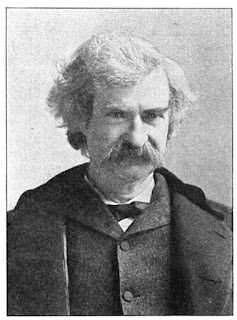 |
Mark Twain
1835-1910 |
Practicing honesty and integrity will also drastically simplify your life. In the ever witty words of the great American writer, Mark Twain:
If you tell the truth, you don't have to remember anything.
"If you tell the truth, you don't have to remember anything."
Making a complete commitment to reality means being willing to take an honest look at yourself in the mirror (literally and metaphorically speaking)—scars, warts, zits, and all—and both seeing and acknowledging what you could improve or change (or not), at which point you might affirm to yourself the wise supplication of the famous Serenity Prayer, which both humbly and wisely implores: God, grant me the serenity to accept the things I cannot change, the courage to change the things I can, and the wisdom to know the difference."
"God, grant me the serenity to accept the things I cannot change,
the courage to change the things I can, and the wisdom to know the difference."
Throughout this ongoing process, you should concurrently see, acknowledge, and appreciate all the positive things you like or admire about YOURSELF.
REMEMBER: Your shortcomings and weaknesses are only
half the story. It is just as important to identify, utilize, enjoy, and build upon your strengths and talents. Along the way, do your level best to gauge
both pros and cons as accurately as possible. In other words, don't blow your strengths or weaknesses out of their actual proportion. Doing so could lead to harmful self-loathing on the one extreme and arrogant self-absorption on the other.
Making a complete commitment to reality means viewing yourself as you really are—the good along with the bad in their proper perspective—not merely what you'd like to see or wish was already there.
Doing this can be hard and painful work!
After all, it's somewhat instinctive for us to naturally shrink away from self-examination and analysis. Many people will do almost anything to avoid the agony caused by authentic self-transparency. But if you have any interest in freedom, growth, and inner peace, its simply must be done.
There is no other way!
Consider the following mistakes that human beings are usually loathe to confess to themselves or others:
- "I messed up and am prepared to do whatever is necessary to clean up the mess I made."
- "I got myself into this negative situation and it is my responsibility to get myself out."
- "My words and/or actions were out of line and it is my job to make amends and change."
Many years ago, my wife shared with me an anonymous statement she saw posted online. It read, Things always happen for a reason, but sometimes that reason is because you are stupid and make bad decisions.
"Things always happen for a reason,
but sometimes that reason is because you are stupid and make bad decisions."
When she first shared this candid comment with me, I confess that I laughed out loud because it rings so true to reality. Indeed, anyone who has any integrity at all will candidly confess that some negative life consequences arise for no other reason than that we sometimes think, speak, or act stupidly and make bad decisions as a result.
I know I have...
More times than I'd like to admit!
Yet it is truly remarkable—to the point of absurdity—the great lengths some human beings will go to avoid having to say (or even think) that they might have been short-sighted, unwise, or flat out wrong. Ironically, some of the highest profile and otherwise smartest persons on the planet are often the most loathe to admit an error—no matter how obvious it is to others!
This fact becomes even more ludicrous when you consider the reality that most people actually admire and respect those who humbly admit and apologize for their errors and then go to work to fix them.
Why in the world would anyone be so loathe to do what other people are likely to admire them for?
In the self-deprecating humor of a famous standup comedian (Brian Regan): Human beings man!
"Human beings man!"
When self-action leaders say or do something foolish—and all of us do from time-to-time—they are ever willing to look at themselves in the mirror, acknowledge the reality of their error, apologize to others where necessary, and then go to work to fix it.
Sadly, the culture of blaming others for your problems is pathetically ubiquitous throughout the Western World and beyond. The only way to properly address the many deep and penetrating problems of our time is to Change the Culture—one self-action leader at-a-time.
Despite being the author of this Life Leadership textbook, I myself have thought, said, and done many stupid things in both my life and career. Some of these things were done knowingly (sins). Many more of them were done more innocently as part of my own growth and learning curve (mistakes).
However, any lasting successes I have enjoyed have been a direct by-product of seeing and acknowledging that I was missing the mark in some way, and then humbly and proactively taking steps to fix my error and do better in the future.
Self-action leaders are willing to look at themselves transparently in the mirror and then candidly confess the truth about themselves, and when/where necessary, to others as well.
Even in situations where others may also be at fault—a common scenario in life—it remains your responsibility to examine yourself for errors that may have contributed to the problem and then fix those errors to the best of your ability.
Why must it always be about your responsibility, even when others may be more to blame?
Simple...
Because YOU are the only person you can control.
Life is Fair
You don't have to spend much time in this world to figure out that life tends to be unfair—sometimes dramatically, painfully, or even tragically so—especially in the short-run. This seems to be especially true for the many people around the world who were born into terrible circumstances and abusive relationships.
Even in the mid-term of things, life can be unfairly punishing and brutally unjust.
 |
The Law of the Harvest
As ye SOW, so shall ye REAP |
However, one of the great paradoxes of truth is that for many, and perhaps even most people, life has a way of being surprisingly fair in the long-run.
Why?
Because we all reap what we sow over time.
This holds true for all aspects of your life, including your personal health and hygiene, relationships, education and professional success, and the legacy and impact you leave behind.
For those who experience long-term unfairness—for example: those who lived and died enslaved or at the murderous hands of evil tyrants, or through seeming bad luck (e.g. accidental injuries and premature death)—the only lasting hope lies in harboring faith in an afterlife and a divine, omniscient, and omnipotent Creator who will mete out perfect justice and mercy according to principles of absolute fairness.
If nothing beyond this mortal realm exists, then those bereaved, lowly, and unlucky souls are truly out of luck.
On the other hand, if our souls do exist beyond the grave, then great hope exists that the myriad injustices of our often-cruel world will be properly sorted out and otherwise atoned for in an afterlife.
 |
John Greenleaf Whittier
1807-1892 |
In the poetic and hopeful verse of John Greenleaf Whittier:
"Ah, well! for us all some sweet hope lies
Deeply buried from human eyes;
And in the hereafter angels may
Roll the stone from its grave away!" (5)
While there are unquestionably exceptions to this postulated rule of long-term fairness, we at Freedom Focused promise you unequivocally that if you will align your behavior with the True Principles rooted in Universal Laws outlined in this Life Leadership textbook, the odds that life will ultimately be fair to you in the end drastically improve.
Serendipity will make absolutely sure of it!
As you pursue the course of SAL in your life, Serendipity will guide you to increased healing and other positive results, including freedom, growth, and inner peace. As this occurs, past unfairness you have suffered will begin to loosen their hold upon you, allowing you to gradually be freed from their chains. Your growing good fortune will also create a powerful contrast with past misfortunes, making your blessings all the sweeter because of the bitter trials you have previously met and overcome.
Self-Discipline: The Pathway to Freedom
"If we learn personal discipline ... then we have the freedom to live without concern.
Everybody loves freedom, but most people think that discipline leads to bondage.
That isn't true. Discipline always leads to freedom."
One of the greatest ironies of TRUTH is that discipline and self-restraint, which
seemingly limit your freedom, are in fact our greatest liberators in life.
Self-discipline enables and empowers YOU to consciously determine where you expend your finite time and energy. This freedom arises when you are no longer a slave to impulse, inclination, or addiction.
Self-restraint allows you to focus your energies, which in-turn empowers you to set and reach positive, productive, and even ambitious long-term goals that are important to you.
Discipline is like the bridle in a horse's mouth that productively channel its energy, strength, and vivacity. It is the enclosed walls of a rifle barrel that propels a bullet onto a straight, targeted, and accurate trajectory.
Likewise, it is disciplined adherence to True Principles rooted in Universal Laws that leads to self-mastery, personal growth and freedom, and inner peace. In the words of that nonpareil teacher, even Jesus of Nazareth: And you shall know the truth, and the truth shall set you free. (7)
"And ye shall know the truth, and the truth shall set you free."
Taking a close look (literally or figuratively) at yourself in the mirror involves two
different, yet equally important, processes. The first is to accurately see your strengths and
strategically determine how to maximize them. The second is to correctly comprehend your
weaknesses and plan how to improve upon or eliminate them. The following
exercise provides you with an opportunity to do both.
IDENTIFYING MY STRENGTHS
-
I excel at:_____________________________________________________________________________
To take my talent and skill to the next level, I must:____________________________________________
-
I am uniquely qualified to:________________________________________________________________
I could contribute more meaningfully to the lives of others by:___________________________________
I am at my best when I:__________________________________________________________________
I could be at my best more often if I:________________________________________________________
IDENTIFYING MY WEAKNESSES
-
-
I was or am wrong about:__________________________________________________________
-
I am at my worst when I:__________________________________________________________
-
I really messed up when I:_________________________________________________________
And it is now my responsibility to:__________________________________________________
It is not always easy to clearly see where your greatest strengths lie; and it’s even more
difficult to recognize and admit when and where you are weak or wrong and need to change.
Nevertheless, doing so is an indispensable part of being a self-action leader. As such,
I invite you to honestly and courageously answer the questions above, and then go
to work in earnest to pursue the lifelong process of maximizing your strengths while
minimizing (or eliminating) your weaknesses over time.
—Dr. JJ
Wednesday, July 10, 2024
Cedar Hills, Utah, USA
Author's Note: This is the 397th Blog Post Published by Freedom Focused LLC since November 2013 and the 207th consecutive weekly blog published since August 31, 2020.
.........................
Tune in NEXT Wednesday for another article on a Self-Action Leadership related topic.
And if you liked this blog post, please share it with your family, friends, colleagues, and students—and encourage them to sign up to receive future articles for FREE every Wednesday.
To sign up, please email freedomfocused@gmail.com and say SUBSCRIBE, or just YES, and we will ensure you receive a link to each new blog article every Wednesday.
Click HERE to buy the SAL Textbooks
Chapter 8 Notes
1. Peck, M. S. (1993). Further Along the Road Less Traveled: The Unending
Journey Toward Spiritual Growth (The Edited Lectures). New York, NY: Simon
and Schuster. Page 75. Actual quote is: “Mental health [is] a process of ongoing dedication to reality
at all costs . . . no matter how uncomfortable the reality makes us.”
2. Ibid.
3. The original authorship of the Serenity Prayer is disputed, although Niebuhr is a top candidate. For more information on other potential author attributions, see ORIGIN OF THE SERENITY PRAYER: A HISTORICAL PAPER. URL: https://www.aa.org/sites/default/files/literature/assets/smf-129_en.pdf
4. My wife and I have always enjoyed the humor of Brian Regan. Early on in our marriage, my wife was feeling sad about something. It was the end of the day and I decided to pull up a clip of Brian Regan's standup comedy. Before long, my wife was laughing wholeheartedly; her mood had entirely changed! I wrote Mr. Regan a letter thanking him for helping to cheer Lina up when I had been unable to do so on my own. I received a very nice letter back with an autographed photo. I'll never forget his kind thoughtfulness.
5. Whittier, J.G. Maud Muller (poem) in Cook, R.J. (1958/1997). One Hundred and
One Famous Poems. Lincolnwood, IL: Contemporary Books. Page 149.
6. Kroll, W. The Freedom of Discipline.
7. John 8:32 (New Testament).


