Showing posts with label Barack Obama. Show all posts

Wednesday, December 13, 2023

The Importance, Power, and Beauty of LANGUAGE


Chapter 8


The Importance, Power, and Beauty of LANGUAGE


Hyrum W. Smith
1943-2019
Earlier in my career, a publisher hired me to write a series of case studies for a collegiate textbook on entrepreneurship. One of the entrepreneurs I interviewed for this project was my uncle, Hyrum W. Smith, an originator of the Franklin Day Planner and a cofounder—along with Dr. Stephen R. Covey—of FranklinCovey Company.

An unusually talented and successful salesman and businessman, Smith has left an indelible mark on the fields of time management and personal development. His life and career have also hugely influenced my own.

During Hyrum's heyday around the turn of the 21st century, he was serving as CEO of a publicly traded company (NYSE), writing best-selling books, and commanding five-figure speaking fees. And it all began in his basement in Centerville, Utah, in the early 1980s. Suffice it to say, he was an ideal candidate for a case study on entrepreneurship. 

At the end of our interview together, I asked Hyrum what advice he would give to young college students interested in becoming entrepreneurs. As I awaited his answer, I assumed he would say something about sales, hard work, ambition, or personal responsibility and character. 

To my surprise, his reply had nothing to do with any of those things. In fact, his response had nothing to do with anything that is stereotypically associated with entrepreneurial success. 

Hyrum W. Smith relaxing at his Eagle
Mountain Ranch in southwestern Utah near
the end of his life. His massive library is upstairs.
This is what he told me:

"When I was just a boy, my father had me memorize a statement that said, 'You cannot think any deeper than your vocabulary will allow you to think.' If you really examine anyone who has been authentically successful as an entrepreneur—or in any other field, for that matter—you will discover that they have a large vocabulary. 
"As I reflect back over my career, I attribute much of my success to a love of the English language and my commitment to read deeply and widely, and to study speech and language. Anyone who wants to be successful in this world has got to read books, and lots of them. This requires a willingness to set aside electronic devices, social media, video games, and other distractions, and the discipline to stick to the task of reading—even (and especially) when it might seem boring. In order to learn independently of others and expand your vocabulary, you must pay the price to spend time with good books, including the dictionary. There is no other way! The size of your vocabulary will, to a large extent, determine how much success you enjoy—or don't enjoy—in your life and career."  

I have visited Hyrum's ranch home in the southwestern United States. You should see the size of his personal library; the man practiced what he preached! Over the course of my life and career, I earnestly and enthusiastically embraced this advice; and now, I pass it along to YOU!

Language is potential power. When used properly, relevantly, and in a timely manner, it becomes kinetic (or actual) power in your life and career. Polished communication skills enable and empower you to teach, impress, inspire, model, negotiate, persuade, uplift, and otherwise do much good in your relationships, career, and life. 

Few things will contribute more to—or detract from—your personal and professional credibility and reputation than how you communicate. When you can speak and write clearly, concisely, and cogently, other people are more likely to pay attention, respond positively, and treat you with respect. 

When you fail to do so, your power and influence is diminished, and you may even become a cause of frustration and irritation to those with whom you live and work.  


Three C's of Effective Communication

CLARITY.....................................Is my speech and writing CLEAR?

CONCISION................................Is my speech and writing CONCISE?

COGENCY...................................Is my speech and writing COMPELLING (or persuasive)?

If you are interested in increasing your personal power and influence, you must make a commitment to becoming a better reader, writer, speaker, and critical thinker. In saying this, I am not asking you to become a professional public orator or published author—although some readers will feel an ambition to take it to that higher level. What I am inviting you to do is pay the price to steadily improve your communication skills over time.

Dr. Stephen R. Covey was a master communicator, and he has called COMMUNICATION SKILLS "the most important skill we can be working on as adults." 


"Communication is the most important skill we can be working on as adults."

—Stephen R. Covey


I would wager—and I know Dr. Covey would agree with me—that it is similarly important for children, adolescents, and young adults to master these vital interpersonal relationship skills. No matter what our age, we should all take seriously the sound advice o Jim Rohn, who exhorted us all: Don't be lazy in language. 


"Don't be lazy in language."

—Jim Rohn


Drawing Deeply from the Wells of Wisdom

As you read this textbook, you will notice I have gone to great lengths to include relevant excerpts from the timeless works of great writers, speakers, thinkers, educators, leaders, philosophers, scientists, and theologians. In fact, one of the reasons this work is so substantive (long) is my decision to not merely garnish the text with such priceless additions, but to deluge and marinate it therein. These pervasive and continual inclusions support and enrich the material in this textbook from start to finish. I hope they will inspire and motivate YOU as much as they have me.  

I express my heartfelt gratitude to these enlightened and gifted men and women who worked, struggled, and endured tremendous adversity to achieve extraordinary things and become remarkable human beings. Their achievements and examples of personal change and growth shine forth from the pages of history as a burnished beacon of Self-Action Leadership light and truth. This wisdom can serve as a "lamp unto our feet and a light unto our path."  (1)

John Donne
1571-1631
These great hearts, minds, and souls spent countless hours honing their character and intellect in preparation to compose timeless texts that serve as helpful aides and powerful guides to us today. I hope the excerpts I share from their collective work will inspire you to study their lives and literature in greater detail. Without the teachings of these great men and women, this textbook would be a much shorter and shallower work. In the slightly doctored words of the English poet, John Donne:

"No Literary Work is an Island, entire of itself; every text is a piece of a Collection, a part of the canon. If a sentence be washed away from a paragraph, the Chapter is the less, as well as if a Section were, or an anecdote of thy friends, or of thine own were. Every Author's exclusion diminishes me, because I partake of the Lexicon and Library. Never send therefore to know for whom the titles toll; They toll for thee."  (2)


Learning the Valuable Lessons of Language

From associations with my father—a career secondary English teacher—and other important figures in my life, I gained an appreciation of the power, importance, and beauty of language at a young age. To begin with, my aunts and grandmothers preached the importance of good grammar and were quick to call attention to grammatical gaffes committed by their grandchildren, nieces, and nephews. Over the years I must have heard: "It is not Jessie and I; it is Jessie and me," or "me doesn't do anything" a hundred times. 

In addition to this technical drilling at home, my family—both immediate and extended—would often engage each other in extensive conversations on meaningful subjects, sometimes late into the night. When riding in an automobile—and particularly on road trips—my dad and I would sometimes study vocabulary words together and continually converse on all sorts of fascinating topics. These father-son tête-à-têtes and other familial repartee stimulated my intellect and deepened my relationships with family members.

Henry Wadsworth Longfellow
1807-1882
One day, after returning home from school as an elementary student, I found my dad sitting peacefully on the couch in our living room. I don't recall the conversation that prefaced what happened next, but all-of-a-sudden Dad broke forth into a beautiful reading of Alfred Noyes' timeless classic, The Highwayman. I was entranced by the beauty of Noyes' verse, the suspense of the poem's narrative, the obvious passion and skill my father lent to this spontaneous exercise, and his natural inclination to heed Longfellow's counsel:

Then read from the treasured volume
    The poem of thy choice
And lend to the rhyme of the poet
    The beauty of thy voice.  (3)

Click HERE to read more about this poetic experience with Dad.  

JJ's college Vocabulary Journal
In college, the most important notebook I kept was not for any of my classes, but rather an independent "Vocabulary Book" which contained an ever-growing list of new words I came across in my assigned readings, along with their definitions and practice sentences. Whenever I hear or read a word I don't know, I feel frustrated... but in a positive way that impels me to look up the word in the dictionary. 

And I keep looking up and otherwise studying the same word until I own it.

I have invested a lot of independent time and effort over the years in this practice. Doing so requires patience, persistence, discipline, and focus. It also requires that you spend time away from something that may be more urgent (like a homework assignment that is due tomorrow). But the effort and investment have been immensely and immeasurably worth it; the reality of the SAL Textbook and hundreds of accompanying blog articles is proof of this fact. 

Inside page of JJ's Vocabulary Journal
Some people may think there isn't much need for a dictionary after completing one's formal education. At Freedom Focused, we strongly disagree! And I personally disagree vehemently. Despite being a published author with a Doctoral degree, I still use the dictionary on a regular basis. When I am in the thick of a writing project, I sometimes use a dictionary and/or a thesaurus many times in a single day or writing session. A dictionary and thesaurus are, without question, two of my best friends and most valuable tools as a professional writer.  

"But," you may say, "I am not a professional writer, nor do I ever intend to be." While that may be the case for most people who read this work, the fact remains that you still have to write, speak, and otherwise communicate with others no matter what field your job is in. As such, chances are good that you are still expected to communicate in a professional manner with your colleagues and clients, and the success—or lack thereof—of your communication can often make or break your long-term success.  

I know a man of science who has a Ph.D. in chemistry. When he was in college, he didn't think mastering writing was very important aside from passing his required general education courses in English. He was, after all, going to become a chemist, and chemists don't need to be skilled in speaking or writing, right?

That was what he told himself.

Even a chemist has to communicate
But over time, he found himself rising through the ranks of the chemical industry; and the higher he rose in his organization's leadership hierarchy, the more he was required to write and speak and the less he was required to do chemistry. As a man in his mid-fifties, he confessed to me: "Jordan, I am now in upper-level management and about all I do is write." 

Another example of the importance and value of communication skills is the former U.S. President, Barack Obama. Regardless of one's political opinion of Mr. Obama, he was almost universally lauded for his communication skills. As the youngest president in U.S. history who had never served in the military (Theodore Roosevelt and JFK) or been the governor of a state (Bill Clinton), Barack Obama had the thinnest leadership resume in presidential history. Despite this fact, he rose to the very top of his career ladder largely on the wings of his ability to communicate.

Talk about putting word power to productive use!

In front of the White House north lawn in April 2007
when Lina and I were dating.
If you study this former Commander-in-Chief's early life, you will discover that he paid the price over long periods of time to become a polished communicator. This price included being awakened by his mother as early as 4:30 a.m. to spend extra time studying English and other subjects she deemed vital to his future success. Like most other kids, the young Barack didn't particularly like these early morning study sessions, but the results in his life worked their way right up into the history books!

Barack and Michelle Obama are also well known for placing a high priority on the education of their two daughters, Sasha and Malia. During their time in the White House—and beyond—they enforced a highly disciplined schedule that allowed ample time for homework and studying and minimal time for television and other media distractions. 

Such practices represent and exemplify non-partisan standards that any reasonable person can and should admire, applaud, and replicate in their own personal and family life, regardless of one's politics.

Like my Uncle Hyrum, I attribute much of my success personally and professionally to my ability to communicate clearly, concisely, and cogently. I am where I am today in large part because I was willing to pay the price in time and effort to learn how to effectively read, write, think, converse, and orate. Few things make a more positive impression on a person or audience than clear, intelligent, and respectful speech.

Similarly, few things make a more negative impression on an audience or person than speech that is halting, convoluted, ignorant, or disrespectful. It is therefore in the interest of everyone to study language, speech, and vocabulary in a concerted effort to become a skilled communicator. As previously pointed out, you will have to communicate in both school and the labor force—no matter what field you decide to pursue. 

Thus, the extent to which you succeed in both your education and career will hinge—at least in part—on how you communicate with your teachers, supervisors, colleagues, clients, etc. Your communication skills may even make the difference in whether you get hired, fired, promoted, demoted, or given a raise (or not). And the good news is that language is something everyone can work on and improve. It requires discipline, focus, hard work, and persistence, but the results can profoundly affect your life and career in a variety of positive ways.  

George III of England
Even in the 2020s, the King's English
still reigns internationally
In conjunction with striving to master your native language, it is also vital to study English. This is because English is the de facto language of international academics, business, and journalism. Most highly successful people in today's global marketplace speak English proficiently, if not fluently—regardless what their native tongue may be. 

A good example of this is Jack Ma, the wealthy Chinese entrepreneur and cofounder of the Alibaba Group and Yunfeng Capital. Ma is one of the wealthiest people in China and grew up speaking Chinese. But Ma got his entrepreneurial start when he was just a boy riding his bike 45-minutes away from his home to a large international hotel so he could learn English by conversing with foreigners. 

Today, Jack Ma is one of the most successful businessmen in the world, in part because of his determination to learn the most prominent international language—ENGLISH.  

To further empower your language skills, I encourage you to gain access to a good electronic dictionary app. Looking up words electronically is more efficient than flipping through pages the old-fashioned way. I also challenge you to start keeping your own vocabulary notebook in your SAL Journal.

One easy way to build word power is to commit to learning ONE new word each day. To help you in this endeavor, you can sign up to receive a free word-of-the-day in your email inbox by visiting the A.Word.A.Day website at www.wordsmith.org/awad.   

There are few better ways to enhance your overall intellect than to build word power. Chances are you will also find words in this textbook with which you are unfamiliar. When that happens, don't just keep reading. Stop and take time to look up the word, jot down its definition in your SAL Journal, and then compose a couple of practice sentences using the new word. 

If you will take the time and exercise the self-discipline to do this, I promise that your study of this textbook will be far more meaningful and fruitful. Plus, your vocabulary will continue to increase and expand, which will translate into authority, power, influence, and opportunities in your life, career, and relationships.  

For anyone reading this book, it is my sincere hope that you will come out on the other side not just motivated to better lead yourself, but to become more culturally, historically, and philosophically literate. Likewise, I hope you will obtain a greater understanding, appreciation, and command of your native language as well as the English language.  

I challenge you to develop your capacity for clear, concise, and cogent communication as both a speaker and a writer. Doing so will endow you with the authority and influence that follows all those who have superior command of language.

Joseph Fielding Smith
1899-1964
Professor of Speech and Drama, Play Director,
Professional oral reader, Dr. JJ's maternal Grandfather,
and a Master of the English Language
More than 80 years ago, two of the world's preeminent authorities of speech—Charles H. Woolbert and Joseph F. Smith  (4)—wrote eloquently of the importance of speech. Their words are as important today as they were in the 1930s. I have taken the liberty to reproduce a quote of theirs with slight variations in order to make it applicable to all mediums of expression.  
"The one ability which grants to [men and women] preeminent superiority over all other animal creation is his [and her] ability to talk and write. ... Communication is desperately fundamental to our civilization. So integral a part of civilization is it, that it has too largely been taken for granted by the people at large. [As human beings] we are strange that way. Things close to us we often neglect. The spoken and written word is so vital a thing that when it fails to convey its message the loss is great enough to cause distress. Consequently, in the presence of the mumbler, the droner, and the mouther of words, men are disappointed and pained. Bankruptcy of speech or script is a solemn affliction because language is the crowning achievement of the human mind and the very cementing principle of civilization. Our value as members of society is judged in large measure according as our language meets with the approval or condemnation of those who hear or read it."  (5)  

Language is important, but it is more than that; because it has the potential to be both powerful and beautiful—even sacred! Moreover, it is never too late to learn, improve upon, or simply brush-up on an art and science that is absolutely indispensable to both your short- and long-term effectiveness and success—no matter what your life station or profession. 

In lauding the incredible merits and power of speech, I do not wish to overstate the point. The ability to communicate effectively is certainly not everything. Just as paper currency must be backed up by the tangible strength of gold, credible governments, and healthy economies, speech must be backed up by character, competence, and courage if it is to create positive results that last. Otherwise, speech alone can create a great deal of mischief and malaise—as the silver-tongued tyrant Adolf Hitler so demonically demonstrated!

Thus, we would do well to take to heart the piercing and poignant reminder of U.S. President Theodore Roosevelt—a man who knew a thing or two about the effective use of language:

1858-1919
"It is a sign of marked political weakness in any commonwealth if the people tend to be carried away by mere oratory, if they tend to value words in and for themselves, as divorced from the deeds for which they are supposed to stand. The phrase-maker, the phrase-monger, the ready talker, however great his power, whose speech does not make for courage, sobriety, and right understanding, is simply a noxious element in the body politic, and it speaks ill for the public if he [or she] has power over them. To admire the gift of oratory without regard to the moral quality behind the gift is to do wrong to the republic."  (6)

In this same vein, we would likewise do well to remind ourselves of what the great American novelist, Nathaniel Hawthorne, who once said: Words—so innocent and powerless they are as standing in a dictionary—how potent for good and evil they become in the hands of one who knows how to combine them!


"Words—so innocent and powerless they are as standing in a dictionary—how potent for good and evil they become in the hands of one who knows how to combine them!"

—Nathaniel Hawthorne


Sir Winston Churchill
1874-1965
Only a basic understanding of World War II history is necessary to comprehend how prominently this truth was revealed in the epic polarity separating Adolf Hitler and Winston Churchill—both masters of their respective tongues. Indeed, as history has amply evinced, the currency of language will only bring about short-term results unless it is backed up by the gold standard of conscience and principle. 

It is no surprise then, that many of the world's noblest figures possessed ample capacities for both communication and conscience, while many of the world's most fearsome fiends were only interested in manipulating others through their expertise in rhetoric and propaganda.  


The Beauty of Language

There is more to language than the import derived from its potential power and influence. When crafted with wisdom and skill, language can also be beautiful, elegant, and melodious. With the right syntax and tone in place, language has the capacity to empower, enliven, ennoble, inspire, and uplift. This is especially true when words promote the development of circumspect character and personal integrity.

Since I was just a little boy, I have always been deeply inspired by words well placed, sentences clearly crafted, and literature that is luminously lettered with enlightened banners of truth. In organizing the material in this textbook, I have gone to great lengths to ensure that you hear from not just my pen, but also the ink of those whose character and compositions I deeply admire and respect, and who have so eloquently considered how we might best lead and live our lives—for our own advantage and the benefit of others.  

To illustrate the beauty of language, I have reprinted excerpts from five passages of English poetry and prose that I find particularly eloquent and instructive. I invite you to read these passages and then use the questions below to reflect on them in your SAL Journal.  


William Shakespeare
1564-1616
Polonius'Advice to Laertes

There—my blessing with thee!
And these few precepts in thy memory
Look thou character. Give thy thoughts no tongue,
Nor any unproportion'd thought his act.
Be thou familiar, but by no means vulgar.
Those friends thou hast, and their adoption tried,
Grapple them unto thy soul with hoops of steel;
But do not dull thy palm with entertainment
Of each new-hatch'd, unfledg'd comrade. Beware
Of entrance to a quarrel; but, being in,
Bear't that the opposed may beware of thee.
Give every man thine ear, but few thy voice:
Take each man's censure, but reserve thy judgment.
Death of Polonius
at the hand of Hamlet
Costly thy habit as thy purse can buy,
But not express'd in fancy; rich, nor gaudy:
For the apparel oft proclaims the man;...
Neither a borrower nor a lender be:
For loan oft loses both itself and friend;
And borrowing dulls the edge of husbandry.
This above all,—to thine own self be true;
And it must follow, as the night the day,
Thou canst not then be false to any man. 
(7)

By: William Shakespeare


From The Present Crisis
1819-1891
When a deed is done for Freedom, through the broad earth's
   aching breast
Runs a thrill of joy prophetic, trembling on from east to
   west,
And the slave, where'er he cowers, feels the soul within
   him climb
To the awful verge of manhood, as the energy sublime
Of the century bursts full-blossomed on the thorny stem of
   Time. ...

For mankind are one in spirit, and an instinct bears
   along,
Round the earth's electric circle, the swift flash of right
   or wrong;
Whether conscious or unconscious, yet Humanity's vast
   frame
Through its ocean-sundered fibres feels the gush of joy or
   shame;—
In the gain or loss of one race all the rest have equal
   claim. ...
Drafted after the Battle of Antietem in
1862, Abraham Lincoln issued the
Emancipation Proclamation on January 1,
1863, freeing all slaves in Union-held territory.
We see dimly in the Present what is small and what is
   great,
Slow of faith how weak an arm may turn the iron helm
   of fate,
But the soul is still oracular; amid the market's din,
List the ominous stern whispers from the Delphic cave
   within,—
"They enslave their children's children who make com-
   promise with sin." ...

New occasions teach new duties; Time makes ancient good
   uncouth;
They must upward still, and onward, who would keep
   abreast of Truth;
Lo, before us gleam her camp-fires! we ourselves must
   Pilgrims be,
Launch our Mayflower, and steer boldly through the des-
   perate winter sea,
Nor attempt the Future's portal with the Past's blood-rusted
  key.  (8)

By: James Russell Lowell


Abraham Lincoln Statue inside the
Lincoln Memorial; Washington, D.C.
Abraham Lincoln's Letter to Mrs. Bixby


Executive Mansion
Washington, Nov 21, 1864

To Mrs. Bixby,     Boston, Mass.

                    Dear Madam.

                                         I have been shown in the files of the War Department a statement of the Adjutant General of Massachusetts that you are the mother of five sons who have died gloriously on the field of battle. I feel how weak and fruitless must be any word of mine which should attempt to beguile you from the grief of a loss so overwhelming. But I cannot refrain from tendering you the consolation that may be found in the thanks of the republic they died to save. I pray that our Heavenly Father may assuage the anguish of your bereavement, and leave you only the cherished memory of the loved and lost, and the solemn pride that must be yours to have laid so costly a sacrifice upon the altar of freedom. 

     Yours very sincerely and respectfully.

       A. Lincoln.

"On the walls of Brasenose College, Oxford University, England, this letter of the 'rail-splitter' President hangs as a model of purest English, rarely, if ever, surpassed."  (9)


From An American Bible

I KNOW: ...

Elbert Hubbard
1857-1915
Killed with his wife aboard the
RMS Lusitania during the Great War
That if I would secure reasonable happiness for myself, I must give out good-
       will to others;
That to better my own condition I must practice mutuality;
That bodily health is necessary to continued and effective work;
That I am ruled largely by habit;
That habit is a form of exercise;
That up to a certain point, exercise means increased strength or ease in effort;
That all life is the expression of the spirit;
That my spirit influences my body,
And my body influences my spirit; ...
And that to eliminate fear my life must be dedicated to useful work—work in
       which I forget myself;
That fresh air in abundance, and moderate, systematic exercise in the open air
       are the part of wisdom;
That I can not afford, for my own sake, to be resentful nor quick to take offense;
That happiness is a great power for good,
And that happiness is not possible without moderation and equanimity;
That time turns all discords into harmony if [people] will but be kind and
       patient,
And that the reward which life holds out for work is not idleness nor rest, nor
       immunity from work, but increased capacity, GREATER
       DIFFICULTIES, MORE WORK.  (10)

By: Elbert Hubbard


I Have a Dream

"I have a dream that my four little children will one day live in a nation where they will not be judged by the color of their skin but by the content of their character. ...

Dr. Martin Luther King, Jr.
1929-1968
"This is our hope. ... With this faith we will be able to hew out of the mountain of despair a stone of hope. With this faith we will be able to transform the jangling discords of our nation into a beautiful symphony of brotherhood. With this faith we will be able to work together, to pray together, to struggle together ... to stand up for freedom together, knowing that we will be free one day. ...

"So let freedom ring from the prodigious hilltops of New Hampshire. Let freedom ring from the mighty mountains of New York. Let freedom ring from the heightening Alleghenies of Pennsylvania. Let freedom ring from the snowcapped Rockies of Colorado. Let freedom ring from the curvaceous slopes of California. 

"But not only that. Let freedom ring from Stone Mountain in Georgia. Let freedom ring from Lookout Mountain of Tennessee. Let freedom ring from every hill and molehill of Mississippi, from every mountain side. Let freedom ring. ...

"When we allow freedom to ring—when we let it ring from every city and every hamlet, and every state and every city, we will be able to speed up that day when all of God's children, black men and white men, Jews and Gentiles, Protestants and Catholics, will be able to join hands and sing in the words of the old Negro spiritual, 'Free at last, Free at last, Great God a-mighty, We are free at last." 

By: Dr. Martin Luther King, Jr. 

MLK delivered this speech on the steps of the Lincoln Memorial in Washington, D.C., USA, on August 28, 1963. 


In Your Journal

1. What are some of your thoughts, questions, or reflections on the five excerpts shared above?

2. Of the five excerpts shared above, what passage is your favorite?  Why? 

3. What is something you could do beginning today to improve your vocabulary and language skills in your native tongue? 

4. If English is not your first language, what could you do beginning today to become more proficient and/or fluent in English?


 SAL Master Challenge

EXERCISE  #2


Self-action leaders BUILD WORD POWER


Intelligent, culturally literate self-action leaders pay the price to develop large vocabularies. Doing so builds confidence and empowers them in a variety of ways in their lives and careers.

Exercise #2 of the SAL Master Challenge is an opportunity to develop the habit of Building Word Power as you read and study books and other written material or hear new words from teachers or other professionals.     


TASKS to COMPLETE

1).  Select 100 words you do not know from challenging reading material (like this book) and record them in your SAL Journal. 

2).  Record each word's part/s of speech, etymology, and definition/s. 

3).  Practice using the word in your journal by writing a unique sentence for the definitions of each word.

Note: This exercise is not meant to be done all at once or in a few days time; that would be exhausting! Take your time and work on this bit-by-bit over-time while concurrently completing other SAL Master Challenge exercises.  


I have completed the SAL Master Challenge EXERCISE #2


Your initials:__________         AP initials:__________


—Dr. JJ

Wednesday, December 13, 2023
Palm Beach Gardens, Florida, USA


Author's Note: This is the 364th Blog Post Published by Freedom Focused LLC since November 2013 and the 177th consecutive weekly blog published since August 31, 2020.   

Click HERE for a compete listing of the other 363 FF Blog Articles 

Click HERE for a complete listing of Freedom Focused SAL QUOTES  

Click HERE for a complete listing of Freedom Focused SAL POEMS   

Click HERE to access the FULL TEXT of Dr. JJ's Psalms of Life: A Poetry Collection

Click HERE for a complete listing of Self-Action Leadership Articles

Click HERE for a complete listing of Fitness, Heath, & Wellness Articles

Click HERE for a complete listing of Biographical & Historical Articles


Click HERE for a complete listing of Dr. JJ's Autobiographical Articles

.........................

Tune in NEXT Wednesday for another article on a Self-Action Leadership related topic.  

And if you liked this blog post, please share it with your family, friends, colleagues, and students—and encourage them to sign up to receive future articles for FREE every Wednesday.

To sign up, please email freedomfocused@gmail.com and say SUBSCRIBE, or just YES, and we will ensure you receive a link to each new blog article every Wednesday.  


Click HERE to buy the SAL Textbooks    


Chapter 8 Notes

1).  Slightly doctored version of Psalms 119:105 (Old Testament)

2).  Donne's actual quote reads:  "No Man is an Island, entire of itself, every. man is a piece of the Continent, a part of the main; if a clod by washed away by the sea, Europe is the less, as well as if a Promontory were, as well as if a Manor of thy friends, or of thine own were; Any mans death diminishes me, because I am involved in Mankind; And therefore never send to know for whom the bell tolls; It tolls for thee." Quoted in Booty, J. (1990). John Donne: Selections From Divine Poems, Sermons, Devotions, and Prayers. New York, NY: Paulist Press. Page 58. 

3).  Longfellow, H.W. (1912). The Poetical Works of Longfellow. London, UK: Henry Frowde (Oxford University Press). Page 131. 

4).  Charles Henry Woolbert was an esteemed professor of speech at the University of Iowa and Joseph F. Smith was an eminent professor of speech at the Universities of Wisconsin, Utah, and Hawaii. Smith is also the father of Hyrum W. Smith—cofounder of FranklinCovey Company—and Dr. JJ's maternal grandfather.

According to Andrew T. Weaver, former Head of the Speech Department at the University of Wisconsin: "Joseph F Smith ... [is] one of the outstanding leaders of our profession. He is an inspiring lecturer and a powerful interpreter of literature." W. Norwood Brigance, former Head of Speech at Wabash College added: "Joseph F. Smith is one of the half dozen top-flight readers in all America. A few may equal him, but none surpass him. In the highest and finest sense of the term, he is an artist."  

5).  Woolbert, C.H. and Smith, J.F. (1934). The Fundamental of Speech: A Textbook of Delivery. New York, NY: Harper and Brothers Publishers. Pages 3-6.

6).  Roosevelt, T. (2004). Citizenship in a Republic, in Auchincloss, L. (Ed.) Theodore Roosevelt: Letters and Speeches. The Library of America. Page 787. Speech delivered at the Sorbonne in Paris, France, on April 10, 1910, a year-and-a-half after Roosevelt had vacated the U.S. Presidency.  

7).  Shakespeare, W. (2014). The Complete Works of William Shakespeare. San Diego, CA: Canterbury Classics. Page 741. Hamlet: The Prince of Denmark. Act I, Scene III, Lines 62-77, 80-86. 

8).  Cook, R.J. (Editor). (1929). One Hundred and One Famous Poems: With a Prose Supplement. Chicago, IL: The Cable Company. Google Books edition. Pages 33-35, 37.

9).  Cook, R.J. (Editor). (1929). One Hundred and One Famous Poems: With a Prose Supplement. Chicago, IL: The Cable Company. Google Books edition. Page 174.

10).  Hubbard, E. (1946). An American Bible (Alice Hubbard, Ed.) New York, NY: Wm H. Wise & Co., Inc. Pages 7-8. 

Wednesday, April 20, 2022

RULES for LIFE by America's Founding Fathers and Mothers

Statue of Thomas Jefferson in the
Jefferson Memorial, Washington D.C.
For several months now, we have been discussing the topic of "RULES for LIFE." I began this series of posts by sharing Ten Rules for Living by Thomas Jefferson: one of America's most famous and venerated Founding Leaders.

Click HERE to review Thomas Jefferson's 10 Rules. 

I followed that post up by sharing examples of "Life Rules" from others, including myself. More recently, my friend and colleague—Dr. Chris Neck—and I have expanded this theme to the topic of PARENTING.

Click HERE to review Dr. CN's post on parenting teenagers. 

This week's post continues this theme of "Life Rules" by sharing a collection of thought-provoking and inspiring quotes from famous American leaders from the past and present—but mostly from the past. 

Mount Rushmore, South Dakota
Left to right: Washington, Jefferson, T. Roosevelt, Lincoln
Freedom Focused cherishes the memory of the Founding Fathers and Mothers of the United States of America. These men and women were imperfect individuals whose legacies have been marred in the minds of some by the sins and stains of past eras in which they lived.

Nevertheless, these imperfections and unpalatable past realities do not change the noble and august words, deeds, and examples put forth by these extraordinary men and women—people that Freedom Focused will ever hold up as worthy of our respect, admiration, study, and emulation.

Sadly, we live in a poisonous era of presentism when persons in both the past and present are often judged not by their greatest accomplishments and noblest aims, but by their worst impulses and most regrettable missteps. This pattern of thinking, speaking, and judging is a sure-fire recipe for negativity, disunity, incivility, discord, hatred, and even violence.

Winston Churchill, who understood better than most the value of heritage and tradition, once wisely cautioned against the pitfalls of presentism. Said he: If the present tries to sit in judgment of the past, it will lose the future (1). 

"If the present tries to sit in judgment of the past, it will lose the future." 

—Sir Winston Churchill

In an effort to counter this quarrelsome culture of endless enmity and character crucifixions, Freedom Focused encourages men and women everywhere to practice patterning our judgements of others after a manner once suggested by a great religious teacher, even Jesus of Nazareth, who, when he was queried whether an adulteress should be put to death for her sins, replied simply—yet oh, so cogently—"Let he who is without sin cast the first stone."

This is not to say we should turn a blind eye to immorality, criminality, or evil (past or present); it is merely an appeal to adjust the focus of our minds and hearts more fully on the best (and future possibility) that lies within a person (or nation), rather than incessantly replaying an individual's (or country's) past foibles and sins. While self-action leaders always learn from the past, they are never fixated on looking backward. Instead, they are focused ever forward in a continual effort to effectively and productively think, speak, and act in the present in order to create an even better future.  

Since I was just a little boy, I have carefully studied and been inspired and mentored by the examples and anecdotes gifted to us by the legacies of the remarkably talented, generous, and principle-centered leaders that built, maintained, saved, and perpetuated our imperfect, yet still gradually improving Union of States.   

This admiration is, in part, why we at Freedom Focused incorporate principles and practices hewn out of the American Declaration of Independence and Constitution into the drafting of similar documents aimed at building and enhancing the Self-Action Leadership (SAL)-capacity of individuals and organizations everywhere.

Simply stated, I am who and what I am today because of the lessons I've learned and the legacies I've observed from the leaders (both men and women, and both black and white) quoted below. My character, personality, and philosophy for living is an aggregate of these stirring statements. I hope readers will find the following words of wisdom as enlightening, compelling, persuasive, and inspiring as I do—as well as all of us at Freedom Focused. 

..................................................

1732-1826
"Always stand on principle, even if you stand alone." 


"If conscience disapproves, the loudest applauses of the world is of little value."


"Facts are stubborn things; and whatever may be our wishes, our inclinations, or the dictates of passion, they cannot alter the state of facts and evidence."


"To be good, and to do good, is all we have to do."


"Move or die is the language of our Maker in the constitution of our bodies."


"The longer I live, the more I read, the more patiently I think, and the more anxiously I inquire, the less I seem to know. ... Do justly. Love mercy. Walk humbly. This is enough." 

—John Adams (1732-1826), 2nd President of the United States

..................................................

Abigail Adams
1744-1818
"Learning is not attained by chance. It must be sought after with ardor and diligence."


"I've always felt that a person's intelligence is directly reflected by the number of conflicting points of view he can entertain simultaneously on the same topic."


"We have too many high sounding words, and too few actions that correspond to them."


"If we mean to have heroes, statesmen, and philosophers, we should have learned women."


"Wisdom and penetration are the fruit of experience, not the lessons of retirement and leisure. Great necessities call out great virtues." 

—Abigail Adams (1744-1818), First Lady of the United States

..................................................

Thomas Jefferson
1743-1826

"If you want something you've never had, you must do something you've never done."


"I like the dreams of the future better than the history of the past."


"The glow of one warm thought is to me worth more than money."


"I tremble for my country when I reflect that God is just; and that His justice cannot sleep forever."


Thomas Jefferson on the US $2.00 bill
"I have sworn upon the altar of God, eternal hostility against every form of tyranny over the mind of man."


"Walking is the best possible exercise. Habituate yourself to walk very far." 


"I never considered a difference of opinion in politics, in religion, in philosophy, as reason for withdrawing from a friend."


"He who knows best knows how little he knows."

—Thomas Jefferson (1743-1826), 3rd President of the United States

..................................................

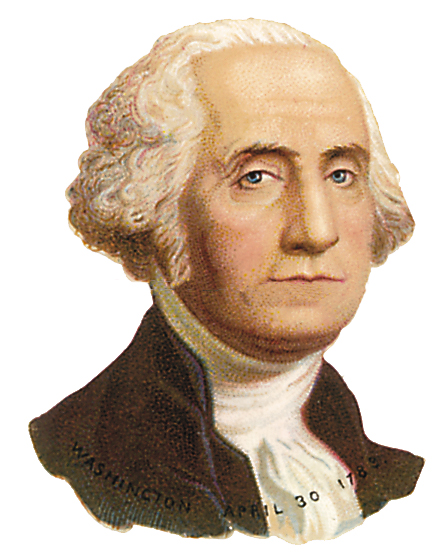
George Washington
1732-1799
"If the freedom of speech is taken away then dumb and silent we may be led, like sheep to the slaughter."


"To be prepared for war is one of the most effective means of preserving peace."


"Truth will ultimately prevail where there is pains to bring it to light."


"It is far better to be alone, than in bad company."


Washington Monument in D.C.

"Happiness and moral duty are inseparably connected."


"The Constitution is the guide which I never will abandon."


"It is impossible to reason without arriving at a Supreme Being."

—George Washington (1732-1799, 1st President of the United States

..................................................

Benjamin Franklin
1706-1790
"Dost thou love life? Then do not squander time, for that's the stuff life is made of."


"Love your enemies, for they will tell you your faults."


"He that lies down with dogs shall rise up with fleas."


"Well done is better than well said."

Benjamin Franklin on the US $100 bill

"A right heart exceeds all."


"He that would live in peace and at ease, Must not speak all he knows nor judge all he sees."


"What's more valuable than gold?

Diamonds.  Than Diamonds?  Virtue."


"A true friend is the best possession."

—Benjamin Franklin (1706-1790), Signer of the Declaration of Independence & Constitution

..................................................

"The advancement and diffusion of knowledge is the only guardian of true liberty."


"Knowledge will forever govern ignorance; and a people who mean to be their own governors must arm themselves with the power which knowledge gives."


"If men were angels, no government would be necessary."


"I believe there are more instances of the abridgment of freedoms of the people by gradual and silent encroachments by those in power than by violent and sudden usurpations."


"The essence of government is power, and power, lodged as it must be, in human hands, will ever be liable to abuse."


"The people are the only legitimate fountain of power, and it is from them that the constitutional charter, under which the several branches of government hold their power, is derived."


"It will be of little avail to the people that the laws are made by men of their own choice if the laws be so voluminous that they cannot be read, or so incoherent that they cannot be understood."

—James Madison (1751-1836), 4th President of the United States

..................................................


Sam Houston
General, President, Senator, Governor
"Do right and risk the consequences."


"Govern wisely — and as little as possible."


"I am aware that in presenting myself as an advocate of the [Native Americans] and their rights, I shall stand very much alone."


"Texas is the finest portion of the globe that has ever blessed my vision!"


"We view ourselves on the eve of battle. We are nerved for contest, and must conquer or perish. It is vain to look for present aid: none is at hand. We must act now or abandon all hope! Rally to the standard, and be no longer the scoff of mercenary tongues! Be men, be free men, that your children may bless their father's name."

Sam Houston Museum w/ my favorite Texan, Frank McLane.
Huntsville, Texas; April 13, 2019

"Let me tell [The Southern States] what is coming. After the sacrifice of countless millions of treasure and hundreds of thousands of lives you may win Southern independence, but I doubt it. The North is determined to preserve this Union. They are not a fiery, impulsive people as you are, for they live in colder climates. But when they begin to move in a given direction, they move with the steady momentum and perseverance of a mighty avalanche."


"To be a good man, an affectionate husband, a kind parent, ... a true patriot, and to leave my family and the world a spotless reputation, comprise all the objects of my earthly ambition!"

—Sam Houston (1786-1863), General (Army of Texas), President of the Republic of Texas, Governor of the State of Texas

..................................................

Abraham Lincoln
1809-1865
"You can fool all of the people some of the time, and some of the people all of the time, but you cannot fool all of the people all of the time."


"Sir, my concern is not whether God is on our side; my greatest concern is to be on God's side, for God is always right."


"How many legs does a dog have if you call his tail a leg? Four. Saying that a tail is a leg doesn't make it a leg." 


"The philosophy of the school room in one generation will be the philosophy of government in the next." 


"I will prepare and someday my chance will come."


"I am a firm believer in the people. If given the truth, they can be depended upon to meet any national crisis. The great point is to bring them the real facts."


Statue of Abraham Lincoln
Lincoln Memorial, Washington D.C.

"My dream is of a place and time where America will once again be seen as the last best hope of Earth." 


"With malice toward none, with charity for all, with firmness in the right, as God gives us to see the right, let us strive on to bind up the nation's wounds, to care for him who shall have borne the battle, and for his widow and his orphan  — to do all which may achieve and cherish a just and lasting peace for ourselves and for all nations."


"All the armies of Europe, Asia and Africa combined, with all the treasure of the earth (our own excepted) in their military chest; with a Bonaparte for a commander, could not by force take a drink from the Ohio, or make a track on the Blue Ridge, in a trial of a thousand years. At what point then is the approach of danger to be expected? I answer, if it ever reach us, it must spring up amongst us. It cannot come from abroad. If destruction is to be our lot, we ourselves must be its author and finisher. As a nation of freemen, we must live through all time, or die by suicide."   

..................................................


Frederick Douglass
1818-1895
"It is easier to build strong children than to repair broken men."


"If there is no struggle, there is no progress."


"I prayed for twenty years but received no answer until I prayed with my legs."


"One and God make a majority."


"The soul that is within me no man can degrade."


"I prefer to be true to myself, even at the hazard of incurring the ridicule of others, rather than to be false, and to incur my own ridicule."


"The life of the nation is secure only while the nation is honest, truthful, and virtuous."


"A gentleman will not insult me, an no man not a gentleman can insult me."

—Frederick Douglass (1817-1895), Early Civil Rights Leader

..................................................


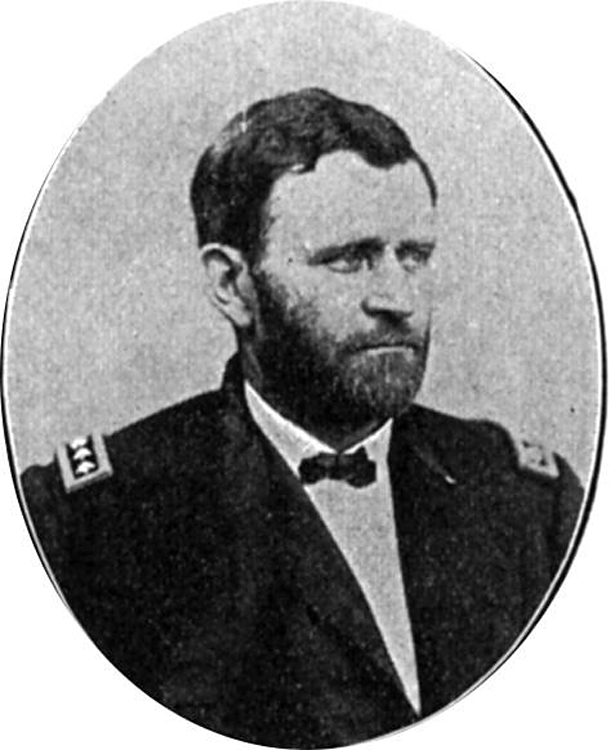
General/President U.S. Grant
1822-1885
"I have never advocated war except as a means for peace."


"Hold fast to the Bible. To the influence of this book we are indebted for all the progress made in ... civilization and to this we must look as our guide in the future."


"Leave the matter of religion to the family altar, the church, and the private school, supported by private contributions. Keep the church and state forever separate." 


President U.S. Grant on the US $50.00 bill


"Nations, like individuals, are punished for their transgressions."

"Everyone has his superstitions. One of mine has always been when I started to go anywhere, or to do anything, never to turn back until the thing intended was accomplished."


"Let us have peace."

—Ulysses S. Grant (1822-1885), Full General of the U.S. Army and 18th President of the United States

.................................................


1803-1882
"Nothing great was ever achieved without enthusiasm."


"Life is a journey, not a destination."


"Be silly. Be honest. Be kind."


"Hitch your wagon to a star."


"Don't be too timid and squeamish about your actions. All life is an experiment. The more experiments you make the better."


"To be great is to be misunderstood."


"You become what you think about all day long."


"Do not go where the path may lead. Go instead where there is no path and leave a trail."

Ralph Waldo Emerson

"One of the most beautiful compensations in life is that no person can help another without helping themselves."


"Knowledge is the antidote to fear."


"Let us be silent, that we may hear the whispers of the gods."


"He who is not everyday conquering some fear has not learned the secret of life."


"Every person I meet is in some way my superior — in that I learn of them."


"Character is higher than intellect."

—Ralph Waldo Emerson (1803-1882), Scholar, Philosopher, Essayist, Poet

.................................................


Henry David Thoreau
1817-1862
"It's not what you look at that matters; it's what you see."


"Rather than love, than money, than fame; give me truth."


"If one advances confidently in the direction of his dreams, and endeavors to live the life which he has imagined, he will meet with a success unexpected in common hours."


"I went to the woods because I wished to live deliberately, to front only the essential facts of life, and see if I could not learn what it had to teach, and not, when I came to die, discover that I had not lived."


"There are a thousand hacking at the branches of evil to one who is striking at the root."


"Goodness is the only investment that never fails."


Sketch of Thoreau's Cabin near Walden Pond
"Things do not change; we change."


"What lies behind us and what lies ahead of us are tiny matters compared to what lies within us."


"I know of no more encouraging fact than the unquestionable ability of man to elevate his life by conscious endeavor."


"None are so old as those who have outlived enthusiasm."


"Life your beliefs and you can turn the world around."

—Henry David Thoreau (1817-1862), Philosopher, Essayist, Friend of Emerson's

.................................................


Theodore Roosevelt
1858-1919
"Do what you can, with what you have, where you are." 


"People don't care how much you know until they know how much you care."


"I am part of everything that I have read."


"To educate a person in the mind but not in morals is to educate a menace to society."


"Never throughout history has a person who has lived a life of ease left a name worth remembering."


"The most important single ingredient in the formula of success is knowing how to get along with other people."


"With self-discipline, almost anything is possible."


"Far and away the best prize that life has to offer is the chance to work hard at work worth doing." 


"Order without liberty and liberty without order are equally destructive."


"Speak softly and carry a big stick; you will go far."


"The only person who never makes mistakes is the person who never does anything."


"It is not the critic who counts; not the man who points out how the strong man stumbles, or where the doer of deeds could have done them better. The credit belongs to the man who is actually in the arena, whose face is marred by dust and sweat and blood; who strives valiantly; who errs, who comes short again and again, because there is no effort without error and shortcoming; but who does actually strive to do the deeds; who knows great enthusiasms, the great devotions; who spends himself in a worthy cause; who at the best knows in the end the triumph of high achievement, and who at the worst, if he fails, at least fails while daring greatly, so that his place shall never be with those cold and timid souls who neither know victory nor defeat."

—Theodore Roosevelt (1858-1919), 26th President of the United States.

.................................................


"The only thing we have to fear is fear itself." 


"When you reach the end of your rope, tie a knot in it and hang on."


"I'm not the smartest person in the world, but I can sure pick smart colleagues."


"It is common sense to take a method and try it. If it fails, admit it frankly and try another. But above all, try something."


Franklin with his wife, Eleanor
"If civilization is to survive, we must cultivate the science of human relationships 
— the ability of peoples, of all kinds, to live together in the same world in peace."


"Confidence ... thrives on honesty, on honor, on the sacredness of obligations, on faithful protection and on unselfish performance. Without them it cannot live."

—Franklin Roosevelt (1884-1945), 32nd President of the United States.

.................................................


Eleanor Roosevelt
1884-1948
"The future belongs to those who believe in the beauty of their dreams."


"You can often change your circumstances by changing your attitude." 


"No matter how plain a woman may be, if truth and honesty are written across her face, she will be beautiful."


"Life is what you make it. Always has been, and always will be."


"It is not fair to ask of others what you are unwilling to do yourself."

Eleanor with her husband, Franklin

"It is better to light a candle than to curse the darkness."


"Great minds discuss ideas. Average minds discuss events. Small minds discuss people."


"No one can make you feel inferior without your consent."

—Eleanor Roosevelt (1884-1948), First Lady of the United States.

.................................................

Martin Luther King, Jr.
1929-1968

"We must accept finite disappointment but never lose infinite hope."


"Faith is taking the first step even when you don't see the whole staircase."


"Forgiveness is not an occasional act. It is a permanent attitude."


"Life's most persistent and pressing question is: what am I doing for others." 


"Darkness cannot drive out darkness; only light can do that. Hate cannot drive out hate; only love can do that."


"Never succumb to the temptation to bitterness."


"Intelligence plus character—that is the goal of true education."

—Dr. Martin Luther King, Jr. (1929-1968), Civil Rights Leader

.................................................

Ronald Reagan
1911-2004
"Freedom is never more than one generation away from extinction. We didn't pass it to our children in the bloodstream. It must be fought for, protected, and handed on for them to do the same."


"We can't help everyone, but everyone can help someone."


"Trust, but verify."


"If we ever forget that we are One Nation Under God, then we will be a nation gone under."


"There are no easy answered, but there are simple answers. We must have the courage to do what is morally right."


"The best minds are not in government. If any were, business would steal them away."


"Politics is supposed to be the second oldest profession. I have come to realize that it bears a close resemblance to the first."


"They say the world has become too complex for simple answers. They are wrong." 

—Ronald Reagan (1911-2004), 40th President of the United States.


.................................................


"I am determined to be cheerful and happy in whatever situation I may find myself. For I have learned that the greater part of our misery or unhappiness is determined not by our circumstance but by our disposition."

—Martha Washington (1731-1802), First Lady of the United States


"There ain't no ticks like poly-ticks. Bloodsuckers all."


"You may all go to hell, and I will go to Texas."


"Remember these words when I am dead. First, be sure you're right; then go ahead."

—Davy Crockett (1786-1836), Soldier, Frontiersman, Soldier


"I am determined to sustain myself as long as possible and die like a soldier who never forgets what is due to his honor and that of his Country; Victory or death."

—William Barrett Travis (1809-1836), Soldier, Army Lieutenant Colonel


"Remember, no effort that we make to attain something beautiful is ever lost."

—Helen Keller (1880-1968), Political activist, disability rights advocate, author and lecturer


"There is no chance, no destiny, no fate, that can circumvent, hinder, or control, the firm resolve of a determined soul."

—Ella Wheeler Wilcox (1850-1919), Poet


"Be a first-rate version of yourself, instead of a second-rate version of somebody else."

—Judy Garland (1922-1969), Hollywood Actor


"I'm a big believer that eventually everything comes back to you. You get back what you give out." 

—Nancy Reagan (1911-2004), First Lady of the United States.


"Love and hope can conquer hate." 

"The best judge of whether or not a country is going to develop is how it treats its women."

—Barack Obama (1961-Present), 44th President of the United States.


"Always stay true to yourself and never let what somebody says distract you from your goals."

—Michelle Obama (1964-Present), First Lady of the United States


"There is no greater gift you can give or receive than to honor your calling. It's why you were born."

—Oprah Winfrey (1954-Present), Billionaire Media Mogul


NOTE: This article is the 20th in a series of 22 articles on the subject of LIFE RULES.

Click HERE to access quick links to the other 21 articles.   


—Dr. JJ


April 20, 2022
Palm Beach Gardens, Florida, USA

Author's Note: This is the 261st Blog Post Published by Freedom Focused LLC since November 2013. 

Click HERE for a compete listing of the other 260 FF Blog Articles.  

.........................

Tune in NEXT Wednesday for another article on a Self-Action Leadership related topic.  

And if you liked this blog post, please share it with your family, friends, colleagues, and students—and encourage them to sign up to receive future articles for FREE every Wednesday.

To sign up, please email freedomfocused@gmail.com and say SUBSCRIBE, or just YES, and we will ensure you receive a link to each new blog article every Wednesday.  

Click HERE to learn more about Freedom Focused

Click HERE to learn more about Dr. Jordan Jensen

Click HERE to buy the SAL Textbooks

Notes:

1. Mansfield, S. Never Give In: The Extraordinary Character of Winston Churchill. Nashville, TN: Cumberland House. Pages 190-193. 

JJ's Journal: February 1988

  The Personal Journals of Jordan Rex Jensen  February  1988 Monday, February 1, 1988 JJ slam dunking a mini soccer ball in the driveway of ...