Showing posts with label English Language. Show all posts

Wednesday, July 14, 2021

The Role of Failure in Success

I have been thinking lately about the vital role that failure plays in all of our greatest successes as human beings.

Think about it...

  • Abraham Lincoln lost more elections than he won. His career record in politics was 5-6.
  • Thomas Edison failed several thousand times before finally discovering the secret to the incandescent light bulb. Along the way, he maintained an incredibly positive and proactive attitude. To wit... when a journalist asked him about his many "failures" to succeed in his quest, Edison corrected the correspondent, saying: "I haven't failed at anything; I've successfully discovered thousands of ways that won't work!"   
  • Michael Jordan failed to make his high school's varsity basketball team as a sophomore. He also played seven seasons in the NBA before earning his first World Championship ring.
This same patterns has played out extensively in my own, personal experiences. For example:
  • Dr. JJ
    Obsessive-Compulsive Disorder (OCD) held me captive in a variety of ways for over two decades, but after getting lots of help from others (including professionals), medication, self-help, and plenty of assistance from that Higher Power, the disorder is now effectively managed and under control.  
  • I was rejected 130 times by 80 different women before finding success with my amazing wife, Lina. And it was worth the wait, because of all the women I ever dated, she is the best gal for me.    
  • I have failed endlessly in my efforts to build my educational business. In fact, to this day, after 18 years of struggle and toil, it still is not fully launched, but I have had a variety of publishing and other successes along the way, and my big break is still out there somewhere just waiting to knock on my door.  
Judging by the patterns articulated above, do you think there is any real doubt in my mind that I will eventually hit the jackpot—one way or another— in my professional pursuits as well?

While there has been no shortage of frustration and discouragement along the way, I remain as confident as ever about my long-term success potential as a writer, speaker, leader, and organizer. Like Edison, I merely view my "failures" as stepping-stones along my never-ending pathways to greater and higher levels of success, service, and contribution.

—Charles Darwin
In adherence to the advice of the famous scientist, Marie Curie, I will persevere until I succeed. Moreover, aware of the great truth declared by the English naturalist, Darwin, I recognize that my capacity for creativity, flexibility, and change are even more important than raw talent or acquired polish.  

One of my oratorical heroes from history is Winston Churchill—who not only saved the world from the evils of Nazi fascism, but did so with two very unique weapons: the persuasive power of the English language and the enormous force of his own personality. 

A young Winston Churchill in uniform at
Sandhurst Military Academy

(i.e. West Point in U.S.)
Despite his enormous legacy of success, Ole' Winston faced his own share of failures and setbacks throughout his life and career. In his early 40s, the Allied disaster at Gallipoli in World War I cost him his career as First Lord of the Admiralty (i.e. Secretary of the Navy in the U.S.). After experiencing a political rebound after the Great War, Churchill found himself on the outside looking in once again throughout much of the 1930s, which are famously referred to as his "Wilderness Years."

But he never gave up trying to use his energy and voice to fight for what he believed was right. And when the time was right, his country called upon him in its hour of greatest need at the outset of World War II—when Western Civilization stood on the brink of collapse from a truly ominous and evil foe.

Despite Churchill's advancing years, which placed him near retirement age in 1940, he took up the reigns of power at a moment of unprecedented importance in the history of Great Britain, Western Europe, and the World-at-large. In the end, Churchill and his Allies came off conquerer over the monstrous Adolf Hitler and his fiendish minions and their unprecedented military might.

Churchill is famous for saying that: "Success is the ability to go from failure to failure without a loss of enthusiasm."   

"Success is the ability to go from failure to failure without a loss of enthusiasm."

 Winston Churchill

Churchill conferring with Roosevelt during World War II
The fascinating thing about this quote is that Churchill—with his famous two-fingered "V"-for victory salute—does not, in the quote, equate success with winning.

He doesn't say: "Success is winning the battle." 

Churchill obviously wanted to win very badly, and was willing to do whatever victory required. Yet victory in and of itself was not the essence of success for Churchill. And it is no secret that the British Empire and the French Republic and their Allies faced their share of difficulties and setbacks during the early years of the worldwide conflict.

No. It was not victory alone that defined success in the eyes of Winston Churchill. What then was the essence of success for this lion of a leader?

CONSISTENT and CONTINUAL EFFORT bolstered by an undeviating and dogged DETERMINATION regardless of the present status of thingsTHAT was the essence of success for Winston Churchill. And anyone who has carefully studied his steady leadership throughout the crisis years of 1940-1945 know that it was this philosophy that eventually led to the gradual attrition of fascist forces and the ultimate victory for the Allies.     

Cultivating this MINDSET for a holistic and comprehensive commitment to eventual victory—which assumes complete and absolute dedication to a cause all along the way—has been my aim since I was about seven years old, and has demonstrated itself in a variety of passions, desires, and goals. 

I have always set my sights high in my life
It all began as a seven and eight-year-old with a growing desire to do all sorts of things—and do them well! From mastering foreign languages and the art of playing the piano to eventually becoming President of the United States, my goals were many, varied, and always ambitious. Along the way, I would, of course, make it to the NBA, and perhaps win some Olympic Gold Medals as well.

I was very passionate about my undertakings, and genuinely believed that with focus, hard work, and consistency, I could eventually do and/or be just about anything I wanted. I was also blessed with a supporting cast of family members, teachers, and friends, who were typically as positive about my potential as I was. 

Along the way, I gradually grew up—as we all must. As I did, I learned that all human beings have limitations, including myself. I also discovered through experience that I was clearly better suited for some activities than I was for others. For example, while I was passionate (in theory) about foreign languages and the piano, I discovered through trial-and-error that I had very little natural genius or personal proclivity for either activity. Thus, I began to increasingly specialize based on my most prominent in-born aptitudes, personal propensities, and preferred preparations.

At age 8 or 9, I took great pride
in sharing a name with "Air Jordan"
Along the way, I discovered that I possessed an above-average level of athletic coordination and talent. One of my top skills as a youngster was playing basketball, and with a lot of practice, I became a pretty good basketball player. Those who knew me well in elementary school and junior high school will verify this fact. In my own mind I was better than I really was (of course), and I very seriously (albeit naïvely) assumed I would someday play in the NBA. 

Then something interesting happened. During my 9th grade year, my love for basketball began to wane severely. It was the first time I had ever been part of a serious, full-length season of any team sport, and I discovered that my joy of playing with a basketball was greater than my joy of playing on a basketball team (there's a pretty big difference). Consequently, and much to my surprise, I decided not to play on the basketball team after 9th grade and instead focus on a different sport I had always shown promise in—middle distance running. 

Finishing my first 10K at age 8.
With my dreams of playing in the NBA altered by perspective and reality, I set out to discover my potential in cross-country and track. Despite an eventual State Championship medal in high school and an All-American citation in college, I learned over time that I was—at best—only a semi-elite track athlete. Unfortunately, semi-elite athletes don't qualify for the Olympics; nor do they sign professional contracts. 

During my year of collegiate competition, I developed a tremendous admiration and respect for Sebastian Coe of Great Britain. Coe was a former Olympic Champion and world record holder at my two best events—the 800 and 1500 meter runs. 

While watching a documentary about Coe during college, I heard his mother say something about her son that became burned into my soul. She said: "There was always something about Sebastian that drove him to be the very best at whatever he did. If he had not been talented at athletics, he would have found some other activity in which to excel." Mrs. Coe was right! In fact, despite Seb's world champion successes as a runner, he later became a successful politician and the lead organizer of the 2012 Summer Olympic Games in London, England—his home country.  

In light of my failure to reach elite status as a middle distance runner, those words of Tina Angela Coe bolstered my mind, heart, and spirit. I have always believed that I possessed the same kind of internal stuff that had driven Seb Coe, Michael Jordan, Abraham Lincoln, Thomas Edison, and Winston Churchill to the very top of their respective fields. The question was: having failed to reach the top (or having become disenchanted with) languages, the piano, politics, basketball, and middle-distance running, what outstanding talents remained whereby I could distinguish myself and serve others? 

Over the years, the answer to this question became crystal clear: writing, speaking, organizing, and leadership. As an adult, I have therefore chased after these new ambitions with the same vigor, vim, and joy that I pursued many of my previous pursuits. Moreover, I have discovered that in the long-run, the service I can provide to others through these endeavors is at least as satisfying—if not more so—than whatever personal achievements and rewards I receive for my individual exertions.  

To date, I've published six books and a dissertation, hundreds of articles in newspapers, periodicals, and academic journals, and 220 blog articles. I've spent approximately 10,000 hours composing with my pen, and approximately 5,000 hours speaking publicly all over the English-speaking world. Lastly, I've gained extensive experience leading, managing, and organizing in a variety of different positions and settings. 

Success is a Journey, not a destination
Despite all that, I still haven't caught my "Big Break" as an entrepreneurial business builder. But that's okay. 

Why is it okay?

It's okay because I've already enjoyed a LOT of success along the way.  I enjoy what I do regardless of the fanfare and plaudits (or lack thereof). There is enormous satisfaction and joy in the journey itself! Honestly... it is that daily joy in the journey that drives me more than anything else. 

Plus, I'm only 41 years old. Abraham Lincoln was ten years older than I was when the opportunity of his lifetime arrived. And Winston Churchill was 24 years old older than me was when his nation came calling. If two of the greatest men in history had to wait until they were 51 and 65, respectively, to finally have their life's work pay off in climactic fashion, I figure I can afford to be as patient as needs be.

Regardless how well a person might prepare prior to an opportunity finally arriving, the reality is that timing always plays a key role in its overall calculus. Make no mistake, opportunities will arise for everyone, and especially for those who conscientiously prepare themselves. We won't always know when our individual opportunities will arise. But we can always do our best to prepare for our own big (and little) chances in life by continually studying, practicing, and teaching. As long as we have paid the price in preparation, life will eventually provide all of us with our own, unique opportunities in due time.

The greatest work of all happens in homes
As you consider what your own "Big" (and little) Breaks" might be, remember that opportunity comes in all different shapes and sizes. Moreover, the best opportunities are often not highly visible with a spotlight shining on them.

For example, some of the world's greatest human beings have been unknown and unheralded mothers and fathers who quietly and obscurely, yet truly and nobly raised stalwart sons and daughters who, in-turn, performed noble deeds and/or raised honorable sons and daughters of their own. 

Can there be any greater personal contribution than that?

True Success is all about the
Direction You are Headed
Remember what we learned from Winston Churchill: results are not, in-and-of-themselves, the truest mark of success. He did not say that victory is success. He said that: "Success is going from failure-to-failure without a loss of enthusiasm."

The truest mark of success is measured in effort, discipline, consistence, persistence, passion, resilience, and durability. Countless heroes died before their battle had been won. While their moments of climax may have been bereft of an audience or applause, their legacy of greatness nonetheless lives on—burnished ever brighter by the tales of triumph told and retold by those who remain.
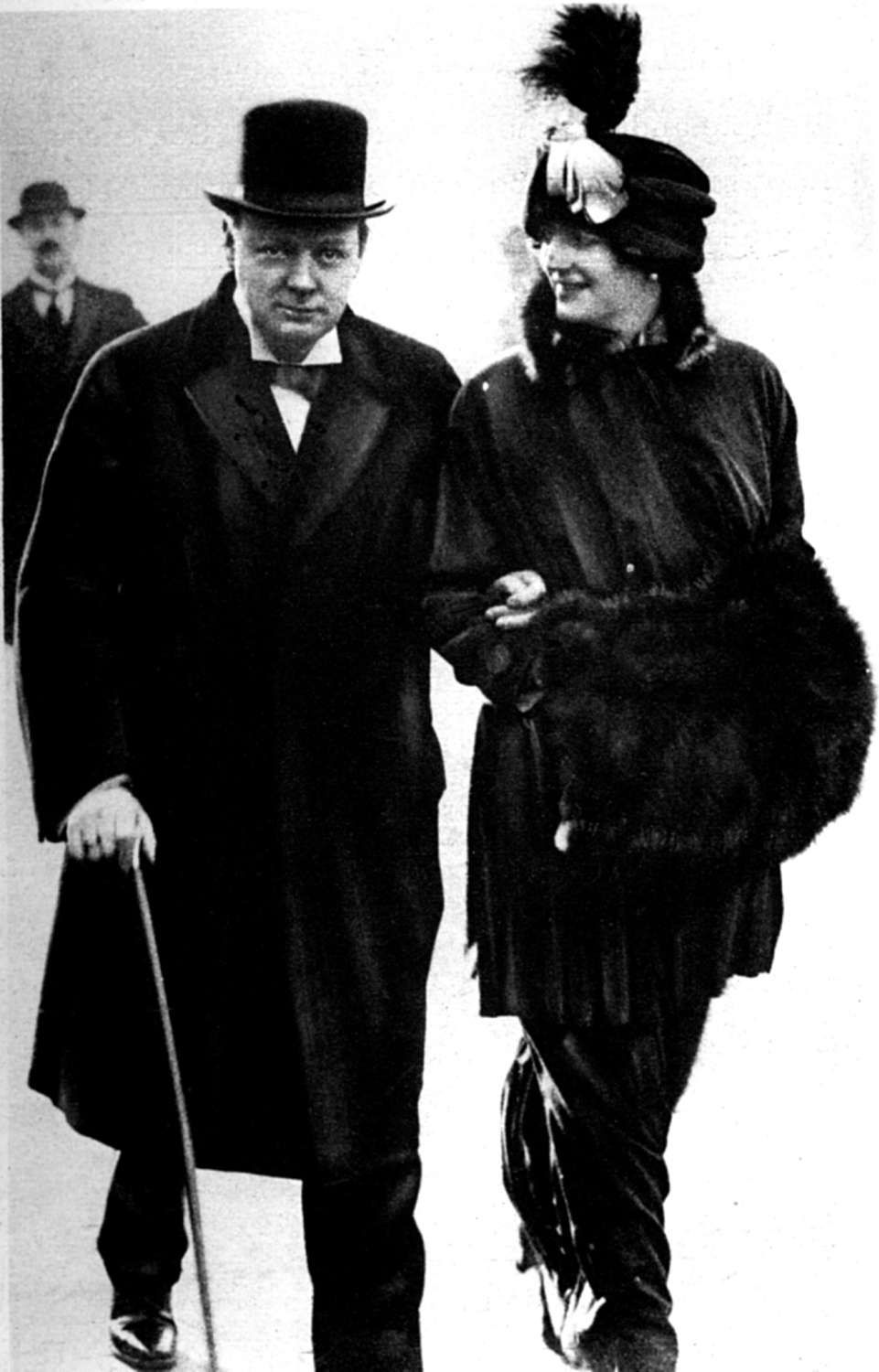
Next time you are tempted to give-up on a worthy goal, pursuit, or change-effort, I encourage you to remember the words of Ole' Sir Winston, who gave the following advice to a classroom of young people at Harrow, a private all-boys school in the Greater London area:

"Never give in, never give in, never, never, never, never-in-nothing, great or small, large or petty—never give in except to convictions of honour and good sense. Never yield to force. Never yield to the apparently overwhelming might of the enemy."

         Winston Churchill 


I close with some inspirational excerpts from a college graduation speech delivered by Denzel Washington, an Academy Award-winning actor. I hope his words ring as true and powerful for you as they did for me. 
Oscar Award

"I've found that nothing in life is worthwhile unless you take risks; nothing! Nelson Mandela said, 'There is no passion to be found playing small and settling for a life that's less than the one you're capable of living. ...

"Do what you feel passionate about; take chances; don't be afraid to fail. ... Don't be afraid to think outside the box; don't be afraid to fail big; to dream big. 
"But remember: dreams without goals are just dreams. 

"Reggie Jackson struck out 2,600 times in his career—the most in the history of baseball—but you don't hear about the strikeouts; people remember the home runs. ...

"Every failed experiment is one step closer to success. You've got to take risks. ... and I want to talk to you about why that is so important. 
"You will fail at some point in your life; accept it, you will lose. You will embarrass yourself; you will suck at something, there is no doubt about it. ... I'm telling you, embrace it because it is inevitable. ...

"Early on in my career I auditioned for a part in a Broadway musical—a perfect role for me I thought, except for the fact that I can't sing. I didn't get the job. But here's the thing: I didn't quit. I didn't fall back. I walked out of there to prepare for the next audition and the next audition and the next audition. I prayed; I prayed; and I prayed! But I continued to fail, and fail, and fail; but it didn't matter because you know what, there's an old saying: You hang around the barbershop long enough sooner or later you're gonna get a haircut. So you will catch a break, and I did catch a break. Last year I did a play called Fences on Broadway. But here's the kicker: it was at the Court Theatre—it was at the same theatre that I failed that first audition 30 years prior. ...

"Every graduate here has the training and the talent to succeed; but do you have the guts to fail? If you don't fail, you're not even trying. I'll say it again: if you don't fail, you're not even trying! To get something you never had, you have to do something you never did. So imagine you're on your deathbed, and standing around your deathbed are the ghosts representing your unfulfilled potential—the ghosts of the ideas you never acted on; the ghosts of the talents you never used. And they're standing around your bed angry, disappointed, and upset. They said we came to you because you could have brought us to life; and now we have to go to the grave together. So I ask you today: "How many ghosts are gonna be around your bed when your time comes?"

Click HERE to watch Denzel Washington's FULL SPEECH

Click HERE to watch a MOVIE CLIP from one of my favorite movies featuring Denzel Washington's prodigious acting ability. This scene in the movie Glory helped Washington win an Academy Award for Best Supporting Actor.


-Dr. JJ

July 14, 2021
Palm Beach Gardens, Florida, USA

Author's Note: This is the 220th Blog Post Published by Freedom Focused LLC since November 2013. 

Click HERE for a compete listing of the other 219 FF Blog Articles.  

.........................

Tune in NEXT Wednesday for another article on a Self-Action Leadership related topic.  

And if you liked this blog post, please share it with your family, friends, colleagues, and students—and encourage them to sign up to receive future articles for FREE every Wednesday.

To sign up, please email freedomfocused@gmail.com and say SUBSCRIBE, or just YES, and we will ensure you receive a link to each new blog article every Wednesday.  

Click HERE to learn more about Freedom Focused

Click HERE to learn more about Dr. Jordan Jensen

Click HERE to buy the SAL Textbooks


Wednesday, January 27, 2016

Preserving English Text While Texting


Tush tush! A pox upon the texting
habits of our posterity!
As I have traveled around the English speaking world teaching grammar and business writing courses, I am sometimes confronted with various forms of the following question: “Is the future of the English language doomed because of the text messaging habits of today’s teenagers and young professionals?” This question always makes me smile (at least on the inside), partly because I know from whence the questioner’s distress arises, and partly because I possess sufficient optimism to provide a hopeful answer to such queries.

The simple answer to this question is “No”; contemporary young people (and their older adult counterparts who routinely butcher English virtually) are not going to ruin our language – at least not entirely – with their lazy acronyms, painfully poor spelling, and lack of any penchant for proofreading. In the end, the real cost is not to the language itself as much as it is to their own personal and professional credibility. To the extent that they persist in these habits, they tarnish their personal image and minimize their potential for professional advancement in the modern workplace.

Pope wrote that hope springs eternal;
May it be so for your texting diurnal.
It is true that the English language is evolving, and in some ways more quickly than ever before throughout its storied history. But language has always evolved. Such evolution began long before the invention of computers or cell phones, and will continue long after the Millennial Generation has matured. As an optimist in the face of this ongoing evolution, I hold that a vestige of quality language will always remain in tact in Western Civilization and beyond.

If I am to be proven right in purporting the perpetual maintenance of what one might call “High Language,” or at very least, “Professional Speak,” then trainers and other educators must play a vital role. Moreover, if the rising generation is to effectively make the vital transition from “Teenage Texter to Polished Professional Communicator,” a very real “Evolution in the Classroom” must occur to match the seeming language evolution that mirrors the troubled text and instant messaging quagmire in which many young professionals (and others) find themselves mired.

I suggest that this educational evolution ought to be based on the view that ALL language is vital, and therefore worthy of thoughtful composition followed by careful and consistent editing and proofreading. This belief corrects the misnomer held by so many that a text or instant message somehow possesses less literary value than an email, letter, report, etc. It also eliminates the mistaken notion that emails are essentially just a grandiose text message and therefore not worthy of careful construction, eager editing, or precise proofreading.


You would think the importance of CLARITY, CONCISION, and COGENCY in all forms of communication would be a self-evident reality for all writers. Not so! In reality, even the best writers struggle at times to effectively cast their thoughts into the finest molds possible – even after expending good-faith efforts and ample time in the process. As such, is it any wonder that less experienced, and more careless composers commonly craft professional prose that would barely qualify as doggerel were it to morph into verse or suddenly burst forth into song?

In truth, the only thing that is self-evident is that much of the communicating public could use a LOT of training when it comes to communication of all kinds, and perhaps especially so when it comes to the compositions that many create most often: text and instant messages. To remedy this self-evident societal sickness and persistent professional problem, I suggest three primary premises serve as a pedagogical foundation to any effective text or instant messaging educational initiative. And the good news is that these same premises apply to other, longer forms of written communication.

Premise 1: Inscrutable text has no value


ALL communication designed to inform, instruct, or persuade (as opposed to poetry, drama, and fictional prose, which is designed to entertain) only has value if it can be quickly read and readily understood. If your readers are confused by whatever convoluted thoughts and disorganized material you have haphazardly strung together on a screen or page, they will likely find themselves frustrated – perhaps even a little angry – and in many cases may stop reading and give up trying to understand what you are trying to communicate.

I often wonder how many billions of dollars are lost in time and resources every single year in America and beyond for no other reason than that a preventable miscommunication has occurred. All communication counts! Don’t be lazy in carefully organizing and dutifully reviewing each message you decide to craft for another, be it for an individual, small group, or large audience.


Premise 2: Editing and proofreading are paramount—not perfunctory—even for text and instant messages.


No matter how long your composition is, editing and proofreading should not be considered perfunctory tasks, but a paramount part of the process. No matter how good you are at writing, and regardless how much knowledge and experience you bring to your keyboard, everyone makes mistakes. A common misnomer among amateur writers is that great writers get it right on their first draft. Not so! There are times when I will edit and/or proofread a document seven, eight, or even nine times before hitting “send” or otherwise submitting it to its intended audience. And I am typically still making changes on the eighth and ninth revision.

Carl Sederholm, a college professor of mine at Brigham Young University, once told my English class: “You never finish a document; you stop writing.” Dr. Sederholm is correct. Unlike math equations and science questions, there is rarely just one right answer when you are writing. Furthermore, you could theoretically continue making adjustments to any document forever! As such, there is usually a point in time where you must “stop writing” and choose to turn your document in. In the meantime, it is wise to spend as much time editing and proofreading as would be both practical and prudent. It will take more time up front on your part to do this; but oh the time it can save you—and others—down the road if you will do it!

Premise 3: Short messages can be just as important as lengthy communications.


Regardless whether your composition is a text message, a full-page letter, a 20-page report, proposal, grant, etc., or a full-length thesis, manual, or book, every communication matters. If it didn’t, you (or anyone else) wouldn’t bother to take time to craft the message in the first place. While some communications are clearly more important than others (e.g., a supervisor’s formal reprimand or financial statement may carry more weight with you than an email or text message wishing you Happy Birthday), any communication that fails to achieve its intended purpose has failed indeed. I don’t like to fail at anything I seriously attempt. As such, regardless of the medium, whenever I communicate, I greatly value the way in which that piece of information is composed. My goal is to maximize the clarity, concision, and cogency of every message I send. Whether a message is a 20-page report or a 2-line text message makes little difference to me.

It is true that it will take more time to effectively edit and properly proofread a 20-page proposal or a 200-page book than a 2-page email or 2-paragraph text message. In addition, the time I devote to editing and proofreading is typically commensurate to the importance of the document (in consideration of all the stakes involved). Nevertheless, I rarely, if ever, hit my “Send” button until I have done at least one or two editing and proofreading reviews—no matter how long or short the document.

I encourage ALL educators to apply these premises in your own communication practices until they become an unconscious habit on your part. By so doing, you will become a good example to your students, thus empowering you to better teach and model the cultivation of the same premises in their communication habits—and especially with regards to text and instant messaging. As you – and they – so do, the maintenance and perpetuation of the beautiful, elegant, and rich English language will be preserved for generations to come. And in the short run, everyone will save time and money while avoiding unnecessary confusion, stress, and heartache as we send and receive messages that are clear, concise, cogent, and let us not forget—kind—a topic for another day.

In closing, there are some fantastic articles online that provide additional, concrete tips for improving your text and/or instant messaging practices. Here are four I would recommend:

Frankola, K. (2015). Has Instant Messaging Become More Annoying Than Email? 5 Steps for More Productive Pinging. HuffPost Business. Posted 10 May 2015. URL: http://www.huffingtonpost.com/karen-frankola/has-instant-messaging-become-more-annoying-than-email-5-steps-for-more-productive-pinging_b_6815700.html

Maher, K. (2004). The Dangers of Using Instant Messaging at Work. The Wall Street Journal (Online). Posted 5 October 2004. URL: http://www.wsj.com/articles/SB109692934259135827

Simpson, M. (2013). 12 Tips for Using Instant Messaging. Matt Simpson Blog. 10 April 2013. URL: https://matthewsimpson.com/12-helpful-tips-for-using-instant-messaging-in-workplace/

Twelve Tips for Instant Messaging in the Workplace. Training and Consulting in International Business Protocol and Social Etiquette. Posted 1 June 2014. URL: http://www.advancedetiquette.com/2014/06/12-tips-for-instant-messaging-in-the-workplace/

Post Scripts:

What is the Difference Between Editing and Proofreading?

The terms “Editing” and “Proofreading” are often used together or interchangeably. This practice perpetuates the mistaken notion that they are synonyms. In fact, they are different pursuits that are both very important. The difference is that editing involves content while proofreading in concerned with mechanics. In shorthand, we can write:

Editing = Content  and  Proofreading = Mechanics

Editing involves checking a document for completeness and accuracy. It also includes examining a sentence, paragraph, section, chapter, or document’s organization, syntax (word ordering), tone, and flow. Proofreading, on the other hand, involves checking for capitalization, punctuation, spelling, and grammar.


The 3 (Three) C's of Good Writing: Clarity, Concision, and Cogency


All effective written compositions possess two or three fundamental elements. These elements are clarity and concision, and in cases where persuasion is a priority, cogency as well. Clarity begs the question: “Is my writing clear and easy to understand?” Concision begs the question: “Have I stated my message as briefly as possible without using any unnecessary words?” Cogency begs the question: “Will my writing be compelling and/or persuasive to my audience?” After finishing any piece of writing, regardless of the length, if you can honestly look it over and say with confidence: “This composition is clear, concise, and cogent,” then you are ready to turn your work in.


About the Author 


Dr. Jordan R. Jensen
Dr. Jordan Jensen is the Founder & CEO of Freedom Focused and the author of the groundbreaking new book, Self-Action Leadership: The Key to Personal, Professional, & Global Freedom.  He has trained business professionals in 47 U.S. States and Territories, 5 Provinces of Canada, and 9 Counties of Great Britain on a wide variety of soft-skill topics including leadership, self-leadership, management, time management, goal setting, strategic thinking, emotional intelligence, and a variety of communication skills. To learn more about Dr. Jensen and how his company, Freedom Focused, can assist you in achieving your organizational potential, visit www.freedomfocused.com

To buy Jordan's new book, click HERE.


Tuesday, December 8, 2015

Grammar & Writing Seminar Coming December 16

Freedom Focused is pleased to inform you of an upcoming live webinar on December 16 featuring Dr. Jordan R. Jensen.

The topic is Error-Free Writing: Sharpening Your Grammar & Proofreading Skills.  This course is designed for anyone who writes professional e-mails, letters, memos, reports, proposals, etc.

Because this program may be of particular interest to YOU, we would like to personally invite you to attend.  And as our special guest, you are eligible for 50% off the regular registration fee!  The details to this webinar are below.

Error-Free Writing: Sharpening Your Grammar & Proofreading Skills


December 16, 2015

1:00PM EST - 2:00PM EST (12:00 Noon CST - 1:00 CST)

Please click on the web link below to view the details of this seminar.

Register Online: Click HERE for Webinar details & to Register
Call: 866-352-9539
Discount code: F7478005 
Priority code: 15999

We look forward to having you in attendance and providing you with the latest information on this topic!

Agenda


I. Learning to Navigate Our Crazy English Language

          a. A Little History
          b. Sentence Structure
          c. Grammar Rules
          d. The Dictionary: Your New Best Friend

II. Editing

          a. Editing vs. Proofreading
          b. Syntax
          c. Content
          d. Formatting

III. Proofreading

          a. Spelling
          b. Capitalization
          c. Punctuation
          d. How to Proofread like a Pro

Friday, February 27, 2015

A Doctor of Education Shares His Personal Experiences with ODC, Part 3

Night & Day Difference — A "Before-and-After" Portrait of My Mental Hygiene

I have come a long ways in learning to manage my OCD & depression. Today, my symptoms are more of a faint hum in the background of my life rather than a blaring bugle in the forefront. In this blog post, I share the assessments of others closest to me who add their two cents to describing the tremendous "Before-and-After" pictures of my mental hygiene.
 

Jensen family in 1989.  I am youngest boy. My OCD became clinical in 1992.
FAMILY MEMBER'S ASSESSMENTS


Aside from my own self-assessment of how far I have come, which I will elaborate on later in this chapter, it is also insightful, and perhaps even more so, to consult the viewpoints and perspectives of others who knew me best, and who were the most intimately aware of the struggle I was having with OCD. In soliciting the feedback of my parents, siblings, and siblings-in-law, I posed the following query: “How far has Jordan come in his battle with OCD—and his life in general—since first being clinically diagnosed in 1997?” With the exception of a few minor typographical corrections and formatting adjustments, I have reprinted these family responses verbatim as I received them. I have done this to maintain the integrity of each person’s full response, even though some responses strayed at times from the direct question posed, and contained a few minor factual discrepancies. Despite my penchant for factual accuracy, I have opted to allow for the occasional deviation from the precise facts in these descriptions because they are, in fact, factual representation of the way they saw it.

FROM MY MOTHER


1. When Jordan was a kid, he always seemed to be ahead of his peers socially and consequently related to adults better than he did friends his same age. This made school experience difficult, because he was surrounded mostly by his peers. Adults that knew Jordan would always exclaim to me what an amazing young man he was. More mature than most boys his age.

He displayed an uncanny ability to lead those around him. Example: Upon the discovery of the death of a Mouse, (or bird....I can't remember which), he went to great lengths to give it a proper burial and had his cousins stand and listen to scriptures he read from the Bible. They didn't question anything Jordan wanted to do or accomplish.

One day when I was doing laundry, He, his little sister Jessie and his cousin Ryan were playing in the doll house across the hallway. I heard him say, "I'll be the Dad, Jessie you be the Mother, and Ryan, you be the Dog". Immediately Ryan dropped to all fours and started barking. I couldn't believe it. If I had been Ryan, I would have said, "how come you get to be the Dad and I'm the Dog?" Kids his own age seemed to look up to him and regularly follow his council. He never saw his ability to lead others as something special or unusual......it was just who he was.

When he was older, in high school, he organized amazing, elaborate dates. Both boys and girls wanted to be invited and involved in Jordan's plans.

Perhaps the most elaborate of all was a Robin Hood date in which he and a good friend rode around on horseback and shot invitations to the girls, via arrows, that landed on their front yards. (Did I mention his dates were always elaborate?) They were of course dressed in the attire befitting Robin Hood's era and the horses were borrowed, as we did not have any horses. : )

He involved the entire Family. For example, I made the turkey feast, while his siblings were assigned specific responsibilities, all of which were crucial to his ability to orchestrate his carefully laid out plans. His brothers helped build a gigantic bonfire, which he started with a flaming arrow. Brothers, hidden in bushes and trees, video taped the entire evening, so at the end of the adventure all the girls and boys could view themselves on the television at our home.

I have shared only a small part of what was required to pull off one of his adventures.......but they were elaborate to say the least. One time he did a mission impossible date and even solicited the help of a teacher and the local police department. People rarely turned him down if he made a request. You might say Jordan had an amazing imagination which he enjoyed using and exercised it regularly.

Through all of these preparations which were painstakingly executed, he seemed to thrive on both preparation and outcome.

2. The one thing that always characterized Jordan was his absolute integrity and honesty. Often times his OCD would play havoc with these qualities. I remember when he took some national test that would determine whether or not he could skip a certain class his freshman year. (I think it was English 101 ) Anyway, he took the test. When the letter came in the mail revealing he had a glowing score and would be able to wave the freshman class, he had a hard time accepting it. His very words to me were..........."It was mostly essay and I just BS... ed my way through it, I couldn't possibility have done so well."( He has a gift with words and language.) All I could say was....."well, you must have done a remarkable job at b.s. ing" Don't fight it, you passed and that's wonderful.

3. When Jordan was passing off merit badges to earn his Eagle Scout award, his scout master told me that Jordan felt he had to do twice as much as was actually required, because he didn't feel the basic requirements were adequate enough to make him worthy of the merit badge.

4. I noted when he was around 12ish....he had an obsession with washing his hands. It was to the point that he had bandages on nearly every finger including thumbs, they were so raw.[1]

Jordan from a young age kept a little black note book. When he came across or heard a word he didn't know, he would look it up, write it in his little book and use it until it became a part of his vocabulary. He was always asking me if I knew the meaning of a certain word. It always seemed to surprise him when I did know. When I didn't I told him so.

5. Jordan was enthralled with the Civil War and about age 14, he started to write a story that took place during the Civil War. He took great pains to research details of that era so everything would be historically accurate. I've never met another child who was as tenacious in everything he encountered.

How has he grown and overcome his issues?

I believe the real key to Jordan's conquering his OCD challenges lie's in two amazing qualities. First: his great humility. Second:, his desire to be the best person he can be.

When he was a junior in high school, he wrote a paper, for some class at school, on OCD. After he had written it, he came to me and said, "Mother, I think this is me" .

That he was willing to look at himself candidly and HONESTLY was a big step. But the giant step was deciding to do something about it. When he got to college, he asked me if it would be ok if he went to see a counselor to get help. He got the help, and was eager, humble and willing to do the things presented to him [by his counselor].

At one point, the counselor prescribed medication. After a time, he decided he was doing fine and went off the medication. One of his brother's let me know he was not doing well. I'm not sure which brother, or brothers encouraged him to see that he needed to stay on the medication. The important thing was that Jordan was humble, teachable and willing to listen to those who see things more clearly than he did.

Jordan and I would talk into the wee hours of the night. He has a mastery of the English Language and is always striving to learn more. His example to me has made a major difference in my life …

He has truly taught me that "It's NOT over until it's over." Our lives are a result of our daily choices and we must learn that no one has the power to hold us back but ourselves. I do so love Jordan. He is a giant among men and will bless the lives of all he touches.

He is one of the most sensitive men I have ever known. In my opinion, this sensitivity, I believe has become a part of Jordan's every day life because he knows what it feels like to suffer and be in pain. Because of his trials and challenges, he has a tremendous desire to lift and comfort the sore distressed, the lost, and the discouraged souls around him. Having experienced some of the vicissitudes of mortality, he is more able to succor those who have had similar challenges.

FROM MY FATHER


Jordan was always an “amazer.” He simply amazed everyone who knew him. He had four older brothers, and he wanted to learn everything they knew, whether it be calculus or Korean. He was ten years ahead of his peers almost from the start.

When he was about 10 or 11 years old, I noticed that he seemed withdrawn, overly serious and worried about something. I invited him into my office and asked him if something was bothering him.

He confessed that he felt like a sinner, and that he had been praying about it, but that the problem did not go away. I asked him what it was. His reply was that he was thinking too much about girls.

It was all I could do to keep a straight face. After all, I squandered about 90% of my youth thinking about things feminine.

I explained to Jordan, that it was normal for boys to think about girls, and that there was certainly no sin about what he confessed to. I suggested that he might talk to his big brothers if he wanted further light and knowledge on the subject.

His demeanor changed overnight. He was his happy little self again.[2] I could relate a hundred other instances where Jordan did not react to things like most kids his age.

While this incident occurred some time before he was actually diagnosed by the medical community with OCD, I think it was part of the reason he decoded so many of the things that kids are exposed to in life differently than others his age.

I have been as impressed with the way Jordan has fought and overcome his OCD problems as I have with many other accomplishments on his considerable resume.

FROM OLDER BROTHER PAUL [3] AND HIS WIFE AMY [4]


Fun Stories:

We remember a visit to downtown Spokane. We were going out for dinner or some sort of fun. As we parked our car and checked the time, we discovered we were within 15 minutes of the free parking time zone. Our parking meter was expired, but we decided to take the risk and not plug any quarters into the machine....after all, it was only 15 minutes. We proceeded down the sidewalk heading for our dining destination. After a few moments we realized Jordan had disappeared. As all good siblings do, we stopped and began searching for our lost bro. Seconds later we heard the huffing and puffing of a sprinter behind us. We turned to see a red-faced Jordan racing to catch-up to us. He explained that he felt it was dishonest to park for that extra 15 minutes without paying and he had rushed back to the meter and plugged in the necessary fare. We just shook our heads. (Jordan, do we still owe you that $ .50?).

As a senior in high school Jordan always excelled in English class. Writing came effortlessly and his grades reflected this. At times Jordan felt undeserving of his high marks as writing took little preparation or effort. One such assignment sent Jordan back to the classroom to argue with his teacher. Most students fight for a higher grade. Not Jordan. He went to the teacher explaining why the assignment had been scored too high. Jordan knew he could have put forth more effort, therefore he shouldn't have receive a high score. Instead of being grateful for the gift he had been given to write well, with moderate effort, he criticized the teacher for giving him too much credit. Jordan couldn't rest easily if he got better grades then he felt he deserved. No wiggle room. Jordan never gave himself a break.

One Friday night we decided to order pizza, certainly a treat for a young married couple and a teenager. We took a pizza count prior to ordering. Amy stated that she would eat one piece, Paul would have 4, and Jordan....the rest. Once the pizza arrived, Amy decided one wasn't quite enough and took a second piece. Jordan, desiring accuracy in all things, contested whether she had a right to one more piece. Amy and Jordan argued back and forth....Amy explaining that she changed her mind...Jordan arguing that she had to stick with her original commitment...Paul laughing and eating his pizza.

Our favorite story about Jordan's OCD is the story of Civic-vs-Accord. Driving to the airport one day we made a comment about our Honda Civic. Jordan began to laugh and told us he couldn't believe after having our car for a couple years that we couldn't remember what model our car was. We laughed right back at him. Of course we knew what model of car we drove, be bought it together, we paid our car payment, insurance, maintenance and tabs for our car. Surely we knew what care we drove. As we chuckled, Jordan was beside himself with laughter. HE couldn't believe we were so dense!! How could WE not know what type of car we owned! Ridiculous! Crazy! He thought we were complete idiots! Jordan just shook his head, he was completely sure he was correct. He was positive that we had an Accord. Well, since Jordan was always so confident in his accuracy, and Paul loved to catch him in an off moment, he challenged Jordan to put his money on it. Dinner was the wager. If we indeed had a Honda Civic, then Jordan had to take us to dinner. If Jordan was right and we had a Honda Accord, then we'd take him to dinner. Jordan agreed immediately, without hesitation. The rest of the drive consisted of Paul and Amy discussing which restaurant they would choose, and Jordan sitting smugly in the backseat.

Upon arriving at the airport, Jordan flew out of the backseat and raced to the rear of the car. Poor Jordan. Glee turned to disgust as he stared downtrodden at the letters C-I-V-I-C. Darn it!

The dinner out was a blast. Paul and Amy planned to pull a prank on Jordan. Jordan knew he had to pay for dinner so they decided to really make him sweat and order as much food as possible (intending the whole time to pay the bill themselves....knowing full well Jordan only had about $50 in the bank). They sat down and ordered two appetizers, steak and fish for dinner. When dinner was over, they got dessert. Paul simply couldn't decide between two different desserts, so he got both of them. Jordan didn't choose a dessert, he sat in his seat watching us eat our dessert no doubt adding number totals in his head and seething the whole time. When the bill of $70 came, Paul chuckled and snatched it to pay. It was then that we told Jordan our original plan to make him sweat. He was relieved, but disappointed he hadn't ordered a dessert plate for himself.

Positives:

OCD wasn't all bad for Jordan. People around him were not aware of his challenge, they only saw a mature teenager who focused on details. At one point Jordan was asked to speak in a bi-annual church meeting consisting of 600+ people of all ages. Speakers were chosen from the various congregations, and Jordan was chosen as the teenage speaker. Jordan studied and prepared his talk well. When he spoke he was confident, direct, and polished. Jordan spoke with a maturity above his years. He was an example to his peers and adults alike. Jordan's accuracy and attention to detail may have been a weakness in some areas, but they have been strengths as well.

Now Years Later:

It has been over a decade since Jordan lived with us as a high school senior. The tools he has gained since that time have been life-changing. Jordan has learned how to take his OCD by the horns and work with it. He uses the tools he has gained to keep his OCD manageable. Jordan has become more self-aware. He has taken the opportunity to use his experiences with OCD to help others who struggle with the same challenges. He keeps it all in perspective. OCD doesn't define Jordan, OCD is just one aspect of life...Jordan has brown hair....Jordan deals with OCD......Jordan likes pizza......Jordan loves sports......as simple as that!

FROM OLDER BROTHER DAVID [5]


For the most part for me, I never really saw a "disorder." I saw someone who was overly honest to the point that it was a little ridiculous. I remember in building shelves, You stressing over things like: we weren't putting in enough nails to make it strong enough. You felt like we were being dishonest to the customer because we weren't putting enough nails in. The irony is that we were the ones with the expertise and years of experience building shelves, yet because you perceived that something wasn't exactly perfect that somehow we were being dishonest.

I felt like a lot of your dating situations went for the worse because of your perception of the world around you from that honesty stand point. The fact that you had a restraining order placed against you by one of the girls you dated was evidence of that. You just didn't see the world around you the same as most every body else.

I remember when I was a Junior in High School and for Halloween your costume was a "Junior in High School". It wasn't good enough to have a backpack on. It had to have all of my books in it. Well, a math, science and history book get pretty heavy for a nine year old to lug around, but you refused to just have a back pack on because if it didn't have a "Juniors" real books in it then some how in your mind the costume wasn't authentic. A silly over-honest manifestation. I always thought that was so endearing that you wanted to be like Wayne and I, and I would have at the time never placed you as having a "disorder" because of it, but all these little things over time added up to the fact that you really were struggling with something.

Again, I mostly saw someone that was overly honest. If I could hand pick a "disorder" to place on some one or even myself, I could think of a lot worse things. I have always admired you for the way you are and the way you always saw the world. I think as you have gotten older, it has helped you to keep a positive outlook on life that so many lose with time.

I am even more impressed with your ability to recognize that the disorder existed, and then work so hard to understand and overcome it. You are amazing, never forget that.

FROM OLDER BROTHER WAYNE [6]


With a Masters in Educational Counseling, I briefly studied the condition of OCD and how to help kids in the secondary educational system. The challenge for Jordan is that he is obsessive about being honest, and in today's world it can be very discouraging as honesty is a waning value generally.

Honesty is the best policy and I love Jordan for this quality. I would never have to wonder if Jordan was trying to take advantage of me or anyone else for that matter. When I witnessed Jordan putting money into a parking meter just before leaving the curbside or delivering more "tip" to a restaurant months after eating there, because he felt he did not tip the waitress enough, or when he went to his high school principal with a plan to eradicate profanity in the hallways... I knew he would easily refrain from the more damning sins like cutting in line or tasting a grape at the store before buying. It sure made relationships with girls extra challenging as he did not want to "lead them on" with any kind of affection like a kiss or a hug.

The beauty is that Jordan has always taken a humble approach to life and has been willing to face the challenges and proactively do things to help himself overcome. I was impressed that he diagnosed himself before getting his parents to get him professionally evaluated. Jordan has been diligent to follow recommendations of doctors and to really evaluate his own progress (which comes from his humility).

He is now married to a wonderful woman and pursuing a doctorate degree and will become a wonderful asset to society with all he has learned as he wants to teach and empower others in self leadership. I cannot think of a better candidate than Jordan for this. I think being truly honest with oneself is rare and Jordan will be a source of great hope to many in the future.

FROM OLDER BROTHER JOE [7]


It seems to me that the biggest area of improvement in Jordan's life is his ability to deal with moral dilemmas. 12 years ago, Jordan wouldn't have been able to take a Zucchini from a neighbor because he knew he would never eat it. While most of us would take the Zucchini and maybe even compliment the giver on his or her amazing abilities to grow champion-caliber green squash, Jordan would have been compelled to tell the person that he really shouldn't take it because he had no intention of ever eating it.

Jordan's OCD manifested itself in a rather peculiar way. While many seem to be obsessive compulsive about germs, cleanliness, routines, etc, Jordan's OCD appeared to be centered in a compulsive honesty. He didn't think he should be given his Eagle Scout award because a piece of paperwork wasn't properly done before he turned 18. He argued with his brother Joe (His boss in this context) for 30 minutes because he wanted to put 3 or four nails in a board when Joe insisted the board only needed 2 nails. While the purpose of this write-up is not to diagnose a cause, it seemed as though any time Jordan felt like there was the tiniest hint of dishonesty in his life, it seemed to paralyze him emotionally and socially. He couldn't function with the thought that he might not be perfectly honest in every way.

Of course this really is a debilitating situation because we are faced with hundreds of moral dilemmas every day. Is it honest to look at a non-work-related website at work for a few minutes? Is it honest to get an A in a class when you really didn't give it your best effort? Is it honest to leave work a few minutes early to get to a family member's ball game, even though you regularly put in extra time at work? Do you pay [church] tithing on your gross or net income? The source of these types of issues are endless, and the guilt associated with them for Jordan really affected him socially and emotionally.

So, how far has he come? Really, at this point, from an outsider’s perspective, he seems cured. While I'm sure he still deals with it in certain ways, he has figured out how to not let it paralyze him. I know he has hit the problem head on, and really embraced both medication and counseling as tools to help him deal with the situation. I believe his wife also provides an invaluable balancing voice. I don't know all that he has done to overcome the effects of this condition, but it certainly appears that he has learned to cope with the problem. Back when it affected him most, it seemed to be almost like a dark cloud over him. Now I would say that no such storm follows him. He was incredibly mature in his approach to the disorder, and was not afraid to seek out professional help.

FROM OLDER SISTER JODY [8]


I remember when you were in junior high/ high school and would put band-aids all over your hands and fingers; glad you don't do that any more.

I remember when you would stress for days, weeks, even months, maybe years about maybe seeing someone who might have stole something, and then beat yourself up that it was your responsibility to make it ALL right. I'm glad you don't do that any more.

I'm glad you don't wash your hands until they bleed, seems like that was an issue for a while, maybe it was just the harsh Monticello weather, but probably not.

I'm glad your married to wonderful Lina and not still "stalking" girls who you could simply not get out of your head or who caused you enormous pain unbeknownst to them.

I'm sorry that you had to figure all of this out on your own through self diagnosis coupled with pain and suffering instead of being led to help from parents or loved ones.

I'm glad you sought help through counseling and medication, and have gained an appreciation and compassion for others who may suffer.

FROM OLDER BROHER-IN-LAW TROY (JODY'S HUSBAND) [9]


I've not known much of Jordan's OCD. In fact, the main thought that comes to mind in considering this question is that the only two reasons I know about it are that: 1. He has brought it up from time to time in family settings. His self-awareness of the issue has seemed honest and pragmatic. 2. His sister Jody (my wife) has mentioned it to me at times. The only way I've ever really "seen it" or noticed it is when Jody would relate a story from Jordan's youth that in some way related to something that was going on in Jordan's adult life now. But at the moment I'm at a loss for a single specific example.

Overall one of the biggest changes I've noticed in Jordan since getting to know him in his teen year is his improved maturity of self assessment and of social skills. When Jordan was younger and single we (his sister and myself and his other siblings) would talk about what it might be like "someday" when Jordan would be married. It was a little hard to picture and we knew it would take just the right individual. Now he and his wife make it look easy. I'll also mention Jordan's willingness to engage the world as it really is - to explore it, learn the truth and proceed accordingly. I was impressed as he did this when he moved to Atlanta. It seems his willingness to press forward, his faith in himself - has proved stronger than his OCD (or anything else) that might have held him back.

FROM YOUNGER SISTER JESSIE [10]


The main things that I remember from growing up with Jordan was some specific obsessive tendencies. Hand washing for example. He would wash and wash and wash some more. It became an obsession for him often. Probably the number one thing I recognized about Jordan growing up however, was how he was capable of obsessing over just about anything. He would get one idea or thought in his head and he couldn't let it go, regardless of how trivial the thought or idea might be. I noticed that this obsessive manner seemed to greatly affect his dating relationships. He would try to force relationships where it was apparent that there was nothing there, merely because he had his heart set on only dating that one person. Even in the relationships that would work for a while, when they ended up going sour for one reason or another, he would agonize and let it eat at him for months and months, even if the relationship was not serious.

In recent years, I have recognized that Jordan no longer obsesses about things in the same manner... at least not in an outwardly, public way. He is actually quite calm and relaxed about a lot of things that I think would have driven him crazy when he was younger. He knows how to let things go and overcome the obsessions. He seems much more emotionally stable due to this. He is very relaxed and chill in comparison to when we grew up. I think that he still struggles with certain obsessions or tendencies, but the degree to which he suffers is much less severe.

This section is taken from my Doctoral Dissertation, which can be downloaded for FREE at my website: www.freedomfocused.com (Books & Free Downloads).


[1] My use of band-aids was not from the over washing of my hands, but from a bad habit (you might say an obsessive habit), of pulling or biting off bits of skin on the ends of my fingers near the fingernails, often until it would bleed.
[2] So true! albeit, as I shared in a previous vignette, this happiness did not last for long as my OCD was just getting started.
[3] Twelve years my senior. I lived with Paul and Amy my senior year of high school, so they knew me up close and personally one of the most severe OCD years of my life.
[4] Seven years my senior. I lived with Paul and Amy my senior year of high school, so they knew me up close and personally one of the most severe OCD years of my life.
[5] Nine years my senior. Twin brother of Wayne.
[6] Nine years my senior. Twin brother to David.
[7] Eight years my senior, and always considered by me to be unusually healthy mentally, Joe was one of the non-professional “psychotherapists” I sought help from, and found enormous benefits from his willingness to listen to the various dilemmas I struggled through with OCD. He also provided me with wise counsel in taking practical action to resolve those dilemmas.
[8] Four years my senior.
[9] 12 years my senior.
[10] Two years younger than me.

Wednesday, October 29, 2014

The Importance & Power of Language

CHAPTER 2:
The Importance & Power of Language


I am currently writing a series of case studies for a new college textbook that will be used in coming years by budding entrepreneurs around the country. One of the entrepreneurs I interviewed for this project was my Uncle, Hyrum W. Smith—a co-founder of FranklinCovey Company. An extraordinary entrepreneur and salesman, Hyrum Smith has left an indelible mark on the fields of time management and personal development. As one of the finest public speakers in the World, Smith commands 5-figure speaker fees when he presents professionally. A lifelong entrepreneur, he was an ideal candidate for one of my case studies.

At the end of the interview, I asked him what advice he would give to young college students interested in becoming entrepreneurs.

APPENDIX A: Definitions of KEY TERMS

  APPENDIX  A Definitions of KEY TERMS  & Acronyms EXISTENTIAL:   Of, or relating to, your existence (life). ONTOLOGY   ( noun ):  The m...