Showing posts with label selflessness. Show all posts

Wednesday, February 5, 2025

Building Relationships


 Chapter 6


Building Relationships


Construction Stage 1.2   Consultations

SAL Model Stage 1.2   Building Relationships


"If civilization is to survive, we must cultivate the science [and art] of human relationships
the ability of all peoples, of all kinds, to live together, in the same world at peace."

Franklin D. Roosevelt


A key component of building a SAL-driven life and/or career is building meaningful relationships that are mutually beneficial and fulfilling. A construction company must similarly form relationships and then work effectively with an array of employees, financial backers, industry experts, and government officials in the effective execution of a major building project.

Good relationships help every phase of the construction process to go smoothly and be efficient. Likewise, quality relationships will help you in every phase of your progression up the SAL Hierarchy as a self-action leader.   

It has been said that you become like the FIVE (5) people with whom you spend the most time. This is a great truism. No matter how hard you may try to circumvent it, you will inevitably be influenced by those with whom you spend the most time.  

Your Existential Growth will ultimately rise or fall based on who you associate with and the quality of your relationships with other people. The operative word here is quality, not quantity. In other words, you don't need thousands, hundreds, or even dozens of friends to be successful. But you do need a few, key, trustworthy friendships and relationships with reliable people who will be there for you in the bad times as well as the good.

There will be times when you'll need help, advice, encouragement, support, and in some cases—as my personal narrative amply evinces—professional, or perhaps even clinical assistance. Life is full of accidents, challenges, obstacles, and other difficulties. 

It is infinitely easier to navigate the storms of mortality if you are surrounded by a capable, caring, compassionate, and reliable milieu of family and/or friends and/or colleagues who love you and have your back. While some people are born into a more caring, reliable, and stable environment than others, there is much that YOU and I can do after birth to create our own support system of quality relationships over time

Benjamin Franklin offered wise counsel related to forming relationships. Said he: Be civil to all, sociable to many, familiar with few, friend to one, and enemy to none.   


 "Be civil to all, sociable to many, familiar with few, friend to one, and enemy to none."

Benjamin Franklin


At Freedom Focused, we extract bushels full of wisdom from this brief quip and quote. In fact, we hold that this simple, 17-word statement implies FIVE (5) different levels of relationships, as follows: 


LEVEL 1:  Relationship with your Source......................................your Creator and/or Conscience
LEVEL 2:  Relationship with your Companion/Partner.................the One
LEVEL 3:  Relationship with your Inner Circle.............................the Few
LEVEL 4:  Relationship with your Outer Circle.............................the Many
LEVEL 5:  Relationship with Everyone Else..................................the All


LEVEL 1  Relationship

Level one is where you cultivate a relationship with your Source.

For me, this is God, meaning my Heavenly Parents—the progenitors of my spirit or soul—in conjunction with my conscience, which I view as the Light of God within my mind, heart, and soul. 

My conscience is an incredibly important part of my relationship with my Source. I believe my Source wants me to think, speak, and act in ways that will maximize my happiness, success, and service contributions to others. I believe further that my conscience exists to direct, guide, and prompt me toward those actions, words, and thoughts my Source would have me pursue. 

YOU may have a different conceptualization of your Source than I do, and that is okay. Everyone is free to search out and discover the ontological essence of one's Source for oneself. Examples of potential Sources include God, the Universe, nature (or "Mother Nature"), procreation, evolution, your conscience, your soul, and humanity's or society's collective conscious (1) and collective unconscious (2), etc.

When you are in need of advice, counsel, encouragement, help, healing, or support, I suggest you turn first to your SOURCE. I personally find enormous comfort, guidance, peace, and wisdom from doing so. 

Self-action leaders cultivate a relationship with their Source by investing time and effort connecting with Him, Her, It, etc. Some accomplish this through prayer, fasting, reading, study, group discussions and instruction, and other religious practices or rites of worship. Some find it through quiet reflection, meditation, tai chi, or yoga. And some do it by exercising or spending time alone in nature.

Suffice it to say, there are many different ways to connect with your Source. The specifics of how YOU will choose to pursue that connection and/or relationship will ultimately be up to you to decide. However you decide to pursue your Source, Freedom Focused encourages you to pursue it earnestly, honestly, and energetically. 


LEVEL 2  Relationship

On level two, you cultivate a relationship with a primary partner or companion (the ONE). 

For me, this is my wife, Lina. For you, it may be a spouse or significant other, a parent, a sibling or other family member, or a close personal friend. 

After your Source, your companion or partner is your closest and most important and valued confidant and friend. When you need company, a sounding board, counsel and advice, a sympathetic or empathetic ear, or cheerleading, you should generally turn to your companion before turning to anyone else. 

In cases where you also turn to someone else, you should keep your companion abreast of any and all such interactions with others. Lack of communication and transparency with your companion will weaken the bonds of your connection and erode trust in the relationship.   

If you want your companion to be there for, and respond positively to you, you must be willing and prepared to commit fully to the relationship. This includes a willingness to regularly invest time and energy on behalf of your companion and the well-being of your shared relationship.

Selfishness is a relationship killer. 

Selflessness is a relationship builder and fortifier. 


SAL Mantra

Selfishness is a relationship killer.

Selflessness is a relationship builder and fortifier.  


LEVEL 3  Relationship

On level three, you cultivate relationships with your Inner Circle (the FEW).

Your Inner Circle consists of a relatively small group of close friends and loved ones. Such persons could be immediate or extended family members, friends, neighbors, work colleagues, healthcare professionals, personal and professional advisors, et cetera; in short, anyone with whom you desire to maintain a close, familiar, and personal relationship. 

Your Inner Circle should consist of approximately a dozen people (or less).  

After turning to your Source and companion, you can seek out members of your Inner Circle to fulfill your emotional, social, professional, and other needs. But don't expect to get anything from these relationships that you are not ready and willing to give in return. 

Laws of reciprocity apply to all healthy relationships that last. While some persons will extend unconditional love toward you no matter what you do (or don't do), especially in the short run, authentic relationships can only survive and thrive in the long-run if both or all individuals are mutually committed to the relationship[s]. 


LEVEL 4  Relationship

On level four, you cultivate relationships with your Outer Circle (the MANY).

Unlike your Inner Circle, which is made up of close, treasured, and trusted confidants, your Outer Circle consists of people with whom you have an easy, casual, and more surface-level social relationship. Depending on your personality and social preferences, this milieu could potentially include dozens, scores, hundreds, or even thousands of people. 

As with other relationship levels, you will get back what you put into any and all relationships. Nevertheless, self-action leaders recognize the importance and value of their time and energy, and are keenly aware that they possess finite amounts of both. They are therefore careful and conscientious managers of both. Consequently, they are sparing with the energy and time they spend with their Outer Circle in order to avoid neglecting more essential relationships they share with their Inner Circle, companion, and Source.  


LEVEL 5  Relationship

Level five relationships (the ALL) include any acquaintances, associations, or other human beings outside of or beyond your Outer Circle. 

Level five is a reminder of the absolute Existential Equality of all human beings. It serves as a principle that prompts you to treat anyone and everyone with dignity and respect, regardless how your personal preferences or values may differ.

Perhaps most importantly, level five is a reminder to avoid making enemies as you would dodge a deadly plague. There are, of course, times when you may make an enemy (or enemies) for saying or doing the right thing by taking an unpopular, but principled stand as a leader and/or self-action leader. 

You cannot control how others will respond to YOU choosing the right.

You can, however, avoid making enemies unnecessarily by always treating others—including those with whom you dislike or disagree—with dignity and respect insofar as reasonably possible.    

In many, and perhaps most cases, you will not have a direct relationship with those on level five. This level includes colleagues you seldom interface or work with, those you only meet once or twice, those you work with on a short-term basis, and the multitudes of strangers you continually mingle among and/or pass by as you come, go, and otherwise live your life.  

Despite the relative shallowness and superficiality of level five interactions, these relationships still matter and can be potentially meaningful as well. After all, I don't know anybody who hasn't been positively and negatively impacted by an array of different persons through short-lived or even one-time social interactions.

Furthermore, any indirect contact you make with other people as a coach, leader, teacher, public speaker, writer, or other influencer can have a tremendous impact on others—even if you never get to meet or know them personally. 

Years ago, before I married Lina, a friend and roommate of mine shared with me how he had overheard a mutual acquaintance refer to me as a "Model Citizen." I laughed out loud when I heard this. I suppose it struck me funny in part because I recognized that such an appraisal was perhaps as likely to be poking fun at me as it was a compliment.

In reality, it was probably a little of both!

Regardless, it made me feel good to learn that my personal conduct and example shone through in an ostensibly positive manner—at least for that particular person. After all, a key objective of self-action leaders in all of their relationships is to model the kind of attitudes, speech, and behavior that would be worthy of emulation by others.  

While our most important relationships will (and should) be cultivated on the first four levels, don't underestimate the potential importance and value of level five relationships. In many cases, you may never know exactly how you come across to others around you on level five. But make no mistake: YOU are an agent of influence wherever you go and to whomever you come across, regardless of the relative depth or shallowness of your interactions and/or relationship.  

What kind of example are you setting for those who cross your path each day? How do your words, deeds, and attitudes affect those who pass you by? 

Think for a moment about all the people in this world that YOU have never met, yet have still had a significant impact or influence on your opinions, thoughts, viewpoints, and attitudes. Similarly, think about all the people that have never met YOU, yet have still been impacted or influenced by your attitudes, viewpoints, thoughts, and opinions.

Such questions are worth pondering as you consider the nature and extent of the impact and influence YOU have on all the people with whom you share interactions or relationships on level five.


What Else Really Matters?

When it comes to what really matters in our lives in the long-run, I am reminded of something Dr. Stephen R. Covey once said on an audio training program. Said he: In the end, what else is there but relationships?


"In the end, what else is there but relationships?"

Stephen R. Covey


It was a most piercing and poignant question, and it resonated with me deeply—then... and ever since.

In our relentless pursuit of basic commodities for survival and living—and amidst all our ancillary ambition for surplus material gain and prosperity—we as self-action leaders must continually remind ourselves that it is all as dross and dust compared to the human connections we form and the personal relationships we forge and nurture and enrich with other human beings.  

Simply stated, PEOPLE are what matter most in this world—and beyond.  

That's the way things really are.

EVERYTHING else is of secondary, tertiary, or negligible importance.  

YOU will always find the greatest of life's satisfactions, joys, rewards, and fulfillments in the human connections you form and then sacrifice to perpetuate and deepen. It is not easy to develop enriching relationships that last; nor do such lasting connections come together and congeal quickly. But it is infinitely worth the commitment, effort, and endurance required to pursue, acquire, enjoy, and then continually nurture them!          


SAL Master Challenge

Exercise  #8


  • Take some time to reflect on your relationships in the five (5) levels described in this chapter.
    • Who in your life belongs on which level? 
    • Are your present relationships a reflection of your highest priorities and deepest held-values and goals? 
    • If not, what THREE (3) changes can and should you make in the immediate future to better harmonize your relationships with those values and goals?  


I have made the following three (3) changes to better harmonize my current relationships with my deepest held values and goals. 

1.


2.


3.


Check boxes (spaces) below when changes have been activated in your character and personality.    

___.  ___.  ___.


I have completed the SAL Master Challenge EXERCISE #8


Your initials:__________         AP initials:__________


In Your Journal

  • How important are PEOPLE to you in your life and career, and why? 
  • How do human beings stack up against other values, priorities, and foci in your life and career?
  • In what ways are you presently valuing things more than people?
  • Why do you think you sometimes value things more than people
 

Dr. JJ

Wednesday, February 5, 2025
Palm Beach Gardens, Florida, USA


Author's Note: This is the 431st Blog Post Published by Freedom Focused LLC since November 2013 and the 238th consecutive weekly blog published since August 31, 2020.   

Click HERE for a compete listing of the other 430 FF Blog Articles 

Click HERE for a complete listing of Freedom Focused SAL QUOTES  

Click HERE for a complete listing of Freedom Focused SAL POEMS   

Click HERE to access the FULL TEXT of Dr. JJ's Psalms of Life: A Poetry Collection

Click HERE for a complete listing of Self-Action Leadership Articles

Click HERE for a complete listing of Fitness, Heath, & Wellness Articles

Click HERE for a complete listing of Biographical & Historical Articles


Click HERE for a complete listing of Dr. JJ's Autobiographical Articles

.........................

Tune in NEXT Wednesday for another article on a Self-Action Leadership related topic.  

If you liked this blog post, please share it with your family, friends, colleagues, and students—and encourage them to bookmark this blog to access a new FREE article every Wednesday.


Click HERE to buy the SAL Textbooks  


Chapter 6 Notes

1.  The "Collective Unconscious" is a term and concept coined and developed by the twentieth century psychologist, Carl Jung (1875-1961). The dictionary defines Collective Unconscious as: (in Jungian psychology) the part of the unconscious mind which is derived from ancestral memory and experience and is common to all humankind, as distinct from the individual's unconscious (New Oxford American Dictionary, E-version for MAC OS).

2. The "Collective Conscious" is a term and concept coined and developed by Émile Durkheim, a French sociologist. It refers to the shared beliefs, mores, traditions, and values found within a broad collective group within human society. 

Wednesday, May 8, 2024

SAL is Not Only About YOU


Chapter 6


SAL is Not Only About YOU 


I am RESPONSIBLE.

        What does it really mean to be responsible

Freedom Focused suggests it means two basic things. 

FIRST, as Dr. Stephen R. Covey taught, to be responsible means you have developed "the ability to choose your response" to a situation—regardless how you may feel about it. (1) 

This ability gives YOU the FREEDOM and POWER to avoid becoming a complacent victim of your circumstances and other situational variables. It empowers you instead to rise above negative, painful, and even tragic events to ultimately choose your own destiny in life.  

SECOND, responsibility means you are accountable to others for your choices. This responsibility potentially extends to a dozen different potential persons, groups, or other entities, as follows:

  1. Yourself
  2. Significant Other
  3. Immediate Family Members
  4. Extended Family Members
  5. Friends
  6. Neighbors
  7. Colleagues
  8. Other people around you—including strangers—that could possibly be affected or influenced by your choices
  9. Organizations, including the Community, State, and Nation in which you reside
  10. Global population
  11. Planet Earth
  12. God/the Universe/Serendipity, etc. 

In discussing the subject of Self-Action Leadership, we understandably talk a lot about self-improvement and personal development. In so doing, however, we must explicitly emphasize that SAL is about helping others as much as it is about helping yourself. 

SERVICE to others ensures that your efforts at personal change and growth don't evolve into narcissism—or worse, into evil. 

It is important, therefore, to ask yourself the question: Why do I want to help myself

There are many potentially noble answers to this question. At Freedom Focused, we suggest that the noblest answer of all is: So that you can more effectively help and serve others!

As Dr. Martin Luther King, Jr. once insightfully stated: Life's most persistent question is: 'what are you doing for others?'"  


"Life's most persistent question is: 
'what are you doing for others?'"

Dr. Martin Luther King, Jr.

As self-action leaders, it is important to acknowledge that our speech and actions impact and influence—for good or ill—others around us. This makes us ethically and morally accountable to others for what we think about, say, and do. 

It also creates, by default, DUTIES that we all have by virtue of our membership in the human race. As previously mentioned, we refer to these basic human responsibilities as Existential Duties.

The reality and presence of Existential Duties elevate the substance of our thoughts, words, and deeds into legitimate moral matters that each of us is duty-bound to continually address throughout our lives.

SAL may begin with YOU and you alone, but it immediately begins to extend outward to your relationships, familial responsibilities, organizational duties, and civic stewardships. Thus, we are all responsible to everyone we impact or influence in any way in our personal, organizational, civic, national, and global lives—and in this prioritized order. 

The order is important because you can only help others if you are in good working condition yourself. Similarly, families and organizations can only help communities, states, nations, and the global populace and planet if these entities themselves have integrity and can effectively work together on realistic long-term solutions.

Unfortunately, many mix up and therefore confuse this essential order.

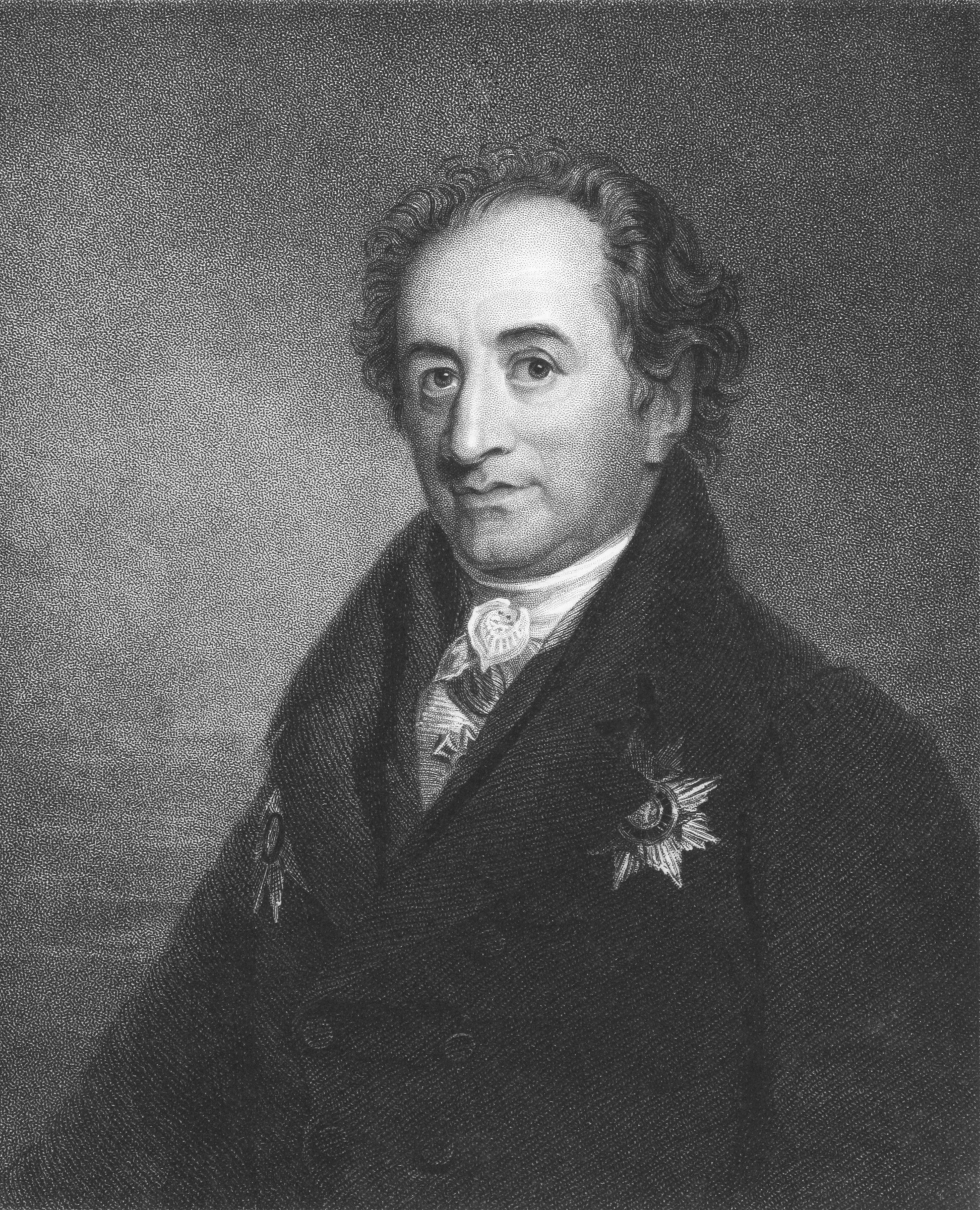
Johann Wolgang von Goethe
1749-1832
As a result, they end up sacrificing their talents, education, relationships, and sometimes even their personal health and hygiene on pet projects aimed at theoretically "saving the world" while their own houses and lives are disordered and in disarray.

As Goethe once cautioned: Things which matter most must never be at the mercy of things which matter least.


"Things which matter most must never be
at the mercy of things which matter least."

Johann Wolfgang von Goethe


At Freedom Focused, we hold that all human beings have an Existential Duty to try their very best to develop nobler characteristics of SAL within themselves for the holistic, long-term benefit of themselves and others. This duty springs froth from the reality that, like it or not, we all live interconnected lives. Thus, our decisions always impact and influence other people, either directly or indirectly—whether we intend for them to, or not.

John Donne
1572-1631
In the ageless wisdom and eloquent prose of the poet, John Donne:

"No Man is an Island, entire of itself, every man is a piece of the Continent, a part of the main; if a clod be washed away from the sea, Europe is the less, as well as if a Promontory were, as well as if a Manor of they friends, or of thine own were; Any Man's death diminishes me, because I am involved in Mankind; And therefore never send to know for whom the bell tolls; It tolls for thee." (2)

Whether you know it or not, and whether you like it or not, Life has granted you the right to direct your own existence in this world. This right is accompanied by a solemn responsibility to conduct and direct your life in ways that contribute positively to the long-term growth, development, and freedom of yourself and others.  

This means that it is selfish, shortsighted, and ultimately wrong to live only for yourself.

Ethical and moral living involves carefully considering how YOUR actions will affect, impact, and influence other human beings and life forms, including the planet-at-large. This means you are responsible for cleaning up the messes you make; it also means you must sometimes take part in cleaning up messes you had no part in creating—with the humble recognition that others have taken part in cleaning up your messes over the years.  

To remind myself of this duty, I strive to pick up at least one piece of trash I didn't throw down every day of my life. While one piece of trash per day by one person (me) isn't going to make a considerable difference in the world's littering problem, the power of the paradigm and practice in my life—and my ability to share with and teach my practice to others—just might have a sizable impact in the end.


SAL Mantra

Pick up ONE piece of trash every day
that you did not throw down.


While we do hold important duties to others and the world in which we live, we must never forget that our capacity to help others is rooted in our own health and well-being. In the grand scheme of things, you aren't going to be worth a hill of beans to anyone or anything—including the planet—unless and/or until your own life and house are in order. 

To wit: while caring for the Planet is vitally important, it should never trump caring for the humans who inhabit and care for it. Environmentalism happens naturally as a by-product of Existential Growth, Freedom, and maturity—after individuals have first cleaned up their own lives. The same principle holds true for family life, education, politics, and everything else. 

Self-action leaders must always remember the simple, yet profound lesson taught routinely by flight attendants the world over: Securely fasten your own air mask before assisting others with theirs


SAL Mantra

If you really want to help other people, then go work on yourself. (3)


In Your Journal

  • What impact or influence do you currently have on other people (i.e. family members, friends, colleagues, etc.)?
  • Is your current impact or influence on others positive and constructive or negative and destructive?
  • What is something you could begin doing TODAY to contribute more positively and constructively to those with whom you live and work?
  • What is something you could do to provide conscious and intentional service to one or more of the following groups: family, neighbors, school, organization, community, state, nation, or world?  


Dr. JJ

Wednesday, May 8, 2024
Palm Beach Gardens, Florida, USA


Author's Note: This is the 387th Blog Post Published by Freedom Focused LLC since November 2013 and the 198th consecutive weekly blog published since August 31, 2020.   

Click HERE for a compete listing of the other 386 FF Blog Articles 

Click HERE for a complete listing of Freedom Focused SAL QUOTES  

Click HERE for a complete listing of Freedom Focused SAL POEMS   

Click HERE to access the FULL TEXT of Dr. JJ's Psalms of Life: A Poetry Collection

Click HERE for a complete listing of Self-Action Leadership Articles

Click HERE for a complete listing of Fitness, Heath, & Wellness Articles

Click HERE for a complete listing of Biographical & Historical Articles


Click HERE for a complete listing of Dr. JJ's Autobiographical Articles

.........................

Tune in NEXT Wednesday for another article on a Self-Action Leadership related topic.  

And if you liked this blog post, please share it with your family, friends, colleagues, and students—and encourage them to sign up to receive future articles for FREE every Wednesday.

To sign up, please email freedomfocused@gmail.com and say SUBSCRIBE, or just YES, and we will ensure you receive a link to each new blog article every Wednesday.  


Click HERE to buy the SAL Textbooks    


Chapter 6 Notes:

1.  Covey, S.R. (1989). The 7 Habits of Highly Effective People: Powerful Lessons in Personal Change. New York, NY: Fireside. Page 71. Italics added.

2.  Booty, J. (1990). John Donne: Selections From Divine Poems, Sermons, Devotions, and Prayers. NewYork, NY: Paulist Press. Page 58.

3.  This mantra is derived from a similar quote by Mother Theresa of Calcutta: If you want to change the world, go home and love your family.

Journals of Rex Buckley Jensen

Rex Buckley Jensen (1943-present) Circa mid-late 1970s In this week's article, it is an honor and privilege for me to pay homage to my d...