Showing posts with label MLK. Show all posts

Wednesday, February 18, 2026

YOU are SOVEREIGN


Chapter 3


YOU are SOVEREIGN


In BOOK the SEVENTH, Chapter Nine (9), the phrases "I Am Sovereign," and "You Are Sovereign" were introduced. These SAL-oriented mantras, which go back to the earliest days of the SAL Life Leadership textbook (First Edition), are designed to emphasize the power and control that YOU possess as a self-action leader to choose your own thoughts, speech, actions, attitudes, and beliefs.

This control makes YOU responsible for the consequences of your individual choices. 

The I Am / You Are Sovereign mantras are designed to serve as a continual reminder that YOU are ultimately in charge of your own life and career—just as I am ultimately responsible for mine. As such, self-action leaders avoid blaming others for the long-term results they get in their lives and careers. While other people's choices will inevitably affect us for both good and ill—especially in the short-run—it is essential that individual self-action leaders avoid victimization mentalities in a never-ending quest for Existential Growth, freedom, and self-sovereignty.

Accompanying your liberty and power to claim this self-sovereignty is a duty and obligation to live up to your innate nobility as a human being. One of the reasons I employ royalty and its related terminology in striking SAL metaphors throughout this Life Leadership textbook is because at Freedom Focused, we believe that YOU, me, and all other members of the human family were born with a metaphysical essence of nobility that courses through their minds, hearts, and souls.

You and I therefore have the potential to become Kings and Queens—in an Existential Growth sense—if we desire it enough and if are willing to pay the high price that existential royalty demands and exacts of its candidates.  

What exactly does an existential King and/or Queen look like? 

     Great question!

I think the poet, Alice Cary, said it best when she penned the following:

Nobility

Queen Victoria of Great Britain
Lived from 1820-1901
Reigned from 1837-1901

While most of us are not born a King or Queen
in a literal sense, all of us have the potential
to become existential royalty over time. 
TRUE worth is in being, not seeming—
   In doing each day that goes by
Some little good—not in dreaming
   Of great things to do by and by.
For whatever men say in blindness
   And spite of the fancies of youth,
There's nothing so kingly as kindness,
   And nothing so royal as truth.

We get back our mete as we measure—
   We cannot do wrong and feel right,
Nor can we give pain and gain pleasure,
   For justice avenges each slight.
The air for the wing of the sparrow,
   The bush for the robin and wren,
But alway[s] the path that is narrow
   And straight, for the children of men.

'Tis not in the pages of story
   The heart of its ills to beguile,
Though he who makes courtship to glory
   Gives all that he hath for her smile.
For when from her heights he has won her,
   Alas! it is only prove
That nothing's so sacred as honor,
   And nothing so loyal as love!

We cannot make bargains for blisses,
   Nor catch them like fishes in nets;
And sometimes the thing our life misses,
   Helps more than the thing which it gets.
For good lieth not in pursuing,
   Nor gaining of great nor of small,
But just in the doing, and doing
   As we would be done by, is all.

Through envy, through malice, through hating,
   Against the world, early and late,
No jot of our courage abating—
   Our part is to work and to wait.
And slight is the sting of his trouble
   Whose winnings are less than his worth;
For he who is honest is noble,
   Whatever his fortunes or birth. (1)

—Alice Cary


BOTTOM LINE: Existentially speaking, we are ALL potential royalty—Kings & Queens, Princesses & Princes—capable of unlimited Existential Growth.  

Do not ever let anyone dissuade you otherwise.  


SAL Mantra

Remember who YOU are... and Rise to Your Potential.


Author, speaker, and Presidential candidate—Marianne Williamson—once wrote the following about our potential as human beings:

"Our deepest fear is not that we are inadequate. Our deepest fear is that we are powerful beyond measure. It is our light, not our darkness, that most frightens us. We ask ourselves, 'Who am I to be brilliant, gorgeous, talented, fabulous?' Actually, who are you not to be? You are a child of God. Your playing small doesn't serve the world. There's nothing enlightened about shrinking so that other people won't feel insecure around you. We are all meant to shine, as children do. We were born to make manifest the glory of God that is within us. It's not just in some of us; it's in everyone. And as we let our own light shine, we unconsciously give other people permission to do the same. As we're liberated from our own fear, our presence automatically liberates others." (2)


In the light of Williamson's inspiring, stirring, and poetic prose, YOU can—and should—continually affirm your self-sovereignty and ever echo this powerful mantra as a never-ending reminder that...


You Are Sovereign

Did you know...

That YOU are the sovereign ruler of your own life and world?
     It's true!
The question is:
How will YOU choose to rule?
What will the legacy of your SAL reign be?
Will it be diabolical and tyrannical?
Or fair, just, kind, and wise?
It is up to YOU to decide
What to do with the enormous liberty and power that 
Life has bestowed upon YOU as a self-action leader
Who, in God's good time, may someday grow to transcend self and ply your hand at creation.  

Along the pathways of your circuitous and rocky journey, 
Never forget that you are both sovereign and free
To make of your life what you'd most like it to be.

Don't be a petty monarch...
The kind that makes excuses and always blames your problems on other people and things.
Don't abdicate your Crown and Throne.
Be the King—
Or Queen—
YOU were born to be:
A leader for the ages—
The kind that history books,
And generations yet unborn 
Will laud
For your wisdom,
Justice,
Mercy,
And above all—
Your GOODNESS.
For while it can be good to be great,
It is far better to be good
Since,
In the end,
The two are really one and the same thing.
So—be good that you might also be great, and
Don't abdicate your crown, scepter, or throne—
In other words: your freedom, integrity, or principles.
And never,
     Ever,
          Ever forget that...

YOU are SOVEREIGN!

            —Dr. JJ 


And to the nascent and fledgling self-action leader who struggles with commitment, or resolve, or spine, I direct you to one of the more direct and passionate of poets—who penned rather potently on the subject of your...

Will

THERE is no chance, no destiny, no fate, 
[That] can circumvent or hinder or control
The firm resolve of a determined soul. ...

Each well-born soul must win what it deserves.
Let the fool prate of luck. The fortunate
    Is he whose earnest purpose never swerves,
    Whose slightest action or inaction serves
The one great aim. Why, even Death stands still,
And waits an hour sometimes for such a will. (3)

            —Ella Wheeler Wilcox


What is YOUR Existential Role?

We all have different roles to play in our lives and careers. 

While all human beings are existential princes and princesses, kings and queens in embryo and training, most of us will not play the literal role of governing a country—or a large organization—during our lifetimes. 

However, many—and perhaps most—of us will get to be mothers or fathers, aunts or uncles, brothers or sisters, managers or teachers, mentors or trainers, and any other number of different roles at home, work, and in the community. 

In the end, the most important thing is not what roles we play in our lives, but how we choose to play those roles. In other words, self-action leaders must always be less concerned about titles and positions and more concerned about duty, integrity, kindness, and performance. 

As Dr. Martin Luther King, Jr. once suggested:


"If a man is called to be a street sweeper, he should sweep streets even as Michaelangelo painted, or Beethoven composed music, or Shakespeare wrote poetry. He should sweep streets so that all the hosts of heaven and earth will pause to say, here lived a great street sweeper who did his job well." 

—Martin Luther King, Jr. 


I fervently believe that every human being was born on this Earth in a particular place at a particular time for a very specific and singular PURPOSE. While I can't scientifically prove that this—my belief—is true, I can say that holding this belief about my own life has made all the difference in my life's decisions and direction in the most positive and productive of ways.  

As such, I encourage YOU to cultivate this paradigm about your own life as well.

I believe that YOUR and my purpose includes duties, responsibilities, and opportunities that are both general to all human beings and unique to each individual—as suited to our natural abilities, desires, interests, talents, and vision.  

I also believe that there is a divine Playwright, whose greatness and glory makes the Immortal Bard—in all of his literary might and earthly majesty—pale by comparison. 

I believe that this omnipotent and eternal Bard created us spiritually before he created us physically. Such a concept is not new, nor is it exclusive to one religion or philosophy. Such a theory was evidently held by Britain's famous 19th century poet laureate—even the august William Wordsworth—who prominently proclaimed with his pen our mortal tendency to...

        Forget the glories [we have] known
     And that imperial palace whence [we] came. [For...]
     
     Our birth is but a sleep and a forgetting: 
     The soul that rises with us, our life’s star,
        Hath had elsewhere its setting, 
           And cometh from afar;
        Not in entire forgetfulness
        And not in utter nakedness,
     But trailing clouds of glory do we come
           From God, who is our home. (4)

I am not asking you to share my beliefs in God or accede the reality of a pre-mortal or post-mortal existence and purpose. There are many different lenses through which you may interpret life's many and varied experiences and realities, and no one will defend your right to choose your own beliefs more ardently and enthusiastically than my Freedom Focused colleagues and me.

However, I do encourage you earnestly to not limit your quest for knowledge to the realm of physical sentience and scientific inquiry alone. Doing so drastically limits your capacity to fully grasp those metaphysical concepts and realities that lie beyond the reach of science to form the existential, spiritual, and religious realms. Doing so also inhibits the otherwise bounteous fruit that flows forth from the cornucopia of metaphysical insights that human beings are capable of harvesting.

After all, what would become of poetry, literature, art, music, theater, human relationships, love, and passion if you were to mask their muse and silence their genius by hemming them in by the finite reaches of quantitative analysis?

To succeed in these vitally important philosophical and other life pursuits, and in order to perpetually grow and succeed, we must be truly alive—and not just in a literal, pulse-activated and blood-flowing sense—but in a vibrant and holistic body/mind/spirit sense.  

The next chapter is dedicated to this idea of not merely living; but, of being truly alive.


In Your Journal

    • Freedom Focused turns the traditional notion of nobility on its head. Instead of only a few, select human beings rising to the top level of a "King" or "Queen," we believe that everyone has the potential to become Kings or Queens, Princes or Princesses in an existential sense. How might this paradigm shift influence the results YOU get in your life and career, as well as the daily vision, drive, happiness, and inner peace that you experience?  

    —Dr. JJ

    Wednesday, February 18, 2026
    Palm Beach Gardens, Florida, USA


    Author's Note: This is the 506th Blog Post Published by Freedom Focused LLC since November 2013 and the 292nd consecutive weekly blog published since August 31, 2020.   

    Click HERE for a compete listing of the other 505 FF Blog Articles

    Click HERE for a complete listing of Freedom Focused SAL QUOTES  

    Click HERE for a complete listing of Freedom Focused SAL POEMS   

    Click HERE to access the FULL TEXT of Dr. JJ's Psalms of Life: A Poetry Collection

    Click HERE for a complete listing of Self-Action Leadership Articles

    Click HERE for a complete listing of Fitness, Heath, & Wellness Articles

    Click HERE for a complete listing of Biographical & Historical Articles


    Click HERE for a complete listing of Dr. JJ's Autobiographical Articles

    .........................

    Tune in NEXT Wednesday for another article on a Self-Action Leadership related topic.  

    If you liked this blog post, please share it with your family, friends, colleagues, and students—and encourage them to bookmark this blog to access a new FREE article every Wednesday.


    Click HERE to buy the SAL Textbooks


    Chapter 3 Notes 

    1.  Ames, M.C. (Editor). (1874). The Last Poems of Alice and Phoebe Cary. New York, NY: Hurd and Houghton. Pages 72-73.

    2.  Williamson, M. (1992). A Return to Love: Reflections on the Principles of A COURSE IN MIRACLES. New York, NY: HarperPerennial. Pages 190-191.

    3.  Wilcox, E.W. (1913). An Ella Wheeler Wilcox Treasury. Google Books edition. London, UK: Siegle, Hill & Co. Page 106.  

    4.  Rolfe, W.J. (1889). Selected Poems of William Wordsworth. Google Books edition. New York, NY: Harper Brothers Publishers. Page 125.

    Wednesday, May 8, 2024

    SAL is Not Only About YOU


    Chapter 6


    SAL is Not Only About YOU 


    I am RESPONSIBLE.

            What does it really mean to be responsible? 

    Freedom Focused suggests it means two basic things. 

    FIRST, as Dr. Stephen R. Covey taught, to be responsible means you have developed "the ability to choose your response" to a situation—regardless how you may feel about it. (1) 

    This ability gives YOU the FREEDOM and POWER to avoid becoming a complacent victim of your circumstances and other situational variables. It empowers you instead to rise above negative, painful, and even tragic events to ultimately choose your own destiny in life.  

    SECOND, responsibility means you are accountable to others for your choices. This responsibility potentially extends to a dozen different potential persons, groups, or other entities, as follows:

    1. Yourself
    2. Significant Other
    3. Immediate Family Members
    4. Extended Family Members
    5. Friends
    6. Neighbors
    7. Colleagues
    8. Other people around you—including strangers—that could possibly be affected or influenced by your choices
    9. Organizations, including the Community, State, and Nation in which you reside
    10. Global population
    11. Planet Earth
    12. God/the Universe/Serendipity, etc. 

    In discussing the subject of Self-Action Leadership, we understandably talk a lot about self-improvement and personal development. In so doing, however, we must explicitly emphasize that SAL is about helping others as much as it is about helping yourself. 

    SERVICE to others ensures that your efforts at personal change and growth don't evolve into narcissism—or worse, into evil. 

    It is important, therefore, to ask yourself the question: Why do I want to help myself? 

    There are many potentially noble answers to this question. At Freedom Focused, we suggest that the noblest answer of all is: So that you can more effectively help and serve others!

    As Dr. Martin Luther King, Jr. once insightfully stated: Life's most persistent question is: 'what are you doing for others?'"  


    "Life's most persistent question is: 
    'what are you doing for others?'"

    —Dr. Martin Luther King, Jr.

    As self-action leaders, it is important to acknowledge that our speech and actions impact and influence—for good or ill—others around us. This makes us ethically and morally accountable to others for what we think about, say, and do. 

    It also creates, by default, DUTIES that we all have by virtue of our membership in the human race. As previously mentioned, we refer to these basic human responsibilities as Existential Duties.

    The reality and presence of Existential Duties elevate the substance of our thoughts, words, and deeds into legitimate moral matters that each of us is duty-bound to continually address throughout our lives.

    SAL may begin with YOU and you alone, but it immediately begins to extend outward to your relationships, familial responsibilities, organizational duties, and civic stewardships. Thus, we are all responsible to everyone we impact or influence in any way in our personal, organizational, civic, national, and global lives—and in this prioritized order. 

    The order is important because you can only help others if you are in good working condition yourself. Similarly, families and organizations can only help communities, states, nations, and the global populace and planet if these entities themselves have integrity and can effectively work together on realistic long-term solutions.

    Unfortunately, many mix up and therefore confuse this essential order.

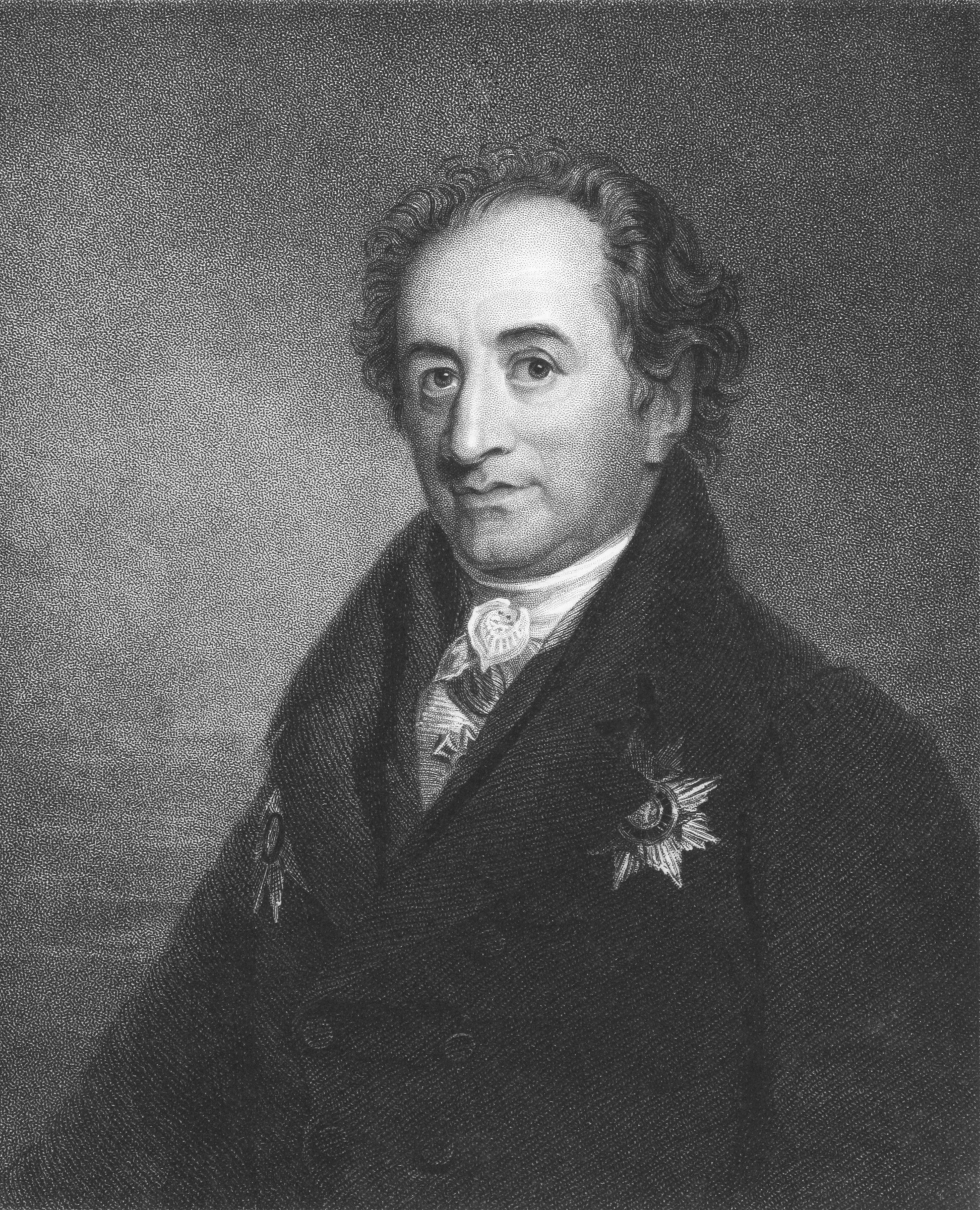
    Johann Wolgang von Goethe
    1749-1832
    As a result, they end up sacrificing their talents, education, relationships, and sometimes even their personal health and hygiene on pet projects aimed at theoretically "saving the world" while their own houses and lives are disordered and in disarray.

    As Goethe once cautioned: Things which matter most must never be at the mercy of things which matter least.


    "Things which matter most must never be
    at the mercy of things which matter least."

    —Johann Wolfgang von Goethe


    At Freedom Focused, we hold that all human beings have an Existential Duty to try their very best to develop nobler characteristics of SAL within themselves for the holistic, long-term benefit of themselves and others. This duty springs froth from the reality that, like it or not, we all live interconnected lives. Thus, our decisions always impact and influence other people, either directly or indirectly—whether we intend for them to, or not.

    John Donne
    1572-1631
    In the ageless wisdom and eloquent prose of the poet, John Donne:

    "No Man is an Island, entire of itself, every man is a piece of the Continent, a part of the main; if a clod be washed away from the sea, Europe is the less, as well as if a Promontory were, as well as if a Manor of they friends, or of thine own were; Any Man's death diminishes me, because I am involved in Mankind; And therefore never send to know for whom the bell tolls; It tolls for thee." (2)

    Whether you know it or not, and whether you like it or not, Life has granted you the right to direct your own existence in this world. This right is accompanied by a solemn responsibility to conduct and direct your life in ways that contribute positively to the long-term growth, development, and freedom of yourself and others.  

    This means that it is selfish, shortsighted, and ultimately wrong to live only for yourself.

    Ethical and moral living involves carefully considering how YOUR actions will affect, impact, and influence other human beings and life forms, including the planet-at-large. This means you are responsible for cleaning up the messes you make; it also means you must sometimes take part in cleaning up messes you had no part in creating—with the humble recognition that others have taken part in cleaning up your messes over the years.  

    To remind myself of this duty, I strive to pick up at least one piece of trash I didn't throw down every day of my life. While one piece of trash per day by one person (me) isn't going to make a considerable difference in the world's littering problem, the power of the paradigm and practice in my life—and my ability to share with and teach my practice to others—just might have a sizable impact in the end.


    SAL Mantra

    Pick up ONE piece of trash every day
    that you did not throw down.


    While we do hold important duties to others and the world in which we live, we must never forget that our capacity to help others is rooted in our own health and well-being. In the grand scheme of things, you aren't going to be worth a hill of beans to anyone or anything—including the planet—unless and/or until your own life and house are in order. 

    To wit: while caring for the Planet is vitally important, it should never trump caring for the humans who inhabit and care for it. Environmentalism happens naturally as a by-product of Existential Growth, Freedom, and maturity—after individuals have first cleaned up their own lives. The same principle holds true for family life, education, politics, and everything else. 

    Self-action leaders must always remember the simple, yet profound lesson taught routinely by flight attendants the world over: Securely fasten your own air mask before assisting others with theirs. 


    SAL Mantra

    If you really want to help other people, then go work on yourself. (3)


    In Your Journal

    • What impact or influence do you currently have on other people (i.e. family members, friends, colleagues, etc.)?
    • Is your current impact or influence on others positive and constructive or negative and destructive?
    • What is something you could begin doing TODAY to contribute more positively and constructively to those with whom you live and work?
    • What is something you could do to provide conscious and intentional service to one or more of the following groups: family, neighbors, school, organization, community, state, nation, or world?  


    —Dr. JJ

    Wednesday, May 8, 2024
    Palm Beach Gardens, Florida, USA


    Author's Note: This is the 387th Blog Post Published by Freedom Focused LLC since November 2013 and the 198th consecutive weekly blog published since August 31, 2020.   

    Click HERE for a compete listing of the other 386 FF Blog Articles 

    Click HERE for a complete listing of Freedom Focused SAL QUOTES  

    Click HERE for a complete listing of Freedom Focused SAL POEMS   

    Click HERE to access the FULL TEXT of Dr. JJ's Psalms of Life: A Poetry Collection

    Click HERE for a complete listing of Self-Action Leadership Articles

    Click HERE for a complete listing of Fitness, Heath, & Wellness Articles

    Click HERE for a complete listing of Biographical & Historical Articles


    Click HERE for a complete listing of Dr. JJ's Autobiographical Articles

    .........................

    Tune in NEXT Wednesday for another article on a Self-Action Leadership related topic.  

    And if you liked this blog post, please share it with your family, friends, colleagues, and students—and encourage them to sign up to receive future articles for FREE every Wednesday.

    To sign up, please email freedomfocused@gmail.com and say SUBSCRIBE, or just YES, and we will ensure you receive a link to each new blog article every Wednesday.  


    Click HERE to buy the SAL Textbooks    


    Chapter 6 Notes:

    1.  Covey, S.R. (1989). The 7 Habits of Highly Effective People: Powerful Lessons in Personal Change. New York, NY: Fireside. Page 71. Italics added.

    2.  Booty, J. (1990). John Donne: Selections From Divine Poems, Sermons, Devotions, and Prayers. NewYork, NY: Paulist Press. Page 58.

    3.  This mantra is derived from a similar quote by Mother Theresa of Calcutta: If you want to change the world, go home and love your family.

    Wednesday, May 1, 2024

    A New & Fresh Concept of Competition


    Chapter 5


    A New & Fresh Concept of Competition 


    Self-action leaders recognize that in the long-run, a healthy work and life balance that produces happiness and inner peace is more important than being a CEO, famous artist, pro athlete, or mingling financially among the one-percenters. There is, of course, nothing inherently wrong with achieving such things. Indeed, they are all noteworthy accomplishments that others can potentially admire, look up to, and respect. 

    The statistical reality, however, is that only a very small percentage of human beings will ever achieve such elevated positions and roles in this world, and those who do typically have outlying advantages physically, financially, socially, or ancestrally, making apples-to-apples comparisons practically untenable. 

    Unfortunately some—and perhaps many—who achieve high levels of worldly success pay a heavy moral, relational, familial, and existential price along the pathway to their outlying fame, riches, and status.

    The good news about SAL is that it doesn't matter how famous (or not), or rich (or not) you were, are, or may yet become. The only thing that really matters is whether or not you are headed in the right direction morally, ethically, and existentially speaking—and whether or not you are enjoying your journey along the way. 

    There are, of course, examples of outlying worldly achievers who are also unusually well balanced in their personal lives, careers, and relationships. But high-profile or otherwise highly successful persons who attain that balance did not achieve such equilibrium because they possess outlying talent. 

    They did so by following the same Self-Action Leadership principles and practices that anyone else who achieved Existential Balance has to follow. Thus SAL—and its role in pursuing Existential Balance, Growth, and Intelligence—becomes a great equalizer within and among the human race.

    What a truly magnificent TRUTH!   


    The Myth of Fair Interpersonal Competition

    Despite our many obvious similarities as members of the human race, all people are profoundly unique. Indeed, every single soul that has ever inhabited this planet—including identical or even co-joined twins—remain remarkably original; no two of us are exactly the same. This is true of our singular genetic makeup as well as our individual personality, preferences, strengths, weaknesses, hopes, dreams, goals, vision, etc.

    Given this remarkable reality, there is really no such thing as purely FAIR competition in any precise sense. While society and culture generally aim to classify, designate, and categorize in order to maximize fairness insofar as possible, such labels and arrangements remain, at best, approximations of fairness. Thus, individuals who come out on top in any given competition usually possess a package of personal and other endowments that simply surpasses their co-competitors. 

    There are, of course, numerous individual exceptions to this general rule; nevertheless, the base postulate is rooted in results routinely recorded in the real world. 

    To illustrate this point, take a few seconds to watch a YouTube clip of Jamaican sprinting superstar Usain Bolt when he set the world record in the 100-meter dash at the 2009 World Championships in Berlin, Germany. In this completely unprecedented race, Bolt left the rest of the world-class field in the dust to clock a previously inconceivable 9.58 seconds!

    Before Bolt came on the sprinting scene in the early-mid 2000s, no one had ever run faster than 9.74 seconds. When I was growing up in the 1980s and 90s, the only people who had ever run under 9.80 had their times disqualified for either doping or the presence of an illegal tailwind. Running faster than 9.70 seemed unlikely; but running under 9.60 seemed like the stuff of fantasy or science fiction.

    But then, at the 2008 Olympics in Beijing, China, Bolt did the impossible; he bested the 9.7 mark by clocking a 9.68 to win the gold medal and break his own previous world record mark of 9.71. As impressive as this blazing time was, it was more than a tenth-of-a-second slower than Bolt would sprint one year later in Berlin.  

    In this record-shattering race that Usain so completely dominated, the second-place finisher—Tyson Gay of the United States—clocked a blistering time of 9.71, equaling Bolt's previous world record. Despite this incredible time, which (as of 2024) still stands as the American record in an event historically dominated by Americans, Gay still trailed Bolt by 13/100ths of a second, which in the 100-meter dash is a substantial margin of victory—as the video footage of the event attests. 

    In other words, despite running the second fastest time in all of human history, Tyson Gay was still definitively defeated by Usain Bolt. 

    When you observe Bolt's remarkable physique—the seemingly perfect formulaic blend of height, weight, and strength for speed—even an amateur onlooker can grasp why Bolt consistently performed head-and-shoulders ahead of his elite competitors. 

    While the world rightly marveled at Bolt's superior exhibition of explosive power and unprecedented speed, his clearly elevated performance should be no existential "skin" of the noses of the "also-rans" in that historic race. After all, each of them did the best they could, even though they ultimately produced a less impressive final result. 

    To wit: six of the eight competitors in the race clocked either a world record, national record, or season's best time! 

    In real life, it is not unheard of for the last place finisher in any given "race" to actually expend the greatest personal effort. Losing a competition against others—even at the elite level—may have little (or perhaps nothing) to do with the quality of your own preparation and effort. In most cases, it is merely a matter of different life variables at-play; and a better endowed package of variables will usually come out on top of the lesser endowed person. 

    There are, of course, endless exceptions to this general scenario, which is, in part, the beauty and glory of SAL. In other words, there are indeed cases when individuals or teams produce greater results because they invest greater intention, preparation, effort, dedication, consistence, persistence, determination, et cetera, than competitors who possessed a more well-endowed package of life variables.   

    In other cases, however, one person's best can easily be bested by someone else's best, or even one's less-than-best. In the final analysis, the ultimate result of any interpersonal competition will be determined with at least quasi-mathematical precision according to the unique output of each person's individual effort multiplied by one's unique set of life variables.  

    Understanding this great truism can help us to keep our own performances and results—and that of others—in perspective. It can also aid us in feeling better about our own accomplishments—and that of others.


    My Personal Quest to Become an Elite Interpersonal Performer

    Since age seven or eight, I have had a deep and pulsating desire to be an elite performer—if not the very best in the world—at something. It was around this same age and stage of my life that I became fascinated by time management, personal planning, and other personal leadership-oriented subjects. Much of my early interest in these topics stemmed from my desire to become not just my best, but the best at something.

    A 9-year old "Air Jordan"
    Mesa, Arizona
    Circa 1988
    Like many young boys or girls, I saw myself eventually becoming a world-class performer in my activity or field of choice, which at the time was basketball. In my little boy's mind's eye, Jordan Jensen was destined to become the Michael Jordan of my generation. 

    This notion was further fueled on the playground where the success of my local exploits in the game led my peers to verbalize this name comparison—which I ate up and did nothing to discourage! 

    Unfortunately—or fortunately (depending on how you look at it)—Kobe Bryant, Tim Duncan, Allen Iverson, and other NBA players my age beat me to the punch. I not only failed in my objective to become an NBA star, but I lost interest in the game altogether after my ninth-grade year in high school! 

    It's amazing how our desires and motivations can evolve and change over time.

    My early exit from the game of basketball surprised me. It also surprised family members, friends, and coaches who knew of my talent in and passion for the sport.

    Nevertheless, in the end, I not only lacked the physicality and talent to become an elite basketball player, but my compatibility, desire, and vision was gradually extinguished as well.

    In the end, and for a variety of reasons, basketball and JJ were simply not a good fit. Although the sun had set on my basketball career, it did not extinguish my desire to become a world-class performer at something.

    JJ leads a collegiate 800 meter race
    Weber State University; Ogden, Utah; 2003
    My next passion was to pursuit greatness as a middle-distance runner in the sports of cross-country and track & field. I fared even better in these sports than I had in basketball, eventually earning State Championship honors in high school and All-American accolades in college. 

    Despite these personal successes, it became evident over time that I was a semi-elite athlete, not an elite athlete, and that no amount of work or dedication would change that. 

    It was many years after college before I fully recognized and accepted this reality. In other words, for a long time after I had officially retired from competitive racing, I continued to believe deep-down that I could potentially become an elite middle-distance runner if I were to make the proper investment of time, effort, discipline, and dedication.

    The truth of the matter was that this was wishful thinking on my part. 

    In fact, as I reflect back on this time in my life, my mind and heart swells with mixed emotions. On the one hand, I am proud of my accomplishments and the fact that I was never afraid to think big and shoot for the stars. On the other hand, I feel a little embarrassed at my inability (at times) to reconcile my actual ability with stark reality. 

    After all, a complete commitment to reality lies at the very heart of both mental health and Self-Action Leadership. In the words of that great American psychiatrist, thinker, and writer, M. Scott Peck, M.D.:


    "Mental health is a process of ongoing dedication to reality at all costs,
    no matter how uncomfortable the reality makes you feel." (1)

    —M. Scott Peck


    After the end of my relatively short career in athletics, I pursued other activities with an initial aim towards elite performance, only to discover that I lacked sufficient desire, passion, and natural proclivity for said fields. 

    Case-in-point: SALES. 

    My life has, in many ways, been one, long, bad date with the art and science of customer sales. It began with a deep dislike—even an ardent aversion—to those pesky door-to-door fundraisers in elementary school and Cub Scouts. Ironically, these distasteful experiences did not quell my pursuit of sales-oriented professional pursuits.

    Not even close! 

    As I grew older, I learned that many of the world's most successful people (at least financially speaking) were salespeople of one kind or another. With this-in-mind, I often felt duty-bound to face my fear and detestation of sales by "doing it anyway" in hopes I would eventually learn to like it and then break through to some kind of monumental success in the process.  

    A modest achievement as a 
    network marketing salesman
    While a certain nobility undoubtedly exists in such a self-flagellating willingness, my pursuit of said end did not produce the desired results. In fact, the more I tried sales, the more I came to dislike it.

    Moreover, whatever victories I did obtain in sales were always meager and modest, leaving me morosely marooned on the margins of success—ever watching others outperform me at every juncture. 

    Along the way I lasted for a few months as a part-time network marketing representative, a few weeks as a direct-sales peddler of cutlery, and a single day as a small-business telephone services salesman. In all, I earned less than a thousand dollars for my combined efforts across all three endeavors.

    As any salesperson worth his or her salt is apt to say: "But wait... there is more... much, much, MUCH more!"

    My Missionary Plaque, which hung on the walls
    of my local church building during
    my service from 1999-2001
    I also served a mission for my Church in Canada where I faithfully canvassed door-to-door for 12 hours every week for two (2), long, often lonely years. 

    Then I came home, graduated from college, and founded Freedom Focused where I spent two decades trying to sell books and seminars—with paltry results, to say the least. Interspersed into that 20-year period I spent eight years as an independent contact trainer where part of my job included "back-of-the-room" product sales. As I traveled all over the English-speaking language teaching seminars, and despite outstanding seminar attendee evaluations, my sales numbers consistently ranked among the lower-tier of trainers.

    Suffice it to say, I have had to discover time-after-time over a period of several decades that I am simply not well-suited to sales. Realizing this over-and-over-and-over again has proved to be a perpetually painful predicament.

    BUT in the end, it has also proven to be enormously LIBERATING!

    One of the biggest challenges I faced throughout this journey was managing the voices in my head of past sales trainers (I've attended a lot of sales training over the years) who would suggest that sales is more about attitude and training than it is about inclination and personality. 

    To an extent, these trainers always had a point—after all, education and attitude is a key component to success in anything, regardless of your native disposition and personal proclivities.

    But an even more primal truth also exists, and that truth is that we all inevitably flower and flourish more fully in an activity or field we love and are passionate about than one in which we inherently loathe. It's a pretty simple concept.  

    As I have journeyed along the circuitous corridors and painful pathways of my 36-years long "bad marriage" with SALES, I have learned that it is time for a divorce! While I am typically not a proponent of divorce in marriage (literally or figuratively), I am pragmatic and sensible enough to know when "enough-is-enough," and am discovering that it is very FREEING to disembark from—and then giddily burn—a ship I am not meant to sail on forever. 

    The sun has formally set on my "Ship of Sales."
    Now it's time to "Burn the Ships" and "Don't Look Back!"
    It's crucial to note here that I do not regret any of the time I spent on my "Ship of Sales." Indeed, the long, hard, irritating, frustrating, and discouraging journey was one I was meant to travel—not only for all that it taught me, but for what I became whilst passing through its painful passage. 

    For me, it was one of those prerequisite, professional "crosses" I had to take up as part of "doing my due diligence," "paying my dues," and otherwise apprenticing appropriately for senior leadership and other macro-influencing opportunities.

    There is no question these dues had to be paid as part of a primal price and requisite responsibility to prove worthy of the place and position I ultimately intended to occupy. But it was more akin to "Boot Camp" than "Officer's Candidate School."

    Boot camp is a "necessary evil" of any soldier's training.

            But if you want to be a General; OCS is a lot more fun!  

    In other words, an equally (if not more) important ingredient to my long-term success was found in my relentless pursuit of what I truly loved doing, which was writing, organizing, speaking, training, influencing, and leading.

    Chief among all these activities—all of which I have a natural flair and talent for—has been WRITING. 

    My first Journal Entry
    Mesa, Arizona, USA
    Thursday, January 1, 1987
    Indeed, of all the things I do well, writing is unquestionably what I do BEST. And writing is something that, from the very beginning—Thursday, January 1, 1987; the day I penned my first journal entry—I have been doing more of than anything else.

    The results of these efforts and endeavors have been prolific, and include:

    • Thousands of pages in personal journals
    • Thousands of pages of personal and business letters, emails, and texts
    • Thousands of pages of school work over 19 years of formal education
    • 1,149 pages of my Doctoral dissertation
    • Thousands of published pages in nine (9) books
    • Thousands of published pages in over 500 blog articles
    • Hundreds of published pages in newspapers, academic journals, textbooks and other publications


    It was painful for me to repeatedly recognize the reality that I will never be elite at activities such as: basketball, running, or sales. But along the way, I discovered there are some things at which I can be an elite professional—if not the very best at. 

    Dr. JJ's 4-Volume 1,149 page Doctoral dissertation
    And while this recognition is enormously satisfying to me, it is not the most important realization.

    Far more important than this discovery is my recognition that I can find enjoyment and fulfillment in the activities themselves—regardless of the extent of my success with external audiences or how I may stack up in any kind of comparison with others. It is this enjoyment and fulfillment that continually drives me forward in my quest to complete the mammoth, 23 year-long publication project that has become the SAL Life Leadership textbook.

    After all, my quest to complete this literary leviathan was always a leap of faith; there was never a guarantee that others would embrace my work in large numbers.  

    As I sit in my office typing these words, the world still does not know about SAL—and quite frankly, my tireless efforts to try and promote it to the world has been an almost comical (temporary) failure to date. 

    But that is okay—and for three very important reasons. 

    FIRST, I have done the very best I knew how to create and then share this message with the world. And in the last analysis, I cannot force others to pay attention to and accept my message.

    I can only write and invite. 

    SECOND, I have found my unique niche and voice in my life and career; and I absolutely LOVE what I do! As such, I find enjoyment, fulfillment, and success in my work regardless of the way in which it is (or is not) embraced by others.  

    THIRD, others have embraced it, just not in significant numbers... yet. But in the last analysis, if I managed to help only a few people—or even just one—an argument could be made that it was worth it because it helped somebody, somewhere, at some point, with something.

    After all, every single self-action leader matters.

    And all self-action leaders possess unlimited Existential Worth and Potential.  

    While I continue to believe... and desire... and hope... and pray that this comprehensive work will, in its time, be widely embraced by others around my nation and world, it has been so satisfying to have finally arrived at the place where I am okay if it doesn't because of the endless other beauties and bounties with which I have been blessed all along the way!

    Truly, the greatest JOY of all is in the JOURNEY...

            And what a journey it has been!  

    How grateful I am to have discovered that the greatest quest I can undertake is not to try and beat others in an interpersonal competition, but to simply become my own best self in an intrapersonal competition. There is little time or energy left to compete against others when you are focusing all your time, attention, and power on being your own best self and producing your own greatest results.  

    In the process of doing so, you will inevitably surpass and fall short of the performances of others along the way. But either way (win or lose), you'll stop caring so much about where and how you stack up against and in competition with others because you will have developed the quiet confidence and inner peace that can only come from a knowledge that you did your best—and the truth of the matter is that  YOU  CAN'T  DO  ANY  BETTER  THAN  THAT! 

    And in the end, what matters most to a self-action leader is doing one's best.  

    As simple as this may sound theoretically, the actual practice of this principle can be extremely tricky and difficult, and I say this from the unique vantage point of my own experience and failures over the course of nearly 40 years! Even as the author of this work and the proclaimer of this point, I confess I struggle every day of my life to compete solely with myself and avoid prideful and unnecessary comparisons with others.

    It's human nature to compare ourselves to others!

            But it's also possible to retrain our paradigms to embrace intrapersonal competition.

    It should be noted here that there are times when it's both appropriate and helpful to make interpersonal comparisons and to compete with others. Doing so can assist and motivate you in your efforts to elevate your own performance and potential. 

    However, if you allow yourself to become overly caught up in the interpersonal component of competition instead of focusing on the intrapersonal element, you're bound to lose focus on your own goals for personal improvement and growth. 

    That loss of focus can then become compounded by negative emotions like anger, bitterness, and jealousy, all of which waste valuable energy—passion that could be productively channeled toward elevating and honing your own performance. The end result may be diminished returns on your own efforts at success, whether you are officially competing with others or not. 


    A Competition Paradigm Shift

    The "Silver Star" that self-action leaders
    are pursuing is not primarily to beat others
    but to simply become their best selves.

    One of my expectations for this Life Leadership textbook is to influence a widespread paradigm shift among people and organizations alike with regards to competition. The goal of this mindset change is to stop placing preeminent value on being "The Best," and instead shift our focus toward continually becoming "Your Best" and "My Best" by striving towards and attaining Existential Balance, Growth, and Freedom.

    Embracing this mindset change frees up a lot of time and effort that can, in turn, be invested in improving your own performance instead of continually fixating on how you stack up in competition with others. 

    This mindset change toward intrapersonal competition has the added benefit of actually improving your chances for success when you must compete interpersonally with other people and organizations. 

    Most importantly, this paradigm shift will contribute to the production of positive feelings, such as happiness, satisfaction, contentment, fulfillment, and inner peace—which sure beats opposing emotions of angst, discontent, frustration, disappointment, discouragement, and jealousy. 

    Considering the current cultural climate in which we live, where elite performers and their performances are held up as royal monarchs of a postmodern King's Court, while the rest of us are viewed as average citizens or worse—plebeian nobodies—it's a tall order to make, to say the very least. 

    Nevertheless, I believe it's possible for wide swaths of the global populace to make this mindset change over time. Rest assured that we at Freedom Focused will do everything we can to proclaim, promote, and support this quest.

    I've spent much of my life trying to become the very best at something. That is not necessarily a bad thing. In fact, it might be argued that in some ways, I have succeeded! After all, it was—at least in part—my undeviating passion for excellence and achievement that empowered my relentless composition and revision of this text through SEVEN (7) different comprehensive draft iterations over the past 23 years. 

    Moreover, as a lifelong athlete and sports enthusiast, I will be the first to admit that there are times and places when interpersonal competition is both appropriate and potentially beneficial and inspiring to everyone involved. 

    Thankfully, along the way I've discovered the GREAT TRUTH that simply striving to be my best can be as challenging a pursuit as trying to surpass the achievements of others—and sometimes even more so. Indeed, the opportunity that we each have to become our best selves provides a challenge sufficiently difficult, engaging, and exciting to keep us all busy until we eventually pass away from this world and, according to my beliefs, far beyond as well. 

    Just as the decathlon is the ultimate track & field event, life provides us with one of its ultimate existential opportunities in our ongoing pursuit of the Existential Octathlon discussed in the previous chapter. And the good news—the gospel of SAL—is that you don't have to compete with anyone other than YOURSELF!

    With this insight in mind, I hope you are looking forward to the rest of your mortal journey as much as I am looking forward to mine!  


    Generalists and Specialists

    Our world is filled with a mixture of generalists and specialists.

    GENERALISTS are people who perform work and other tasks that do not require extensive or specialized training and experience to perform. 

    Examples of generalists include: assembly persons, assistants, clerical workers, cleaners and custodians, customer service representatives, delivery persons, drivers, manual laborers of all kinds, postal workers, receptionists, servers, temp workers, etc. 

    SPECIALISTS are people who perform work and other tasks that do require extensive or specialized training and experience to perform. 

    Examples of specialists include: actors, architects, artists, attorneys, designers, dentists, doctors, electricians, engineers, executives, inventors, IT experts, musicians, plumbers, scientists, surgeons, teachers, technologists, etc. 

    There will always be a need in our world for both generalists and specialists. However, just as the percentage of leaders and top performers is minuscule compared to followers and "the rest of the pack," the number of generalists will always be higher than the number of specialists. As a result, generalists will usually receive less attention, credit, honor, glory, and financial remuneration for their efforts and contributions.

    This does not, however, make them any less important to society.

            It simply makes them less visible.

    For example: quarterbacks will always be better compensated and achieve greater prominence than offensive linemen. However, it is no secret that every quarterback would be in deep trouble without his offensive line!

    H.W. Longfellow
    1807-1882
    When it comes to the human body, the brain, eyes, face, heart, and other prominent features will similarly spend more time in the limelight than the fingers and toes. Yet the former will always be in debt to the latter for dexterity, functionality, and equilibrium.

    In light of this great truth, the sage words of Henry Wadsworth Longfellow bear repeating here:  

    "Nothing useless is, or low;
       Each thing in its place is best;
    And what seems but idle show
       Strengthens and supports the rest." (2)
    The beauty of Self-Action Leadership and the Existential Balance, Growth, and Freedom attainable through lifelong participation in Existential Octathlon is that you don't have to compete with, or compare yourself to, anyone else. The only competition that matters in the end is the intrapersonal competition with YOURSELF and the comparisons you make between your present and past results. 

    The primary goal of a self-action leader is never to surpass someone else's performance; although there are times when that may be a worthy secondary goal. The primary goal of a self-action leader is—and should always remain—to continually improve upon your own previous performances. 

    You accomplish this by rising each time you fall and continually striving for existential balance in your life and career. As you do so, you will continue to make a steady rise towards the upper-limits of your personal and professional potential.

    And as Dr. Martin Luther King so eloquently taught us, the thing of greatest importance is not what we do for a living, but how we fulfil our individual responsibilities—whatever those tasks might entail.  


    "If a man is called to be a street sweeper, he should sweep streets even as Michaelangelo painted, or Beethoven composed music or Shakespeare wrote poetry. He should sweep streets so well that all the hosts of heaven and earth will pause to say, 'Here lived a great street sweeper who did his job well.'"

    —Dr. Martin Luther King, Jr.


    In Your Journal

    • In what ways do you currently compare yourself with others?
    • Are these comparisons positive and helpful or negative and counterproductive?
    • What benefits might you derive from shifting your own paradigm from primarily competing with others to primarily competing with yourself? 

    —Dr. JJ

    Wednesday, May 1, 2024
    Palm Beach Gardens, Florida, USA


    Author's Note: This is the 386th Blog Post Published by Freedom Focused LLC since November 2013 and the 197th consecutive weekly blog published since August 31, 2020.   

    Click HERE for a compete listing of the other 385 FF Blog Articles 

    Click HERE for a complete listing of Freedom Focused SAL QUOTES  

    Click HERE for a complete listing of Freedom Focused SAL POEMS   

    Click HERE to access the FULL TEXT of Dr. JJ's Psalms of Life: A Poetry Collection

    Click HERE for a complete listing of Self-Action Leadership Articles

    Click HERE for a complete listing of Fitness, Heath, & Wellness Articles

    Click HERE for a complete listing of Biographical & Historical Articles


    Click HERE for a complete listing of Dr. JJ's Autobiographical Articles

    .........................

    Tune in NEXT Wednesday for another article on a Self-Action Leadership related topic.  

    And if you liked this blog post, please share it with your family, friends, colleagues, and students—and encourage them to sign up to receive future articles for FREE every Wednesday.

    To sign up, please email freedomfocused@gmail.com and say SUBSCRIBE, or just YES, and we will ensure you receive a link to each new blog article every Wednesday.  


    Click HERE to buy the SAL Textbooks    


    Chapter 5 Notes:

    1.  Peck, M.S. (1993). Further Along the Road Less Traveled: The Unending Journey toward Spiritual Growth (The Edited Lectures). New York, NY: Simon and Schuster. Page 75. Verbatim quote reads: "You might remember in The Road Less Traveled, I defined mental health as a process of ongoing dedication to reality at all costs. And 'at all costs' means no matter how uncomfortable the reality makes us." 

    2.  Longfellow, H.W. (1912) The Poetical Works of Longfellow. Henry Frowde, Oxford University Press. Page 186. From the poem: The Builders.

    JJ's Journal: 1981

        From the Personal Journals of My Father Rex Buckley Jensen  1981 Sunday, March 29, 1981 Annual School Picture Monticello, Utah September...