Despite these personal successes, it became evident over time that I was a semi-elite athlete, not an elite athlete, and that no amount of work or dedication would change that.
It was many years after college before I fully recognized and accepted this reality. In other words, for a long time after I had officially retired from competitive racing, I continued to believe deep-down that I could potentially become an elite middle-distance runner if I were to make the proper investment of time, effort, discipline, and dedication.
In fact, as I reflect back on this time in my life, my mind and heart swells with mixed emotions. On the one hand, I am proud of my accomplishments and the fact that I was never afraid to think big and shoot for the stars. On the other hand, I feel a little embarrassed at my inability (at times) to reconcile my actual ability with stark reality.
After the end of my relatively short career in athletics, I pursued other activities with an initial aim towards elite performance, only to discover that I lacked sufficient desire, passion, and natural proclivity for said fields.
My life has, in many ways, been one, long, bad date with the art and science of customer sales. It began with a deep dislike—even an ardent aversion—to those pesky door-to-door fundraisers in elementary school and Cub Scouts. Ironically, these distasteful experiences did not quell my pursuit of sales-oriented professional pursuits.
As I grew older, I learned that many of the world's most successful people (at least financially speaking) were salespeople of one kind or another. With this-in-mind, I often felt duty-bound to face my fear and detestation of sales by "doing it anyway" in hopes I would eventually learn to like it and then break through to some kind of monumental success in the process.
While a certain nobility undoubtedly exists in such a self-flagellating willingness, my pursuit of said end did not produce the desired results. In fact, the more I tried sales, the more I came to dislike it.
Moreover, whatever victories I did obtain in sales were always meager and modest, leaving me morosely marooned on the margins of success—ever watching others outperform me at every juncture.
Along the way I lasted for a few months as a part-time network marketing representative, a few weeks as a direct-sales peddler of cutlery, and a single day as a small-business telephone services salesman. In all, I earned less than a thousand dollars for my combined efforts across all three endeavors.
As any salesperson worth his or her salt is apt to say: "But wait... there is more... much, much, MUCH more!"
 |
My Missionary Plaque, which hung on the walls
of my local church building during
my service from 1999-2001 |
I also served a mission for my Church in Canada where I faithfully canvassed door-to-door for 12 hours every week for two (2), long, often lonely years.
Then I came home, graduated from college, and founded Freedom Focused where I spent two decades trying to sell books and seminars—with paltry results, to say the least. Interspersed into that 20-year period I spent eight years as an independent contact trainer where part of my job included "back-of-the-room" product sales. As I traveled all over the English-speaking language teaching seminars, and despite outstanding seminar attendee evaluations, my sales numbers consistently ranked among the lower-tier of trainers.
Suffice it to say, I have had to discover time-after-time over a period of several decades that I am simply not well-suited to sales. Realizing this over-and-over-and-over again has proved to be a perpetually painful predicament.
BUT in the end, it has also proven to be enormously LIBERATING!
One of the biggest challenges I faced throughout this journey was managing the voices in my head of past sales trainers (I've attended a lot of sales training over the years) who would suggest that sales is more about attitude and training than it is about inclination and personality.
To an extent, these trainers always had a point—after all, education and attitude is a key component to success in anything, regardless of your native disposition and personal proclivities.
But an even more primal truth also exists, and that truth is that we all inevitably flower and flourish more fully in an activity or field we love and are passionate about than one in which we inherently loathe. It's a pretty simple concept.
As I have journeyed along the circuitous corridors and painful pathways of my 36-years long "bad marriage" with SALES, I have learned that it is time for a divorce! While I am typically not a proponent of divorce in marriage (literally or figuratively), I am pragmatic and sensible enough to know when "enough-is-enough," and am discovering that it is very FREEING to disembark from—and then giddily burn—a ship I am not meant to sail on forever.
 |
The sun has formally set on my "Ship of Sales."
Now it's time to "Burn the Ships" and "Don't Look Back!" |
It's crucial to note here that I do not regret any of the time I spent on my "Ship of Sales." Indeed, the long, hard, irritating, frustrating, and discouraging journey was one I was meant to travel—not only for all that it taught me, but for what I
became whilst passing through its painful passage.
Far more important than this discovery is my recognition that I can find enjoyment and fulfillment in the activities themselves—regardless of the extent of my success with external audiences or how I may stack up in any kind of comparison with others. It is this enjoyment and fulfillment that continually drives me forward in my quest to complete the mammoth, 23 year-long publication project that has become the SAL Life Leadership textbook.
After all, my quest to complete this literary leviathan was always a leap of faith; there was never a guarantee that others would embrace my work in large numbers.
As I sit in my office typing these words, the world still does not know about SAL—and quite frankly, my tireless efforts to try and promote it to the world has been an almost comical (temporary) failure to date.
But that is okay—and for three very important reasons.
FIRST, I have done the very best I knew how to create and then share this message with the world. And in the last analysis, I cannot force others to pay attention to and accept my message.
I can only write and invite.
SECOND, I have found my unique niche and voice in my life and career; and I absolutely LOVE what I do! As such, I find enjoyment, fulfillment, and success in my work regardless of the way in which it is (or is not) embraced by others.
THIRD, others have embraced it, just not in significant numbers... yet. But in the last analysis, if I managed to help only a few people—or even just one—an argument could be made that it was worth it because it helped somebody, somewhere, at some point, with something.
After all, every single self-action leader matters.
And all self-action leaders possess unlimited Existential Worth and Potential.
While I continue to believe... and desire... and hope... and pray that this comprehensive work will, in its time, be widely embraced by others around my nation and world, it has been so satisfying to have finally arrived at the place where I am okay if it doesn't because of the endless other beauties and bounties with which I have been blessed all along the way!
Truly, the greatest JOY of all is in the JOURNEY...
And what a journey it has been!
How grateful I am to have discovered that the greatest quest I can undertake is not to try and beat others in an interpersonal competition, but to simply become my own best self in an intrapersonal competition. There is little time or energy left to compete against others when you are focusing all your time, attention, and power on being your own best self and producing your own greatest results.
In the process of doing so, you will inevitably surpass and fall short of the performances of others along the way. But either way (win or lose), you'll stop caring so much about where and how you stack up against and in competition with others because you will have developed the quiet confidence and inner peace that can only come from a knowledge that you did your best—and the truth of the matter is that YOU CAN'T DO ANY BETTER THAN THAT!
And in the end, what matters most to a self-action leader is doing one's best.
As simple as this may sound theoretically, the actual practice of this principle can be extremely tricky and difficult, and I say this from the unique vantage point of my own experience and failures over the course of nearly 40 years! Even as the author of this work and the proclaimer of this point, I confess I struggle every day of my life to compete solely with myself and avoid prideful and unnecessary comparisons with others.
It's human nature to compare ourselves to others!
But it's also possible to retrain our paradigms to embrace intrapersonal competition.
It should be noted here that there are times when it's both appropriate and helpful to make interpersonal comparisons and to compete with others. Doing so can assist and motivate you in your efforts to elevate your own performance and potential.
However, if you allow yourself to become overly caught up in the interpersonal component of competition instead of focusing on the intrapersonal element, you're bound to lose focus on your own goals for personal improvement and growth.
That loss of focus can then become compounded by negative emotions like anger, bitterness, and jealousy, all of which waste valuable energy—passion that could be productively channeled toward elevating and honing your own performance. The end result may be diminished returns on your own efforts at success, whether you are officially competing with others or not.
A Competition Paradigm Shift
 |
The "Silver Star" that self-action leaders
are pursuing is not primarily to beat others
but to simply become their best selves. |
One of my expectations for this Life Leadership textbook is to influence a widespread paradigm shift among people and organizations alike with regards to competition. The goal of this mindset change is to stop placing preeminent value on being "
The Best," and instead shift our focus toward continually becoming "
Your Best" and "
My Best"
by striving towards and attaining Existential Balance, Growth, and Freedom.
Embracing this mindset change frees up a lot of time and effort that can, in turn, be invested in improving your own performance instead of continually fixating on how you stack up in competition with others.
This mindset change toward intrapersonal competition has the added benefit of actually improving your chances for success when you must compete interpersonally with other people and organizations.
Most importantly, this paradigm shift will contribute to the production of positive feelings, such as happiness, satisfaction, contentment, fulfillment, and inner peace—which sure beats opposing emotions of angst, discontent, frustration, disappointment, discouragement, and jealousy.
Considering the current cultural climate in which we live, where elite performers and their performances are held up as royal monarchs of a postmodern King's Court, while the rest of us are viewed as average citizens or worse—plebeian nobodies—it's a tall order to make, to say the very least.
Nevertheless, I believe it's possible for wide swaths of the global populace to make this mindset change over time. Rest assured that we at Freedom Focused will do everything we can to proclaim, promote, and support this quest.
I've spent much of my life trying to become the very best at something. That is not necessarily a bad thing. In fact, it might be argued that in some ways, I have succeeded! After all, it was—at least in part—my undeviating passion for excellence and achievement that empowered my relentless composition and revision of this text through SEVEN (7) different comprehensive draft iterations over the past 23 years.
Moreover, as a lifelong athlete and sports enthusiast, I will be the first to admit that there are times and places when interpersonal competition is both appropriate and potentially beneficial and inspiring to everyone involved.
Thankfully, along the way I've discovered the GREAT TRUTH that simply striving to be my best can be as challenging a pursuit as trying to surpass the achievements of others—and sometimes even more so. Indeed, the opportunity that we each have to become our best selves provides a challenge sufficiently difficult, engaging, and exciting to keep us all busy until we eventually pass away from this world and, according to my beliefs, far beyond as well.
Just as the decathlon is the ultimate track & field event, life provides us with one of its ultimate existential opportunities in our ongoing pursuit of the Existential Octathlon discussed in the previous chapter. And the good news—the gospel of SAL—is that you don't have to compete with anyone other than YOURSELF!
With this insight in mind, I hope you are looking forward to the rest of your mortal journey as much as I am looking forward to mine!
Generalists and Specialists
Our world is filled with a mixture of generalists and specialists.
GENERALISTS are people who perform work and other tasks that do not require extensive or specialized training and experience to perform.
Examples of generalists include: assembly persons, assistants, clerical workers, cleaners and custodians, customer service representatives, delivery persons, drivers, manual laborers of all kinds, postal workers, receptionists, servers, temp workers, etc.
SPECIALISTS are people who perform work and other tasks that do require extensive or specialized training and experience to perform.
Examples of specialists include: actors, architects, artists, attorneys, designers, dentists, doctors, electricians, engineers, executives, inventors, IT experts, musicians, plumbers, scientists, surgeons, teachers, technologists, etc.
There will always be a need in our world for both generalists and specialists. However, just as the percentage of leaders and top performers is minuscule compared to followers and "the rest of the pack," the number of generalists will always be higher than the number of specialists. As a result, generalists will usually receive less attention, credit, honor, glory, and financial remuneration for their efforts and contributions.
This does not, however, make them any less important to society.
It simply makes them less visible.
For example: quarterbacks will always be better compensated and achieve greater prominence than offensive linemen. However, it is no secret that every quarterback would be in deep trouble without his offensive line!
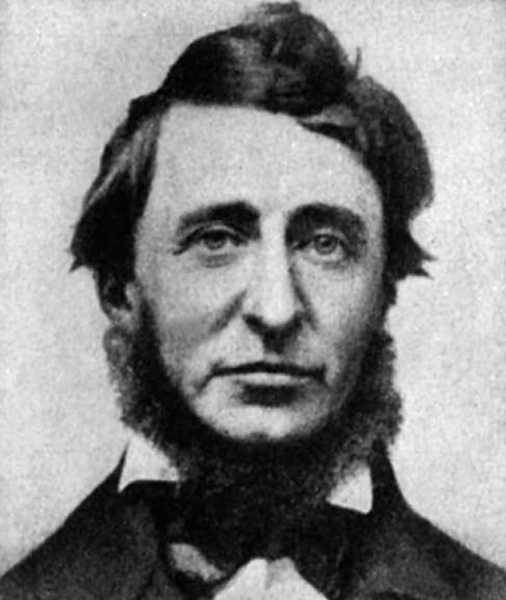
 |
H.W. Longfellow
1807-1882 |
When it comes to the human body, the brain, eyes, face, heart, and other prominent features will similarly spend more time in the limelight than the fingers and toes. Yet the former will always be in debt to the latter for dexterity, functionality, and equilibrium.
In light of this great truth, the sage words of Henry Wadsworth Longfellow bear repeating here:
"Nothing useless is, or low;
Each thing in its place is best;
And what seems but idle show
Strengthens and supports the rest." (2)
The beauty of Self-Action Leadership and the Existential Balance, Growth, and Freedom attainable through lifelong participation in Existential Octathlon is that you don't have to compete with, or compare yourself to, anyone else. The only competition that matters in the end is the intrapersonal competition with YOURSELF and the comparisons you make between your present and past results.
The primary goal of a self-action leader is never to surpass someone else's performance; although there are times when that may be a worthy secondary goal. The primary goal of a self-action leader is—and should always remain—to continually improve upon your own previous performances.
You accomplish this by rising each time you fall and continually striving for existential balance in your life and career. As you do so, you will continue to make a steady rise towards the upper-limits of your personal and professional potential.
And as Dr. Martin Luther King so eloquently taught us, the thing of greatest importance is not what we do for a living, but how we fulfil our individual responsibilities—whatever those tasks might entail.
"If a man is called to be a street sweeper, he should sweep streets even as Michaelangelo painted, or Beethoven composed music or Shakespeare wrote poetry. He should sweep streets so well that all the hosts of heaven and earth will pause to say, 'Here lived a great street sweeper who did his job well.'"
—Dr. Martin Luther King, Jr.
- In what ways do you currently compare yourself with others?
- Are these comparisons positive and helpful or negative and
counterproductive?
- What benefits might you derive from shifting your own paradigm from
primarily competing with others to primarily competing with yourself?
—Dr. JJ
Wednesday, May 1, 2024
Palm Beach Gardens, Florida, USA
Author's Note: This is the 386th Blog Post Published by Freedom Focused LLC since November 2013 and the 197th consecutive weekly blog published since August 31, 2020.
.........................
Tune in NEXT Wednesday for another article on a Self-Action Leadership related topic.
And if you liked this blog post, please share it with your family, friends, colleagues, and students—and encourage them to sign up to receive future articles for FREE every Wednesday.
To sign up, please email freedomfocused@gmail.com and say SUBSCRIBE, or just YES, and we will ensure you receive a link to each new blog article every Wednesday.
Click HERE to buy the SAL Textbooks
Chapter 5 Notes:
1. Peck, M.S. (1993). Further Along the Road Less Traveled: The Unending Journey toward Spiritual Growth (The Edited Lectures). New York, NY: Simon and Schuster. Page 75. Verbatim quote reads: "You might remember in The Road Less Traveled, I defined mental health as a process of ongoing dedication to reality at all costs. And 'at all costs' means no matter how uncomfortable the reality makes us."
2. Longfellow, H.W. (1912) The Poetical Works of
Longfellow. Henry Frowde, Oxford University Press. Page 186. From the poem: The Builders.




.jpeg)
