Showing posts with label SMART Goals. Show all posts

Wednesday, April 2, 2025

S.M.A.R.T.I.E.S. GOALS


 Chapter 14


S.M.A.R.T.I.E.S  GOALS


One of the more common techniques for goal setting is the concept of a "SMART Goal," which originated with the work of George Doran. Since then, different variations on the same theme have materialized. 

For example, Paul J. Meyer presents SMART goals as the following acronym:


Specific

Measurable

Attainable

Relevant

Time-bound (1)


Freedom Focused affirms the utility and value of this clever and memorable mnemonic construct. However, we also build upon it in several ways. 

First, we add an "A" for Accountability. 

Accountability in goal setting is important.

Why?

Because when you are accountable to others beyond yourself, you are more likely to achieve your goal by virtue of the positive peer pressure engendered by built-in accountability measures and structures. This is why you are required to enlist at least two and three witnesses, respectively, to notarize (sign) your SAL Declaration of Independence and SAL Constitution.

Our next addition is an "I," which stands for Interpersonal competition. Goals based on competition with others can be beneficial in some ways and at some times, but as a self-action leader, YOU should always focus primarily on competing with yourself, because in the end, the goal of SAL is not to defeat others; it is to become your best possible self. 

Next, we add an "E" for Engaging

If a goal doesn't interest and engage YOU, then you'll likely lack the motivation to invest the time and effort required to accomplish it. I believe that is why some managers and leaders fail to get their subordinates to successfully set and achieve goals. Externally motivated goals that are manager-driven or otherwise coerced or pressured from outside sources typically do not personally interest or naturally engage workers. To consistently set and achieve worthwhile goals, self-action leaders must set goals that motivate them internally. 

Lastly, we add an "S" for Sane.

I've mentioned this quote twice previously (in BOOKS the SECOND and FOURTH), but it remains apropos to reiterate it here: Insanity is doing the same things over and over again while expecting different results.


"Insanity is doing the same things over and over again while expecting different results."

Albert Einstein


The Insanity Test is a tool to help you avoid repeated failures on the same goal.

The key to setting sane goals is to identify what you need to do differently on your next attempt and then change your approach on subsequent efforts. Thus, the Insanity Test is defined as: The process of evaluating and then changing your approach to a goal until you have achieved your objective.


Insanity Test

A process of evaluating and then changing your approach
to a goal until you have achieved your objective.


If you set a goal but don't reach it, you can apply the Insanity Test to observe, research, and solicit feedback from others regarding how, when, where, and why you fell short on a previous attempt. You can then make appropriate adjustments to future approaches and efforts.

This process can then be repeated and refined until you reach your goal.  

I successfully applied the Insanity Test to an ambitious personal goal I set in 2011. My goal was the qualify for the Boston Marathon. In my first marathon race, I missed my qualifying time by 70 minutes.

I was not even close!

By applying the Insanity Test, I was able to make several adjustments to my training regimen and race strategy. As a result, I gradually got closer to my goal. On my seventh attempt, in 2012, I came within 20 minutes; and on my 10th attempt, in 2014, I came within nine (9) minutes—a 59-minute improvement over the course of three (3) years!

Frustratingly, nine minutes too slow was the closest I ever came to qualifying for the Boston Marathon. But that is okay because part of the insanity test is determining when a goal may be too ambitious given the variables at play (e.g. natural talent, desire, will, available training time, etc.).

After my 13th marathon, I still hadn't qualified for the Boston Marathon, and I admit I felt very disappointed about it. 

However, after analyzing all the variables at play, I determined it was time to adjust my goal in a way that would free up some time I could reinvest in my family and professional work. 

My 2015 Half Marathon racing shirt,
number, and finisher's medal.
My new goal was to run under 90 minutes in the half-marathon. I felt confident I could reasonably achieve this goal without neglecting more important priorities in my life. 

In 2015, I achieved this goal when I ran a half marathon in 87 minutes and 30 seconds (1:27:30), beating my goal by 2 minutes and 30 seconds.

Accomplishing this goal was very satisfying to me!

I confess it was not as satisfying as qualifying for the Boston Marathon would have been. Nevertheless, one of the most important lessons you will ever learn as a self-action leader is that YOU are not perfect, and neither are the circumstances of life. 

As my mother often says: Life happens; deal with it!

That is pretty good advice from Mama.

While there may be instances when YOU are guilty of simply being lazy and need to get off the couch and stop making excuses for why you aren't reaching your goals, there are also times when you may have legitimately set a goal that is unrealistically high and need to make a practical adjustment. The wisdom of Self-Action Leadership is found in your ability to wisely distinguish between different situations, circumstances, and other life variables to then make reasonable adjustments to your goals along the way.

REMEMBER: Self-action leaders are determined and persistent; but they are also patient and flexible. The power of SAL comes in large part from your ability to achieve BALANCE in your approach.  

Life isn't perfect; neither are we. As such, we will not always achieve every goal we set for ourselves. Nevertheless, a certain nobility exists in making the effort—and then making necessary adjustments along the way.

With these acronymic additions, we therefore present S.M.A.R.T.I.E.S — or just SMARTIES — goals:


S
pecific

Measurable

Attainability & Accountability

Relevant

Time-bound 

Intrapersonally competitive

Engaging

Sane


All goals that don't directly involve your life's mission can be divided into four (4) basic categories: long-range, mid-range, short-range, and daily tasks.  


Long-Range Goals

Long-range goals aid you in realizing your vision and accomplishing your mission. Long-range goals typically involve several months, an entire year, or even several years to accomplish.  


Mid-Range Goals

Mid-range goals serve as major milestones in pursuit of long-range goals. Typically, mid-range goals take several days, weeks, or months (on up to a year) to accomplish. Mid-range goals and below are usually not included in your SAL Constitution. A better place for these—and other shorter-term goals—would be in a designated planning and/or calendaring system.   


Short-Range Goals

Short-range goals serve as minor milestones that contribute to your completion of mid-range goals. Typically, short-term goals take hours, days, or weeks (on up to a month-or-so) to accomplish. Like mid-range goals, short-range goals are recorded in your planning and calendaring system instead of your SAL Constitution.  


Daily Tasks

Daily tasks are individual actions taken in pursuit of short-term goals.

Daily tasks typically take anywhere from a few seconds, minutes, or hours (on up to a full-day) to accomplish.

In the case of uncompleted daily tasks that are either delegated or planned forward (not to be confused with procrastinated), it might take several days to complete some daily tasks.

Like mid- and short-range goals, daily tasks are written down in your planning and calendaring system rather than your SAL Constitution.  

Daily task lists—also known as to-do lists—can be useful tools for setting and achieving ultra short-term goals intended to be completed within the confines of a single day. Depending on your personality, you may or may not enjoy the formal process of writing down tasks to be done and then checking them off—or crossing them off—your list upon completion. 

Some people thrive on this practice and even use an old-fashioned notebook and pen or paper day planning system.

Others like to use technology in a similar way. 

Still others—especially those with sharp memories—may prefer to simply utilize mental lists and notes.

It doesn't really matter how you do it. But, since all of us do have tasks that we need to accomplish every day of our lives, it makes sense to develop a system of daily task setting that works for you. 


Prioritizing Your Daily Tasks

As a youngster, I was taught a basic prioritization method for daily tasks by Franklin Day Planning trainers, which utilized a simple lettering (A, B, C) and numbering (A1, A2, A3, B1, B2, etc.) system. This simple method resonated deeply with me as a boy and I found great pleasure in meticulously prioritizing every task listed each day in my Franklin Day Planner. 

Because of its simplicity and ease of use, I commend this same system—or something similarly simple and straightforward—to you. As you mature in your time management skills over time, the ways in which you prioritize will likely evolve in the name of further ease and efficiency. 

For example, at this point in my life, I rarely tangibly record a daily task (or to-do) list. I simply keep continual mental notes about what needs to be done and then avoid procrastination so I stay on top of everything that matters most to me. 

It is a nice place to be; but remember it took me 45 years to get to this place!

So, be patient with yourself and utilize whatever tools you need or want to help you in your own, personal time management development and maturation.  

In the next chapter, you will be introduced to a valuable SAL tool that will help you further with setting and achieving daily tasks. Before we dive into that method and tool, consider the following example of how daily tasks and short-, mid-, and long-range goals contribute to fulfilling a vision and accomplishing a mission.

VISION:  Help hundreds (or even thousands) of young students to grow and succeed through academic instruction and character education and development. 

MISSION:  Become a successful career educator.

LONG-Range GOAL:  Graduate with a bachelor's degree, and earn a teacher's certificate.

MID-Range GOAL: Select and apply for an academic major.

SHORT-Range GOAL:  Meet with a guidance counselor to discuss potential academic pathways.

DAILY TASK:  Call to arrange an appointment with a guidance counselor.


The SAL Time-Life Productivity Pyramid


In Your Journal

  • Develop a Planning System that works for you and journal about its details. Then answer the following questions:
    • Is your system primarily technology-oriented, paper-based, or a combination of both?
    • How/where will you keep track of different goals (Long-, Mid-, and Short-Term)
    • How/where will you record and prioritize Daily Tasks? 
  • Practice writing two or three theoretical (or practical) Vision and Mission Statements, followed by a relevant Long-, Mid-, Short-Range Goal and Daily Task for each.
  • Set two or three theoretical (or practical) Long-Range, Mid-Range, and Short-Range goals. Then run each goal through the S.M.A.R.T.I.E.S construct to see if it qualifies as a SMARTIES goal. If, after evaluation, a goal does not meet all of the SMARTIES' criterion, adjust your goal so that it does.  


Dr. JJ

Wednesday, April 2, 2025
Palm Beach Gardens, Florida, USA


Author's Note: This is the 446th Blog Post Published by Freedom Focused LLC since November 2013 and the 246th consecutive weekly blog published since August 31, 2020.   

Click HERE for a compete listing of the other 445 FF Blog Articles 

Click HERE for a complete listing of Freedom Focused SAL QUOTES  

Click HERE for a complete listing of Freedom Focused SAL POEMS   

Click HERE to access the FULL TEXT of Dr. JJ's Psalms of Life: A Poetry Collection

Click HERE for a complete listing of Self-Action Leadership Articles

Click HERE for a complete listing of Fitness, Heath, & Wellness Articles

Click HERE for a complete listing of Biographical & Historical Articles


Click HERE for a complete listing of Dr. JJ's Autobiographical Articles

.........................

Tune in NEXT Wednesday for another article on a Self-Action Leadership related topic.  

If you liked this blog post, please share it with your family, friends, colleagues, and students—and encourage them to bookmark this blog to access a new FREE article every Wednesday.


Click HERE to buy the SAL Textbooks


Chapter 14 Notes

1.  Meyer, P. J. (2006). Attitude is Everything!: If You Want to Succeed Above and Beyond (Vol. Volume 2). Merced, CA: Leading Edge Publishing.


Wednesday, January 5, 2022

My ONE New Year's Resolution

When it comes to setting New Years' Resolutions—or goals in general—many people make one of two mistakes. 

The FIRST error is to just write the whole idea off as culturally cliché or otherwise lame and therefore justify one's decision to ditch the process entirely.

The reasoning for such an abdication of personal responsibility usually falls under the umbrella excuse of: "Well, New Years' Resolutions never last beyond January anyway, so why try when I am just going to fail?"

A long list of New Year's Resolutions
can prove counterproductive.
The SECOND mistake involves the opposite extreme. It occurs when someone ambitiously and energetically sets out to undertake an unrealistically long (or impossibly difficult) list of goals. No matter how dedicated someone might be in the beginning of such an undertaking, burn-out inevitably ensues, causing them to abandon their mammoth quest. Such eager beavers forget that there is really only one way to eat an elephant (i.e. accomplish any big goal) and that is: "One Bite at a Time"

As regular readers of the SAL blog are well aware, self-action leaders consciously eschew extremes in every area of their lives. Rather than embrace excesses or deficiencies, they are always aiming at the "Happy Medium" or Golden Mean—a philosophical principle of virtuous living taught by none other than the great Greek thinker, Aristotle.

How might Aristotle approach the issue of goal-setting or New Years' Resolutions? 

Aristotle
384-322 B.C.
While I cannot be sure of his exact answer, I feel pretty confident that it would go something like this: When setting goals, it is better to set easier, shorter, and fewer goals that you will realistically follow through on than it is to set harder, longer, or more goals that you are apt to give up on.  

This is one of the reasons I have chosen to set only ONE New Year's Resolution for 2022. There is nothing wrong with setting multiple goals at a time. However, the shorter—and the more focused—your list is, the most likely you are to effectively achieve your goals. As such, if you do want to set multiple New Year's Resolutions, I would encourage you to limit your goals to THREE (3) or less.

REMEMBER: One goal set and achieved is worth infinitely more than a hundred goals set and discarded.  

Truth be known, I have more weaknesses, shortcomings, imperfections and room for improvement than I can count on both hands and feet several times over. Like every other imperfect human being on this planet, I am a work-in-progress and will still have room to grow even if I live to be a hundred!

However, I know from personal experience—and from a lot of self-knowledge and self-awareness—that I don't have the time, energy, motivation, or desire to try and tackle everything (or even several things) at once. As such, I've thoughtfully considered what ONE area of my life could use the most help at this particular moment in time. 

The answer to that question involves my PHYSICAL HEALTH.

The SAL Textbook, Volume I, introduces the concept of an Existential Octathlete. The idea behind this concept involves eight (8) different key areas of life growth that contribute to our overall (existential) growth.  These eight life arenas include the following eight (8) domains of life:

  • CONSTITUTIONAL (Personal and Familial Vision, Mission, Values, Standards, Goals, etc.)
  • SPIRITUAL
  • PHYSICAL
  • MENTAL
  • EMOTIONAL
  • SOCIAL
  • FINANCIAL
  • MORAL     

Of all these areas, the PHYSICAL arena is the area of my life that needs the most work. 

While I go to the gym or otherwise workout an average of 4-6 times per week, I am still overweight.

I don't have a sweet tooth.  I have 32 sweet teeth!
I'm 6'1" with a small-boned, slender frame—an ectomorph and former semi-elite middle distance runner. My ideal weight range is #165 - #175 pounds. Right now, I am #200 pounds. I don't like the way I look or feel when I am twenty-five (25) pounds overweight. It is a drain on my energy and negatively impacts my self-image, personal identity as an athlete, and self-esteem as a professional who preaches Personal Leadership to his readers and trainees.  

What led to my undesired weight gain? It's pretty simple really: Fast food, soft drinks, chocolate, ice cream, candy, etc. 

The gap between where I want to be PHYSICALLY and where I actually am physically is as significant as it's ever been in my life. And as Hyrum W. Smith—author of The 3 Gaps principle and book—teaches, whenever there is a gap between where we are and where we want to be, we experience PAIN, and the only way to authentically alleviate that pain is to Close the Gap.*

My New Year's Resolution in 2022 is to lose #25 Pounds
Therefore, my goal in 2022 is simple, but it will not be fast or easy. My goal is to lose twenty-five (25) pounds by January 1, 2023. 

In the history of New Year's Resolutions, weight loss is perhaps the most common; it is probably also the most cliché in the sense that so many people so often fail in their resolution to actually lose the weight they desire to shed. In other words, I am in good company!  

In order to approach this goal in both a serious and pragmatic way — so as to not end up another weigh-loss casualty and cliché mired in failure — it is important to apply a specific, time-tested method.

What method would best be employed to maximize my success potential? 

The ANSWER to this question can be found in the SAL Textbook, Volume 2. It is an extension of the "SMART Goal" principle, and it is called SMARTIES Goals, or S.M.A.R.T.I.E.S. Goals. 

SMARTIES is an acronym that stands for:

Specific

Measurable

Attainable (realistic) & Accountable

Relevant

Time-bound

In-competition primarily with yourself

Engaging

Sane 

If you are serious about accomplishing any goal, I highly recommend applying the SMARTIES method. To illustrate how this method is designed to work, let's put my own goal through the SMARTIES formula and see if it passes the test. 

SPECIFIC:  I specify the life arena I want to work on (PHYSICAL), precise area I seek to improve (smaller girth), and exact amount of weight I am aiming to lose (25 pounds). More importantly, I have a very specific plan that involves intermittent fasting.

This plan asks me to not eat after 4:00 p.m. on Mondays through Thursdays during the week. I will then further fast (skip) breakfast and lunch on Sundays. This goal and plan is very specific.

MEASURABLE:  It's 25 pounds. Not 15, not 20, not 30. It's precise, mathematical, scientific, and measurable.

ATTAINABLE (Realistic):  This goal is attainable or realistic based on my successful loss of 20 pounds in the final three months of 2019 by utilizing a similar method of intermittent fasting as outlined above. I am actually giving myself a lot more time to accomplish a similar objective. This will allow me the flexibility to take things slowly at a pace I know I can handle.

At the height of my personal fitness as a young man running track in college, I weighed #150 pounds. I recognize it is unrealistic to expect to return to those kind of "glory days." Moreover, I don't think I would want to be that skinny again. On the other hand, finding a happy-medium balance between that former place and where I am now is very realistic.

Furthermore, I know from personal experience that it is not presently realistic (for me) to go on a traditional "DIET" or arbitrarily limit my intake of my favorite foods and beverages in an attempt to "white knuckle" my way to better nutritional habits. Experience has taught me that I am much more successful if I regularly apply principles of intermittent fasting while concurrently striving for a modicum of moderation in my choice and intake of calories. And the good news is that there are health benefits aplenty to intermittent fasting practices.

Click HERE to read 14 Benefits of Intermittent Fasting

Click HERE to access scholarly articles on the manifold benefits of INTERMITTENT FASTING

ACCOUNTABLE:  Announcing this plan on my blog makes me accountable to all of my readers. I will report back in one year's time to announce the results of my efforts. 

SMARTIES Goals are Time-Bound
RELEVANT:  This goal is highly relevant to me personally. My physical fitness and health impacts every other area of my life. Losing weight will cause me to feel better about every other life arena. It will also provide me with the energy, motivation, and vigor required to be at my best.  

When setting your own goals, strive to make them highly relevant to your values and standards. Avoid setting arbitrary goals that add little value to issues of greater importance beyond the goal itself.  

TIME-BOUND:  This goal has a deadline of January 1, 2023 for its completion. This makes it time-bound.

In Competition Primarily with Myself:  This goal does not involve competition with others. While it is not wrong or bad to set interpersonal goals, self-action leaders are always primarily concerned with self-improvement, not with comparing their progress with other people. Thus, intrapersonal goals should be one's primary focus.     

ENGAGING:  This particular weight-loss goal is very engaging for me personally. I am motivated to regain a higher level of health, fitness, energy, and esteem. I know from past experience that all four elements of my life are bolstered and improved as I exercise the self-discipline, diligence, focus, determination, and endurance required to see this kind of goal through to fruition. 

SANE:  There is a saying: "The definition of INSANITY is: Doing the same things over and over again while expecting different results." If you want a different output (result), you must invest in a different input (action); that is just a mathematical reality.

Eating too many calories (and the wrong kind of calories) and then applying exercise alone does not get me the results I desire. Such has often been my approach in the past. I cannot keep perpetuating this negative cycle and expect to see different results. This goal is SANE because I am committing to a program that changes my current habits to different habits that past actions have proven will bring me more desirable results as I follow through. 

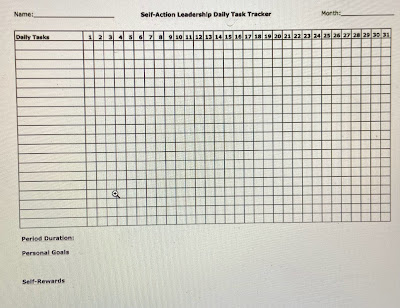
SAL Daily Task Tracker, available HERE
To help track my progress with this goal, I will utilize the SAL Daily Task Tracker as found in the SAL Textbook, Volume 2, or available on the Freedom Focused website (Books and Free Content section), or by clicking HERE

I am genuinely excited about this goal, and I am pleased to report that I have already lived true to my resolve by fasting after 4:00 p.m on both Monday and Tuesday of this week.  

Experience has taught me I will not be able to follow this well-laid out plan perfectly. For a variety of reasons (e.g. sickness, extenuating circumstances, the occasional "off" days that inevitably arise due to my own human weaknesses), I know I will fall short of my resolve on some (and perhaps even many) days moving forward. This is one of the reasons why I am giving myself an entire year to accomplish my goal, even though I know I could accomplish it in three months under ideal circumstances.

Life has taught me that rarely are circumstances ideal. Nevertheless, I am confident that if I remain committed to my goal, pick myself up each time I fall short and keep trying, and never give up, that on January first of next year (2023) I will be able to successfully report that I weight #175 pounds (or less) with all of the accompanying plusses of accomplishing that goal.  

Wish me luck!  

And now.....  it's YOUR turn!

I invite—nay, I challenge—YOU to to now undertake the same process I undertook above, but this time for YOURSELF. If you will take your time, be sincere and authentic in your approach, and commit fully to the SMARTIES Goal process, I am confident you can similarly determine the right GOAL for you to work steadily on this year, and then see your goal through to fruition at your own appointed deadline.  


Dr. JJ

January 5, 2022
Palm Beach Gardens, Florida, USA

Author's Note: This is the 246th Blog Post Published by Freedom Focused LLC since November 2013. 

Click HERE for a compete listing of the other 245 FF Blog Articles.  

.........................

Tune in NEXT Wednesday for another article on a Self-Action Leadership related topic.  

And if you liked this blog post, please share it with your family, friends, colleagues, and students—and encourage them to sign up to receive future articles for FREE every Wednesday.

To sign up, please email freedomfocused@gmail.com and say SUBSCRIBE, or just YES, and we will ensure you receive a link to each new blog article every Wednesday.  

Click HERE to learn more about Freedom Focused

Click HERE to learn more about Dr. Jordan Jensen

Click HERE to buy the SAL Textbooks

Notes:

* Smith, H.W. (2015) The 3 Gaps: Are You Making a Difference? San Francisco, CA: Berrett-Koehler.

Tuesday, January 5, 2016

A New Year's Resolution that Pays Weekly Dividends & Strengthens America

A New Year is upon us!  Have you set any new goals yet?  Or maybe a better question is... Have you set any new goals that will last beyond about January 10?  (SMILE)

If you are still looking for that elusive resolution to ensure that 2016 will be a better year than 2015, then Freedom Focused can help -- and at no cost to you.

Indeed, we have an offer that puts the "FREE" into Freedom Focused by providing weekly blog articles delivered directly to your email inbox at absolutely zero cost to you.  To date, thousands of people all over the world have read these articles on personal development, Self-Action Leadership, history, and other relevant topics--to their personal and professional benefit.  We invite you to join these readers to receive your own little boost each week.

To sign up for this blog, just enter your e-mail address in the white box on the lower right hand side of this page where it says: "Follow by Email."  After entering your e-mail address and clicking "Submit," check your e-mail inbox to confirm your submission, and you are all set!  Then, invite your friends and colleagues to do the same.

We look forward to having you join us in our effort to restore American Greatness, not through political means (we'll leave that to the people and the politicians; God help us all!), but through an education in true principles rooted in Universal Law.  It will be a slow and steady process... but it is the only REAL way to make America great again.

To get started, click on any of the links below to sample some of the most popular articles of 2015...

A 21st Century 7 Habits of Highly Effective People

Self-Action Leadership in Real Life: Success from Chicago's South Side


From Orphan to Executive: Self-Action Leadership from Real Life

The Patriotism Principle

The Most Important Educational Message of the 21st Century

A Sacred Day of Remembrance

The Joe Jensen Story: A SAL Case Study

An Era Shifting Speech on Education


From One Simple Man to Another: My Tribute to Bill O'Reilly

The Uncle Tom's Cabin of the 21st Century

The Age of Authenticism

About the Author 


Dr. Jordan R. Jensen
Dr. Jordan Jensen is the Founder & CEO of Freedom Focused and the author of the groundbreaking new book, Self-Action Leadership: The Key to Personal, Professional, & Global Freedom.  He has trained business professionals in 47 U.S. States and Territories, 5 Provinces of Canada, and 9 Counties of Great Britain on a wide variety of soft-skill topics including leadership, self-leadership, management, time management, goal setting, strategic thinking, emotional intelligence, and a variety of communication skills. To learn more about Dr. Jensen and how his company, Freedom Focused, can assist you in achieving your organizational potential, visit www.freedomfocused.com

To buy Jordan's new book, click HERE.


Monday, January 20, 2014

Finding Freedom in INTRApersonal Competition

In last week's post, I discussed the importance of focusing primarily on intrapersonal competition (competing against yourself) rather than interpersonal competition (competing against others) in goal setting.  This is an important aspect of setting SMARTIES Goals.  Today, I share my story that influenced me to change my own viewpoint of competition.

Thursday, January 2, 2014

Resolutions that Stick: The SMARTIES Principle

HAPPY NEW YEAR!


As the New Year dawns, it is tradition to set goals to better yourself.  The perennial question, however, is: How do I make New Years’ Resolutions that actually last past January 2nd?

There are two basic reasons New Years Resolutions flop.  The first arises from setting too many goals.  The second occurs from a failure to set SMART Goals.  SMART, in this context, is an acronym.  It stands for Specific, Measurable, Attainable, Relevant, and Time-bound.  The SMART model is an excellent method for goal setting, but there is more, and that is why I encourage self-action leaders to include four additional guidelines to their goal setting.  These additional recommendations turn SMART goals into SMARTIES Goals, as follows:

Specific
Measurable
Attainable and Accountable
Relevant
Time-bound
In competition primarily with yourself
Engaging
Sane

APPENDIX N: Freedom Focused Corporate CONSTITUTION

  APPENDIX  N Freedom Focused Corporate CONSTITUTION "The American Constitution is, so far as I can see, the most wonderful work ever s...